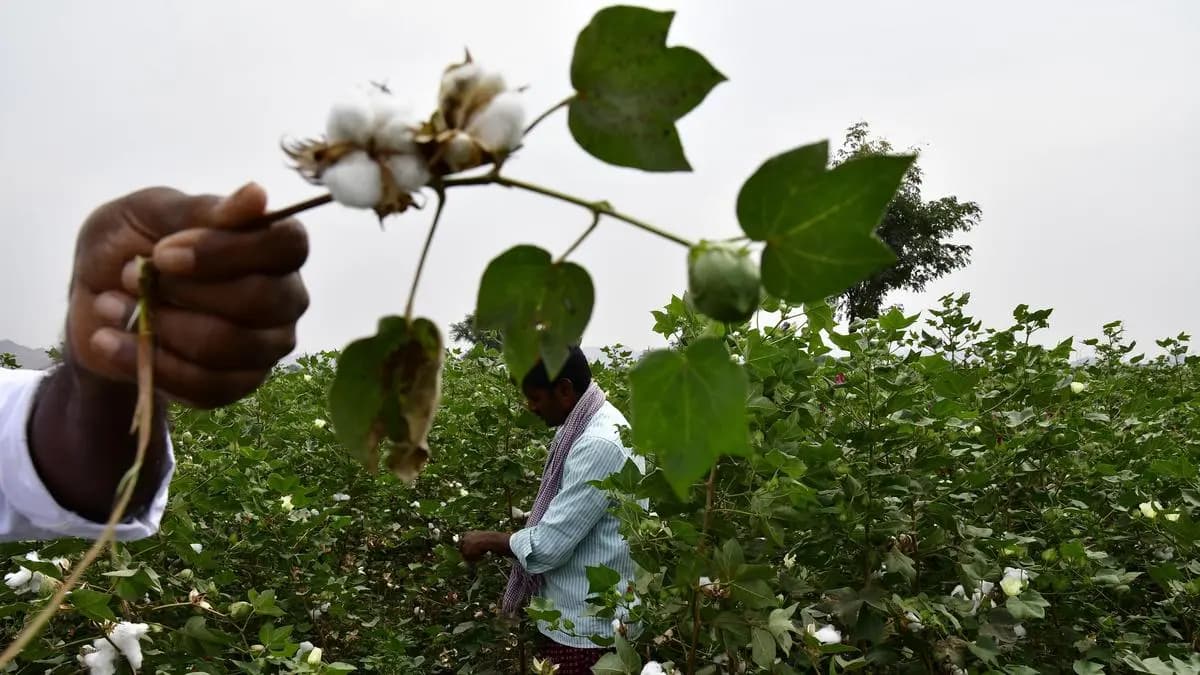
No Change in Bt Cottonseed MRP for 2026-27
Why It Matters
Keeping the price cap stabilizes farmer input costs but squeezes seed producers amid inflation and growing pest pressures, affecting cotton profitability and the broader seed market.
Key Takeaways
- •MRP stays at ₹900 ($11) for Bolgard II, ₹635 ($7.6) for Bolgard I.
- •2025‑26 price hike was 4%, but 2026‑27 sees no increase.
- •Seed firms requested inflation‑adjusted rise; government declined.
- •Bharatiya Kisan Sangh says cap hurts non‑GM cotton seed pricing.
- •95% of Indian cotton is Bt; pesticide use rising due to resistance.
Pulse Analysis
India’s price‑control regime for Bt cottonseed, in place since 2016, aims to protect farmers from volatile seed costs. By freezing the MRP at ₹900 for Bolgard II and ₹635 for Bolgard I, the Ministry signals a cautious approach amid broader inflationary pressures. Converting these caps to roughly $11 and $7.6 per packet provides a clearer benchmark for international observers, underscoring how policy can shape input pricing in a market that accounts for over 95% of the nation’s cotton output.
The seed industry, however, views the static pricing as a constraint on profitability. Last year’s 4% increase was the first significant rise after a modest 1% hike in 2024‑25, and manufacturers had pressed for a rise aligned with general inflation—currently near 6% in India. Stakeholder groups such as the Bharatiya Kisan Sangh argue that the cap depresses non‑GM cotton seed prices, creating a pricing imbalance that could deter diversification. The decision also reflects the government’s legal obligation under the Cotton Seeds Price (Control) Order, 2015, to announce the MRP annually, regardless of market dynamics.
From an agronomic perspective, the policy’s impact extends beyond economics. While Bt cotton continues to dominate 95% of the cultivated area, resistance to the Bt protein—especially from pink bollworm—has prompted farmers to increase pesticide applications, eroding some of the original environmental benefits. The rising reliance on chemicals raises production costs and may influence future seed‑price negotiations. As pest pressures evolve, policymakers will need to balance price stability with incentives for breeding more resilient varieties, ensuring that cotton’s contribution to India’s textile sector remains sustainable.
No change in Bt cottonseed MRP for 2026-27
Comments
Want to join the conversation?
Loading comments...