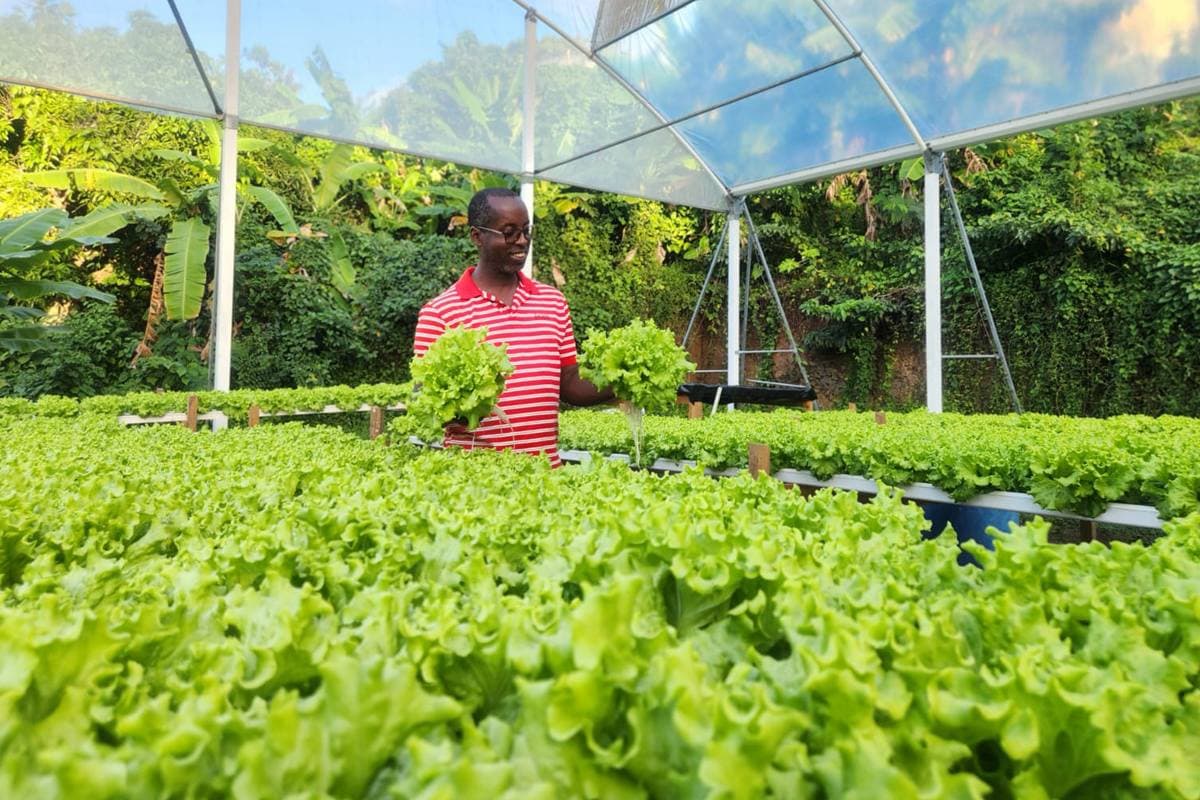
No Soil, No Problem: How Hydroponics Pose an Growing Alternative in the Face of Climate Change
Why It Matters
Hydroponics delivers food security for smallholders facing erratic rainfall while cutting water use and emissions, making it a viable climate‑adaptation strategy in the Caribbean and beyond.
Key Takeaways
- •Hydroponic lettuce yield grew 160% after FAO‑GCF upgrade.
- •Water consumption drops up to 90% versus soil farming.
- •Solar‑powered pumps offset electricity costs, reducing emissions.
- •Precise nutrient flow critical; mis‑gradient harms plant health.
- •Farmers adopt model, expanding to tomatoes, cabbage, and community training.
Pulse Analysis
Climate volatility is reshaping agriculture across the Caribbean, where erratic rain and rising temperatures threaten traditional soil‑based farms. Hydroponics—growing plants in nutrient‑rich water without soil—offers a technology‑driven answer, delivering up to 90 percent water savings and shielding crops from pests and extreme weather. By decoupling production from the elements, growers can harvest year‑round, a critical advantage in regions dependent on imported food. The method also aligns with sustainability goals, as closed‑loop systems lower fertilizer runoff and, when paired with solar power, cut greenhouse‑gas emissions.
The Benjamin family in southern Grenada illustrates how external support can accelerate adoption. A pilot funded by the United Nations Food and Agriculture Organization and the Green Climate Fund supplied a solar‑powered greenhouse, a robust nutrient‑delivery network, and hands‑on training. Their lettuce output jumped from roughly 500 heads to 1,300, a 160 percent increase, while daily water use fell dramatically. Operating costs remain modest because the solar array eliminates recurring electricity bills, and the system requires only about half an hour of monitoring each day. Although hydroponic nutrients are pricier than conventional fertilizers, they last longer, improving overall cost efficiency.
Beyond individual success stories, hydroponics is gaining traction as a scalable climate‑adaptation strategy. The Grenadian pilot has sparked interest among neighboring farms, prompting knowledge‑sharing sessions and the replication of similar setups. Market access remains a hurdle; growers must differentiate their produce and secure reliable distribution channels, often through supermarkets or direct‑to‑consumer platforms. Policymakers can lower barriers by offering financing for high‑upfront capital and integrating hydroponic metrics into national food‑security plans. As more islands confront water scarcity and land constraints, the combination of renewable energy and soil‑free cultivation could become a cornerstone of resilient, locally sourced food systems.
No soil, no problem: How hydroponics pose an growing alternative in the face of climate change
Comments
Want to join the conversation?
Loading comments...