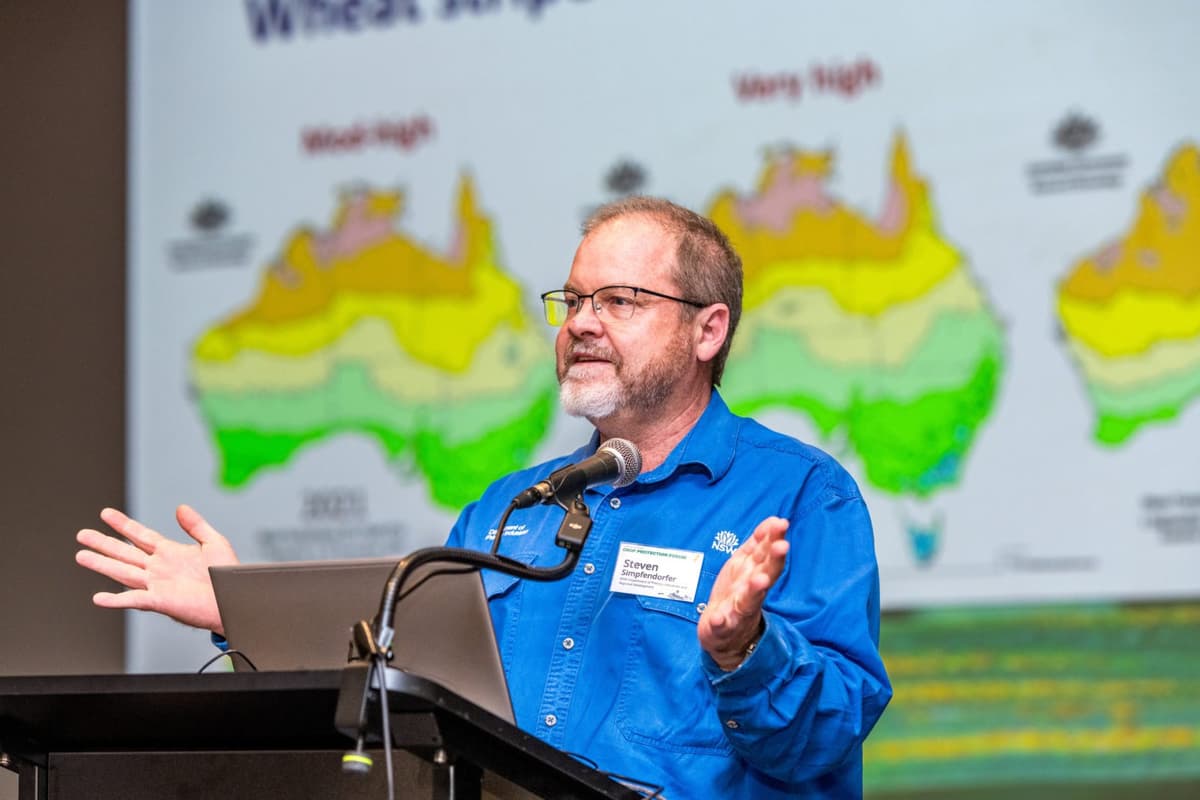
NSW DPIRD Scientists Lead Work Tackling Soil-Borne Diseases
Why It Matters
Soil‑borne diseases erode farm profitability and threaten Australia’s $25 billion primary industry, making coordinated research essential for economic stability and climate‑resilient agriculture.
Key Takeaways
- •$34.6 M (≈$22.8 M USD) five‑year GRDC soil disease program launched.
- •Soil‑borne diseases cost Australian grain growers $1.71 B (≈$1.13 B USD) annually.
- •NSW DPIRD leads research on Fusarium crown rot and Sclerotinia stem rot.
- •Integrated management includes rotation, stubble control, tolerant varieties, bio‑controls.
- •Projects aim to protect $25 B (≈$16.5 B USD) primary industry output.
Pulse Analysis
Soil‑borne pathogens such as Fusarium crown rot and Sclerotinia stem rot have become a silent but costly threat to Australian agriculture, undermining yields and driving up input costs. While the diseases themselves are ancient, their economic toll has surged with the adoption of conservation cropping practices that retain stubble and reduce soil disturbance. This shift, while environmentally beneficial, creates a more hospitable environment for pathogens, amplifying losses that now exceed $1.7 billion AUD annually. Climate projections suggest hotter, drier conditions will further exacerbate disease pressure, making proactive research a strategic imperative.
The GRDC Soilborne Disease Initiative, backed by $34.6 million AUD (≈$22.8 million USD) over five years, represents the most significant coordinated effort to date. NSW DPIRD scientists, led by Dr. Steven Simpfendorfer and Dr. Kurt Lindbeck, are tasked with delivering region‑specific, integrated management packages that blend agronomic practices, resistant cultivars, targeted fungicide regimes, and emerging biological controls. By aligning with universities and extension networks, the program ensures that research outputs translate quickly into field‑ready recommendations, thereby accelerating adoption among growers who face $112 million AUD (≈$74 million USD) and $70 million AUD (≈$46 million USD) in annual losses for wheat and broadleaf crops respectively.
Beyond immediate yield protection, the initiative bolsters Australia’s broader biosecurity framework. Skills transfer components build a pipeline of experts capable of responding to both endemic and exotic disease incursions, safeguarding a $25 billion AUD (≈$16.5 billion USD) primary‑industry backbone. As the sector leans into sustainability goals—lowering nitrogen use, reducing greenhouse‑gas emissions, and preserving soil health—effective disease management becomes a linchpin for achieving nature‑positive outcomes while maintaining farm profitability.
NSW DPIRD scientists lead work tackling soil-borne diseases
Comments
Want to join the conversation?
Loading comments...