On the Heels of Fresh Funding, Oishii Has ‘Crossed the Chasm’ of Unit Economics in Vertical Farming
Why It Matters
Demonstrating sustainable unit economics validates vertical farming as a viable commercial model, attracting patient capital and signaling market maturity. Oishii’s success could reshape investment criteria across indoor agriculture.
Key Takeaways
- •Oishii raised $150M Series C, total funding now $370M
- •Focus on premium strawberries avoided over‑crowded leafy‑green market
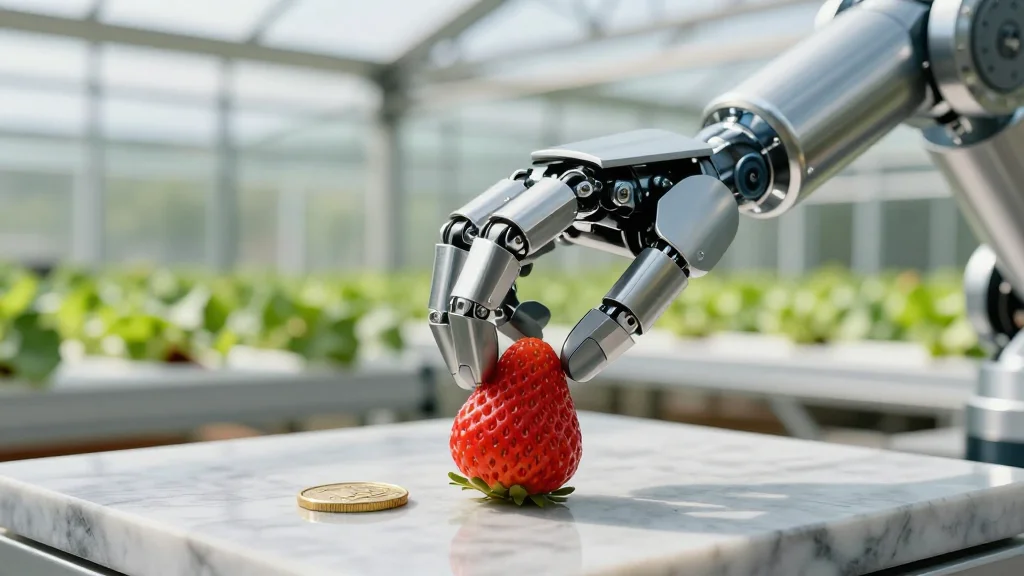
- •In‑house robotics and Japanese techniques create sustainable unit economics
- •Patient capital from SPARX and Resilience Reserve fuels long‑term growth
Pulse Analysis
The vertical farming sector has endured a harsh correction, with high‑profile unicorns like Plenty and Bowery stumbling under lofty valuations and thin margins. Most of these firms pursued fast‑growth lettuce and herb production, a commodity market that quickly saturated and offered limited price power. Oishii’s strategy diverges sharply; it targets a niche premium strawberry segment that commands a $5 price tag per fruit, leveraging scarcity and consumer willingness to pay for quality. This differentiation, combined with a hybrid of modern automation and traditional Japanese horticulture, positions the company away from the low‑margin race that has tripped up many peers.
Proving unit economics has become the new litmus test for indoor agriculture investors. Oishii’s in‑house robotics, precision climate control, and vertically integrated supply chain have lowered per‑unit costs enough to achieve profitability at scale, a milestone that many vertical farms have yet to reach. By iterating quickly across technology and production, the firm can adjust planting cycles, optimize nutrient delivery, and reduce waste, translating into a sustainable cost structure. This disciplined approach not only justifies the recent $150 million infusion but also signals to the market that vertical farms can move beyond experimental pilots to commercially viable operations.
The financing round, led by SPARX Asset Management and Resilience Reserve with participation from Nomura, MISUMI, and Mizuho, underscores the importance of patient capital in deep‑tech agriculture. These investors recognize the long‑term payoff of sustainable food production, especially as climate pressures and supply‑chain resilience become strategic priorities. With the new funds, Oishii plans to expand its farm footprint, accelerate R&D in both the United States and Japan, and deepen its automation capabilities. If the company can sustain its unit‑economic advantage, it may set a new benchmark for vertical farming profitability, encouraging a shift in venture capital focus toward differentiated, high‑margin indoor crops.
On the heels of fresh funding, Oishii has ‘crossed the chasm’ of unit economics in vertical farming
Comments
Want to join the conversation?
Loading comments...