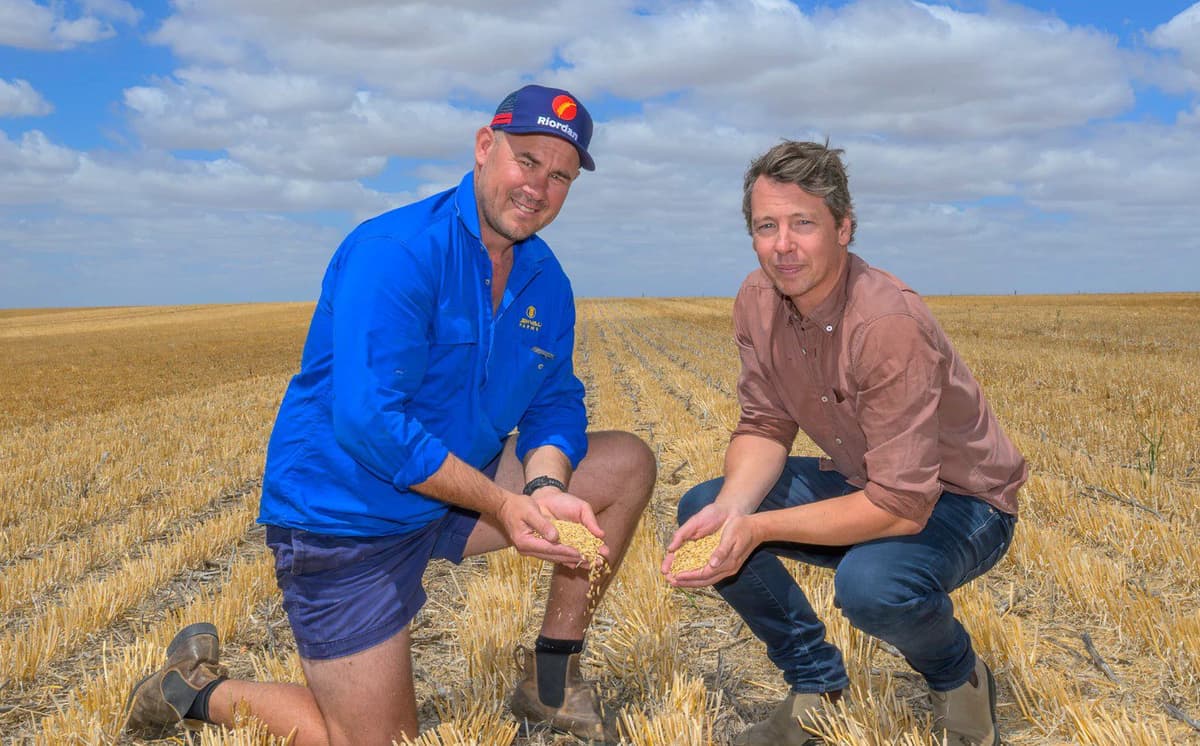
Partnership to Track Barley Carbon Emissions From Paddock to Beer
Why It Matters
By providing granular emissions data, the program enables growers to improve sustainability, unlock climate‑friendly market opportunities, and help Asahi meet rising consumer and regulatory pressure for greener supply chains.
Key Takeaways
- •Asahi partners with Charles Sturt University to measure barley carbon footprints
- •Nine Wimmera farms receive farm‑specific emissions reports for barley production
- •Data shows fertilizer and herbicide use are primary emission sources
- •Direct farmer‑brewer link improves traceability and supports sustainable market access
- •Program aligns with Asahi’s goal to lower supply‑chain carbon intensity
Pulse Analysis
The brewing industry is increasingly scrutinized for the carbon intensity of its raw materials, and barley—its foundational grain—has become a focal point for sustainability efforts. Asahi Beverages’ collaboration with Charles Sturt University’s Cool Soil Initiative marks a pioneering step in agricultural carbon accounting, moving beyond generic estimates to farm‑level measurements. By integrating soil health metrics, fertilizer application rates, and field operation data, the program generates precise emissions profiles that can be compared across the Wimmera region, offering a transparent view of the environmental impact embedded in each barley batch.
For the participating growers, the detailed reports serve as both a diagnostic tool and a market differentiator. Farmers receive actionable insights on how to tweak input use, adopt low‑impact machinery, and enhance soil carbon sequestration—all of which can translate into cost savings and premium pricing in a market that rewards climate‑smart practices. The partnership also reinforces Asahi’s direct‑supply model, reducing reliance on bulk handlers and ensuring that only barley meeting stringent sustainability criteria reaches the Abbotsford Brewery. This traceability not only bolsters brand credibility but also positions Asahi to meet emerging regulatory disclosures and consumer demand for responsibly sourced beer.
Looking ahead, the initiative could set a template for other beverage producers seeking to decarbonize their supply chains. As data accumulates, the emissions benchmarks may evolve into industry standards, facilitating broader adoption of carbon‑reduction technologies across Australian grain farms. Moreover, the ability to certify low‑emission barley opens doors to export markets where sustainability certifications are increasingly required. In this way, Asahi’s program not only advances its own environmental goals but also catalyzes a shift toward climate‑resilient agriculture throughout the region.
Partnership to track barley carbon emissions from paddock to beer
Comments
Want to join the conversation?
Loading comments...