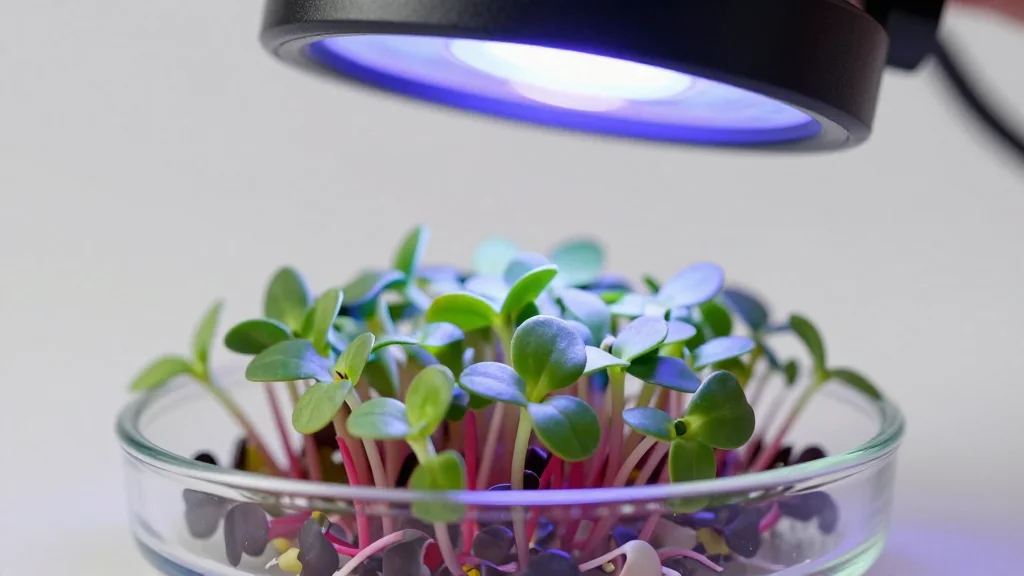
Study Evaluates Pathogen Reductions on Microgreens Treated with UV-C
Why It Matters
UV‑C offers a non‑chemical, rapid decontamination step for fragile microgreens, yet its limited durability means producers must adopt layered safety protocols to protect public health and maintain market confidence.
Key Takeaways
- •UV‑C bidirectional at 10 cm, 120 s cuts pathogens up to 3 log
- •Salmonella most sensitive; Listeria most resistant to UV‑C
- •Sunflower microgreens respond better than radish to UV‑C
- •Pathogen counts rebound 0.3–1.7 log during 14‑day refrigeration
- •UV‑C should complement, not replace, hygiene and input controls
Pulse Analysis
Microgreens have surged in popularity for their flavor and nutrition, but their rapid growth cycles and delicate tissues make them especially prone to contamination from seeds, irrigation water, or soilless media. Traditional post‑harvest sanitizers can damage leaf quality, prompting growers to explore physical interventions such as ultraviolet‑C light, which inactivates microorganisms by damaging DNA without leaving residues. Understanding how UV‑C parameters interact with microgreen morphology is crucial for scaling the technology from boutique farms to large‑scale distributors.
The study conducted by researchers in Turkey and Colorado quantified UV‑C’s impact across a range of doses, distances, and exposure times. Bidirectional illumination at a close 10 cm distance delivered the highest log reductions, with Salmonella showing the greatest susceptibility and Listeria the most resistance—reflecting differences in cell‑wall structure and DNA‑repair mechanisms. Notably, sunflower microgreens, with broader, smoother cotyledons, allowed more uniform UV penetration than the more textured radish varieties. However, the antimicrobial effect proved transient; during two weeks of refrigerated storage, sublethally injured cells recovered, leading to modest population rebounds and increased spoilage organisms.
For growers, the findings signal that UV‑C can be a valuable component of a multi‑hurdle safety strategy but cannot stand alone. Integrating UV‑C with rigorous seed sanitation, controlled irrigation, and strict handling protocols will better mitigate risks and satisfy increasingly stringent retail standards. Future research should explore synergistic combos—such as mild heat or edible antimicrobials—paired with UV‑C to extend shelf‑life and protect consumer health, positioning microgreens as a safe, high‑value segment in the fresh‑produce market.
Study Evaluates Pathogen Reductions on Microgreens Treated with UV-C
Comments
Want to join the conversation?
Loading comments...