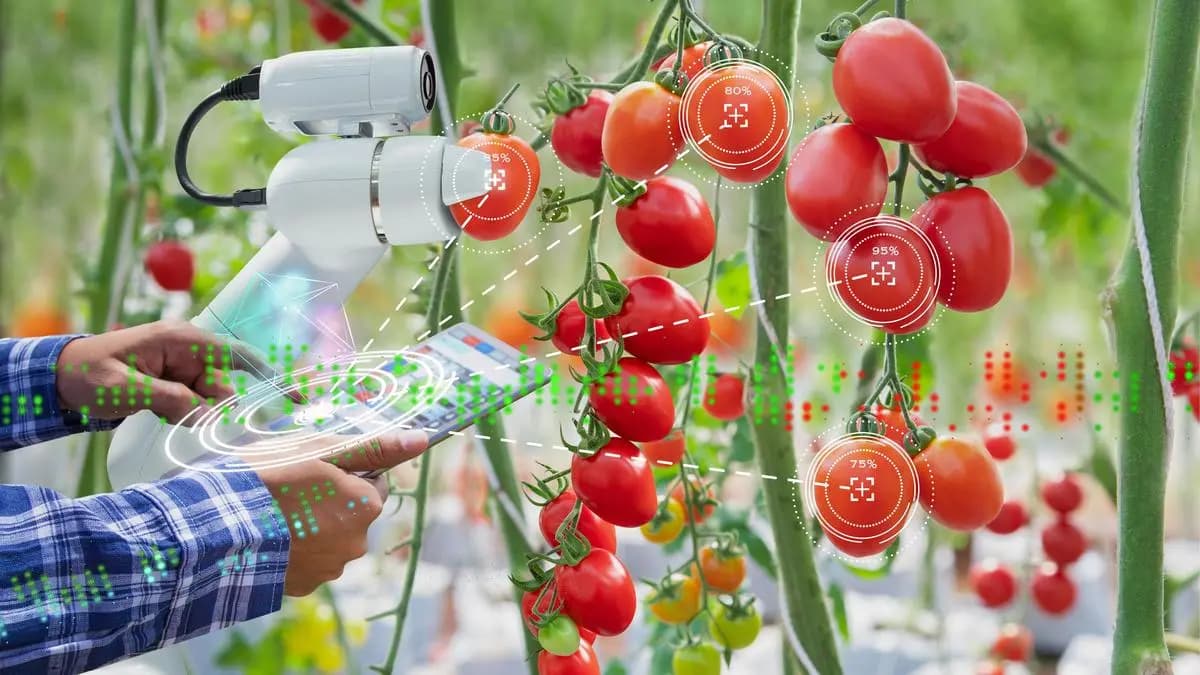
The Missing Link in Agri-Tech: Why Semiconductor Startups Will Decide India’s Farming Future
Why It Matters
A robust semiconductor base will lower costs, boost scalability, and secure India’s agri‑tech ambitions, directly influencing food security and economic growth. Without domestic chips, AI‑driven farming solutions remain dependent and fragile.
Key Takeaways
- •AI could add $1.7 trillion to India's economy by 2035
- •Indian drone market projected at $11 billion by 2030
- •India imports 85‑90% of its semiconductor needs
- •Government pledged $10 billion for semiconductor mission
- •Startup Stairs allocated ~ $0.48 million for deep‑tech startups
Pulse Analysis
India’s farming sector is at a tipping point, driven by rapid adoption of artificial intelligence and unmanned aerial systems. AI models now forecast yields, detect pests, and tailor irrigation, while drones deliver real‑time field imaging and precision spraying. These technologies are projected to inject $1.7 trillion into the national economy by 2035 and push the domestic drone market to $11 billion by 2030, underscoring a clear shift toward data‑centric agriculture.
Yet the surge in smart‑farming tools collides with a glaring hardware shortfall: India imports roughly 85‑90% of its semiconductor chips. This reliance inflates costs and hampers the scalability of AI and drone solutions that require custom, low‑latency processors. Recognising the strategic risk, the government launched a $10 billion India Semiconductor Mission to foster design and fabrication capabilities. The initiative targets not only large fabs but also a vibrant ecosystem of chip‑design startups that can create application‑specific integrated circuits for agricultural use cases.
Startups are poised to bridge the gap, leveraging policy incentives and targeted funding. Programs like Startup Stairs have earmarked about $0.48 million to nurture AI, drone, and semiconductor ventures, offering mentorship, prototyping labs, and market access. By aligning academic research, industry expertise, and government support, India can cultivate a self‑reliant semiconductor supply chain that powers the next wave of agri‑tech innovation, ensuring sustainable productivity gains and resilience against global supply disruptions.
The missing link in agri-tech: Why semiconductor startups will decide India’s farming future
Comments
Want to join the conversation?
Loading comments...