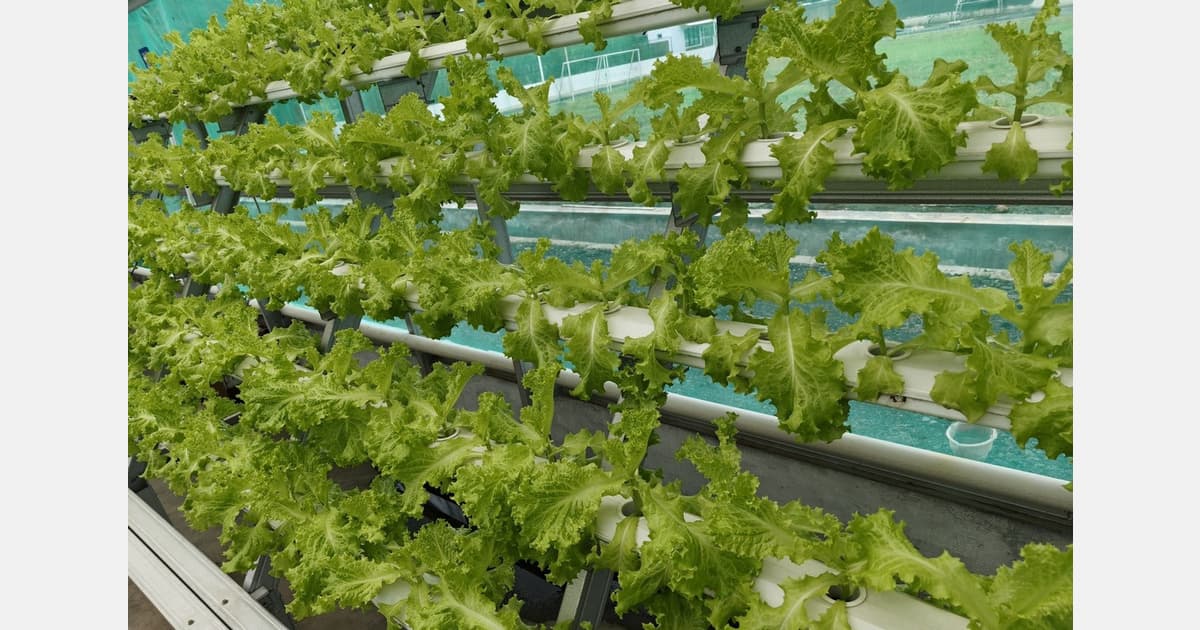
UK: Solar Power Could Offset Emissions in Vertical Farming
Why It Matters
The climate advantage of vertical farming hinges on strategic land reuse, suggesting that coordinated food‑energy planning can turn a high‑energy technology into a net‑zero opportunity for the UK’s agriculture sector.
Key Takeaways
- •Vertical lettuce farms slash land use by 93% versus fields.
- •Current vertical farms emit more GHG due to high electricity demand.
- •Converting vacated farmland to solar power offsets vertical farm emissions.
- •Solar‑enabled land reuse yields net emissions lower than traditional lettuce.
- •Study provides UK‑wide framework for food‑energy co‑planning.
Pulse Analysis
Vertical farming has emerged as a high‑tech answer to the United Kingdom’s limited arable land and the pressure to increase food production without expanding into natural habitats. By stacking lettuce trays in climate‑controlled warehouses, growers can achieve yields that dwarf those of conventional fields, freeing up thousands of hectares for alternative uses. The University of Surrey’s recent life‑cycle assessment quantifies this land‑saving potential at roughly a 93 percent reduction, positioning indoor agriculture as a plausible tool for preserving countryside ecosystems while meeting urban demand.
Despite the dramatic land efficiency, the energy intensity of LED lighting, climate control, and automation pushes the carbon footprint of vertical lettuce above that of field‑grown counterparts. The study highlights that the decisive factor is the source of electricity; when the surplus land is repurposed for solar‑power installations, the generated clean energy can directly offset the farm’s operational emissions. Modelling shows that a solar‑centric reuse scenario not only neutralises the vertical farm’s carbon penalty but also drives overall emissions below the baseline of traditional production.
The findings give policymakers a concrete lever: coupling vertical farms with renewable‑energy projects can turn a perceived environmental trade‑off into a net benefit. Investors may view joint food‑energy sites as lower‑risk assets, while regional planners can allocate freed farmland to solar arrays, woodland, or habitat restoration in line with the UK’s net‑zero roadmap. Future research should expand the analysis to other crops and grid‑mix scenarios, but the current evidence already suggests that integrated land‑use strategies could accelerate both food security and climate goals.
UK: Solar power could offset emissions in vertical farming
Comments
Want to join the conversation?
Loading comments...