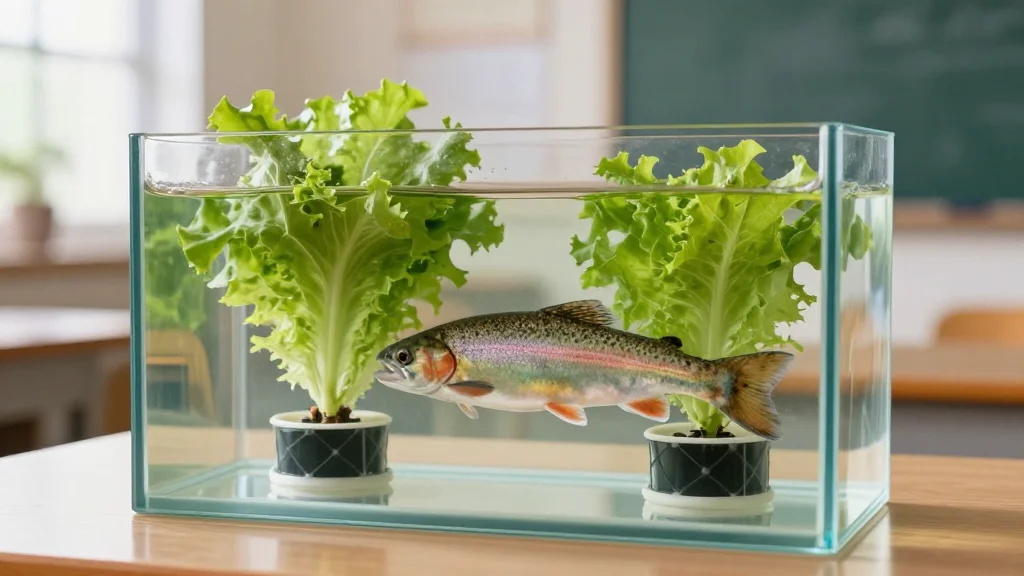
US (NV): RHS Students Enjoy ‘Trout in the Classroom’ with Aquaponics System
Why It Matters
The project provides hands‑on STEM and agricultural training, preparing students for emerging sustainable‑farming careers. It demonstrates how schools can adopt low‑cost, high‑impact aquaponics to enrich curricula and promote environmental stewardship.
Key Takeaways
- •30 trout introduced into RHS classroom aquaponics system
- •FFA students manage daily feeding and water monitoring
- •First year RHS successfully implements live‑fish program
- •Program linked to GerminATE controlled‑environment agriculture training
- •Aquaponics bridges hydroponics and sustainable food education
Pulse Analysis
Aquaponics is gaining traction in K‑12 education as a practical bridge between biology, environmental science, and modern agriculture. By circulating water between fish tanks and plant beds, schools can demonstrate nutrient cycles in real time, turning abstract concepts into tangible experiences. Robertson High School’s adoption of a Trout in the Classroom model showcases how a modest investment—live trout eggs and a simple recirculating system—can transform a standard classroom into a living laboratory, reinforcing curriculum standards while sparking student curiosity.
The partnership with the national Trout in the Classroom program and the GerminATE initiative adds a layer of credibility and resources that many districts lack. Students not only learn fish husbandry but also acquire data‑collection skills, monitoring temperature, dissolved oxygen, and growth rates. These competencies align with emerging workforce demands in controlled‑environment agriculture, hydroponics, and aquaculture, sectors projected to grow as climate‑resilient food production becomes a priority. By embedding these practices early, schools help cultivate a pipeline of technically proficient graduates ready for green‑tech jobs.
Beyond classroom benefits, the aquaponics system contributes to broader sustainability goals. The closed‑loop design reduces water usage compared to traditional farming and provides a source of nutrient‑rich water for indoor plants, potentially yielding fresh produce for school cafeterias. Such integrated systems illustrate circular economy principles, offering a replicable model for districts seeking cost‑effective, curriculum‑aligned sustainability projects. As more schools adopt similar programs, the cumulative impact could accelerate the adoption of environmentally responsible food production methods nationwide.
US (NV): RHS students enjoy ‘Trout in the Classroom’ with aquaponics system
Comments
Want to join the conversation?
Loading comments...