We Can Create Food Systems That Enhance Human & Planetary Health
Why It Matters
Decarbonizing agriculture tackles the largest source of Scope 3 emissions, safeguarding food security while mitigating climate change. The transition directly influences investor risk, regulatory landscapes, and consumer demand for sustainable nutrition.
Key Takeaways
- •Food systems generate ~30% of global GHG emissions.
- •Agrivoltaics and low‑carbon fertilizers can cut farm‑level emissions.
- •Plant‑based diets could free calories for 1.2 billion people.
- •Scope 3 emissions represent roughly 80% of agriculture’s carbon footprint.
Pulse Analysis
Decarbonizing agriculture is no longer a niche ambition; it is a strategic imperative for companies and governments confronting climate risk. While the sector accounts for nearly a third of global emissions, the bulk of its carbon footprint lies in Scope 3 activities—fertilizer production, refrigeration, logistics, and consumer handling. By shifting to renewable‑derived nitrogen fertilizers and integrating circular practices such as composting and digestate reuse, the industry can slash emissions at the source and reduce reliance on fossil‑fuel‑intensive inputs. These low‑carbon pathways also improve soil health, enhance water efficiency, and bolster resilience against extreme weather, delivering tangible agronomic benefits alongside climate gains.
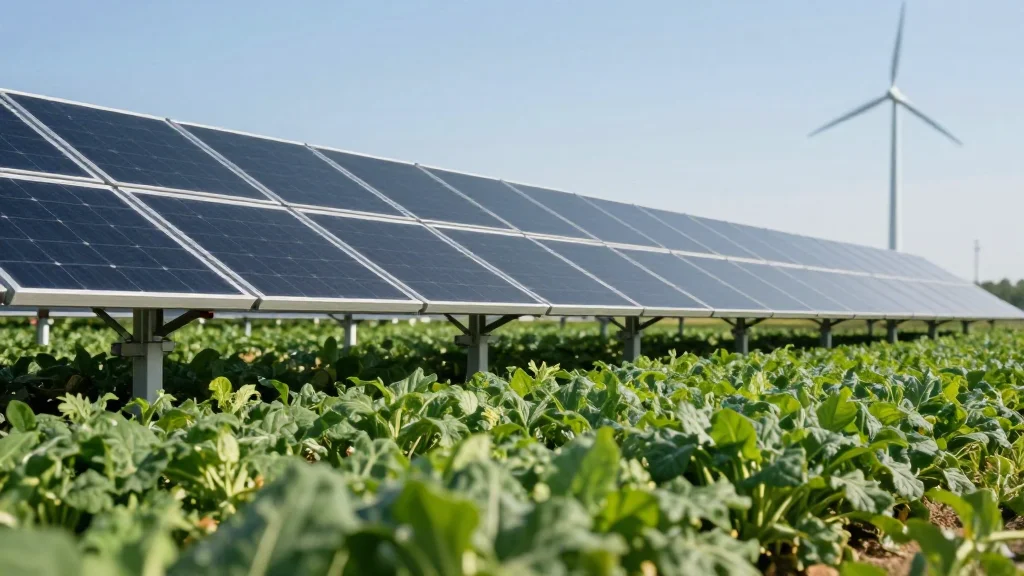
Technology and land‑use innovations are accelerating the transition. Agrivoltaics, which pair solar panels with crops, provide clean electricity for irrigation and machinery while preserving biodiversity. Meanwhile, precision irrigation, drought‑tolerant crop varieties, and smart logistics cut water use and transport emissions. Biofuel policies, such as the EPA’s temporary waiver for higher ethanol blends, illustrate how regulatory levers can promote renewable energy integration without compromising food availability. However, the rise in biofuel feedstock must be balanced against food‑vs‑fuel debates to ensure that calorie conversion for human consumption does not lag behind.
Beyond the environmental calculus, dietary shifts amplify the impact. Modeling by the EAT‑Lancet commission shows that reducing beef consumption to recommended levels could liberate enough calories to feed over a billion people, directly addressing the 800 million currently facing hunger. Plant‑based diets also lower per‑calorie emissions, creating a virtuous cycle of health and sustainability. For policymakers, investors, and agribusiness leaders, the message is clear: aligning food production with climate objectives requires coordinated action across technology, supply‑chain transparency, and consumer education, turning the food system from a carbon liability into a climate solution.
We Can Create Food Systems That Enhance Human & Planetary Health
Comments
Want to join the conversation?
Loading comments...