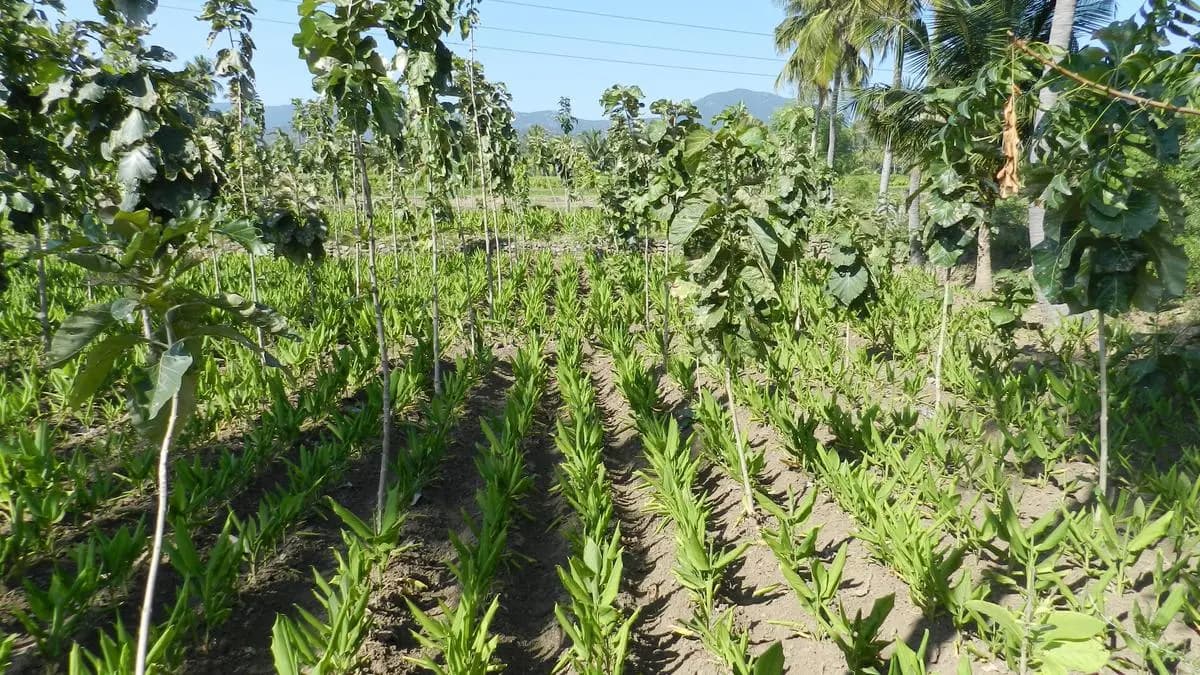
Why Agroforestry Is Key to India’s Twin Goals of Carbon Reduction and Farmer Income Growth
Why It Matters
Scaling agroforestry can simultaneously lower India’s greenhouse‑gas emissions and stabilize smallholder incomes, addressing climate goals and rural poverty. The model also unlocks new carbon‑credit revenues, attracting private investment.
Key Takeaways
- •Agroforestry could cut India's carbon emissions by up to 1.5 billion tonnes
- •Over 1 million saplings distributed, 600k planted on 5,000 acres
- •Smallholder adoption hindered by financing, market access, and input costs
- •FPOs and tailored credit products can bridge upfront investment gaps
- •Corporate carbon‑credit demand creates new revenue streams for farmers
Pulse Analysis
India faces a dual imperative: meeting its enhanced Nationally Determined Contributions while safeguarding the livelihoods of more than 200 million people employed in agriculture. The sector occupies roughly 55 percent of the country’s land area, making it a critical lever for both emissions mitigation and rural development. Traditional afforestation schemes often require dedicated land and long maturation periods, limiting their scalability among smallholders. Agroforestry, by embedding trees within existing farms, offers a pragmatic pathway that aligns climate objectives with the economic realities of India’s predominantly marginal growers.
The ecological upside of agroforestry is substantial. Trees capture carbon, improve soil organic matter, and moderate micro‑climates, which can translate into yield gains for adjacent crops. Economically, farmers tap new revenue streams from timber, fruit, fodder, and increasingly, nature‑based carbon credits. Pilot initiatives have already placed one million saplings across 5,000 acres, with 600,000 trees thriving at no cost to growers, demonstrating that low‑upfront‑cost models can spur rapid uptake. As corporate demand for credible carbon offsets rises, smallholders stand to receive upfront financing that shortens the payback horizon for tree‑based assets.
Despite these advantages, adoption stalls due to financing gaps, limited market linkages, and insufficient extension services. Strengthening Farmer Producer Organisations and designing credit products that match the long‑term nature of tree investments are essential to bridge the upfront cost barrier. Government incentives, such as tax rebates for carbon‑credit sales, combined with private‑sector partnerships that provide technical assistance and guarantee of purchase, can create a virtuous cycle of investment and impact. If scaled, agroforestry could lock in an additional 1‑1.5 billion tonnes of CO₂‑eq sequestration by 2035 while delivering measurable income growth for India’s rural households.
Why Agroforestry is key to India’s twin goals of carbon reduction and farmer income growth
Comments
Want to join the conversation?
Loading comments...