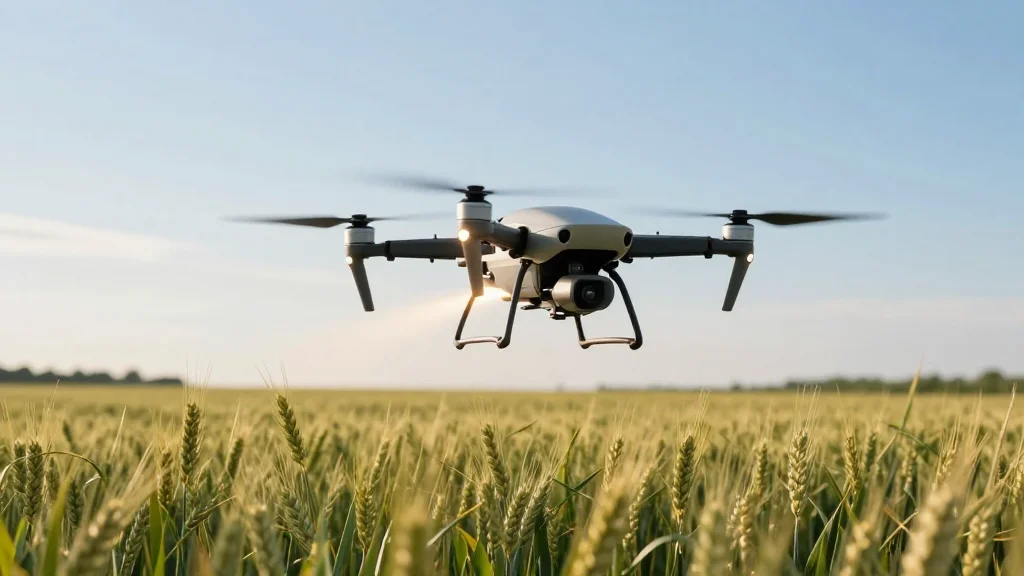
Why Investors Are Moving From Farm Inputs to Drone-Powered Farm Intelligence
Why It Matters
Drone‑enabled precision farming reduces resource waste and operational costs, making agriculture more sustainable and attractive for long‑term capital. The model also creates scalable, recurring revenue streams for investors and rural entrepreneurs.
Key Takeaways
- •India's agri‑drone market projected $2.18 B by 2034
- •Drones cut pesticide use 30‑40% and water use up to 90%
- •Drone‑as‑a‑Service enables pay‑per‑use access for small farms
- •Government schemes have deployed over 1,600 drones to rural groups
- •Investors view drones as infrastructure for recurring agri‑services
Pulse Analysis
India’s agricultural landscape is undergoing a data revolution as fragmented farms adopt drone‑based intelligence. Traditional reliance on seeds, fertilizers and irrigation is giving way to precision tools that can scan acres in minutes, flagging stress signals invisible to the naked eye. For a country where the average farm is just five acres, such granular insight translates into higher productivity without the need for costly machinery, aligning with the broader push for sustainable, resource‑efficient farming.
The investment narrative reflects this operational shift. The agri‑drone sector grew to $302.3 million in 2025 and is forecast to surge to $2.18 billion by 2034, a CAGR of nearly 24%. Growth is fueled by the Drone‑as‑a‑Service (DaaS) model, which lowers capital barriers for marginal farmers and creates a pay‑per‑use revenue stream for startups. Government initiatives like Namo Drone Didi and the Sub‑Mission on Agricultural Mechanization have already placed over 1,600 drones in the hands of women self‑help groups and custom hiring centres, accelerating adoption and building a rural tech workforce.
For investors, drones are no longer a niche gadget but a foundational layer of a broader agri‑tech ecosystem. The technology simultaneously addresses labor shortages, reduces pesticide and water consumption, and opens avenues for data‑led farm management services. As climate volatility intensifies, the ability to make rapid, data‑backed decisions becomes a competitive advantage, positioning drone platforms as long‑term infrastructure assets that can generate recurring revenue and drive sustainable growth across India’s agricultural sector.
Why investors are moving from farm inputs to drone-powered farm intelligence
Comments
Want to join the conversation?
Loading comments...