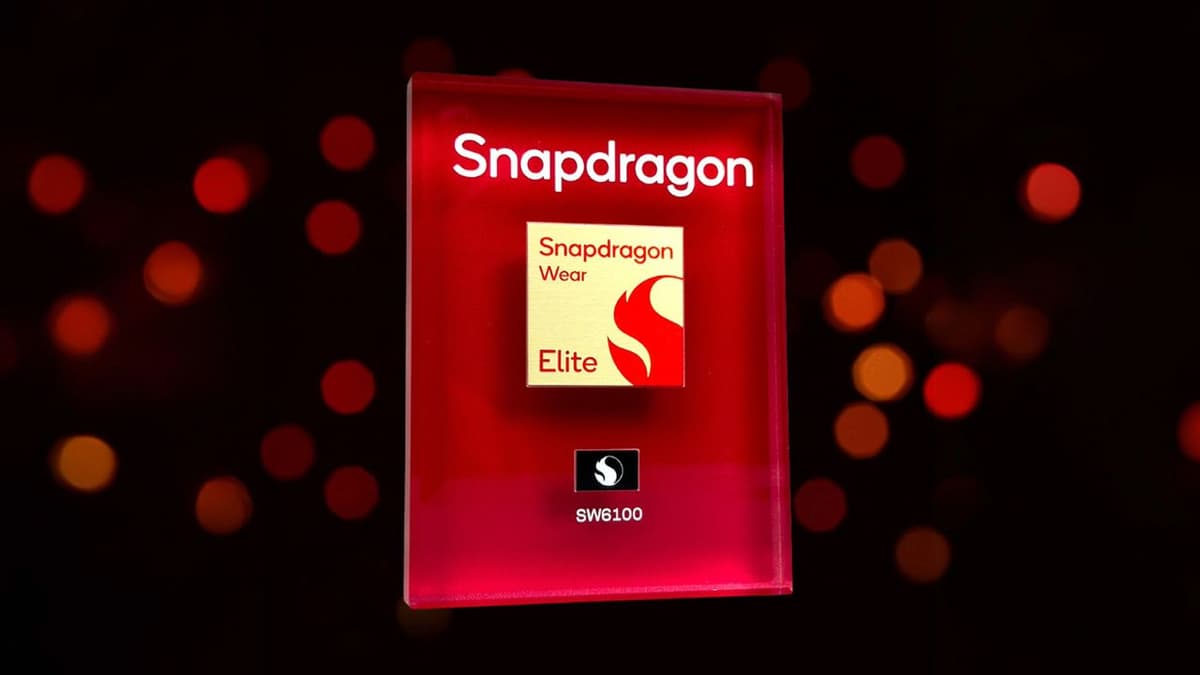
Qualcomm's New Snapdragon Wear Elite Wants to Make AI Wearables Actually Smart
•March 2, 2026
0
Companies Mentioned


Why It Matters
By delivering smartphone‑class AI performance and longer endurance, the Wear Elite could redefine what smartwatches and emerging AI wearables can do, accelerating market adoption and new form factors.
Key Takeaways
- •3nm Snapdragon Wear Elite powers next-gen AI wearables
- •Hexagon NPU handles up to 2 billion AI parameters
- •Claims 5× CPU, 7× GPU, 30% battery boost
- •Integrates 5G RedCap, Bluetooth 6, UWB, satellite NB‑NTN
- •Partners Google, Motorola, Samsung; devices arriving later this year
Pulse Analysis
The wearable market has long lagged behind smartphones in raw compute power, limiting on‑device AI functions such as real‑time language translation or advanced health analytics. Qualcomm’s new Wear Elite chip narrows that gap by leveraging a 3 nm process node and a dedicated Hexagon neural‑processing unit. This architecture enables complex models to run locally, reducing latency and dependence on cloud services, which is crucial for privacy‑sensitive health data and for users in low‑connectivity environments.
Beyond raw performance, the Wear Elite’s heterogeneous design balances power consumption with capability. An eNPU low‑power island handles always‑on tasks like keyword spotting, while the main NPU tackles heavier workloads such as voice‑call echo cancellation. Combined with a five‑core CPU and a GPU promising up to seven‑times faster graphics, the chip delivers up to a 30 % increase in battery life and supports rapid charging. Its connectivity suite—5G RedCap, Bluetooth 6.0, micro‑power Wi‑Fi, UWB, GNSS and NB‑NTN—positions wearables for seamless interaction with IoT ecosystems, precise location services, and even satellite messaging when terrestrial networks fail.
Industry analysts see the Wear Elite as a catalyst for a new generation of AI‑centric wearables, from smarter smartwatches to audio‑only assistants and AR glasses. Qualcomm’s early collaborations with Google, Motorola and Samsung suggest a rapid rollout of flagship devices that will showcase on‑device AI use cases like context‑aware health recommendations and natural‑language interactions. As developers gain access to a more powerful, energy‑efficient platform, the ecosystem is likely to expand, driving competition and innovation across the wearable landscape.
Qualcomm's new Snapdragon Wear Elite wants to make AI wearables actually smart
0
Comments
Want to join the conversation?
Loading comments...