AI Agents: A New Paradigm of Military Decision-Making
Companies Mentioned
Why It Matters
The mesh cuts decision latency, giving militaries faster, more reliable choices and a competitive edge in defense technology.
Key Takeaways
- •Airbus defines ~90 specialized AI agents for tactical tasks.
- •Framework links agents to prevent hallucinations and ensure traceability.
- •Natural‑language commands generate visual maps of data sources.
- •AI agent mesh aims to deliver decision superiority across all force levels.
- •Modular agents automate complex operations without commander expertise.
Pulse Analysis
The surge of data from drones, satellites and cyber sensors has turned modern battlefields into information jungles. Commanders must sift through terabytes of raw inputs to make split‑second calls, a process that strains human cognition. Large‑language models have already proven their worth by summarising reports and suggesting actions, but they remain limited to text generation. Airbus Defence and Space is extending that capability with a network of autonomous AI agents, each engineered for a narrow function such as image selection, sensor fusion or asset tasking. By stitching these agents together, the company creates a dynamic "agent mesh" that can orchestrate complex operational sequences without a single monolithic system.
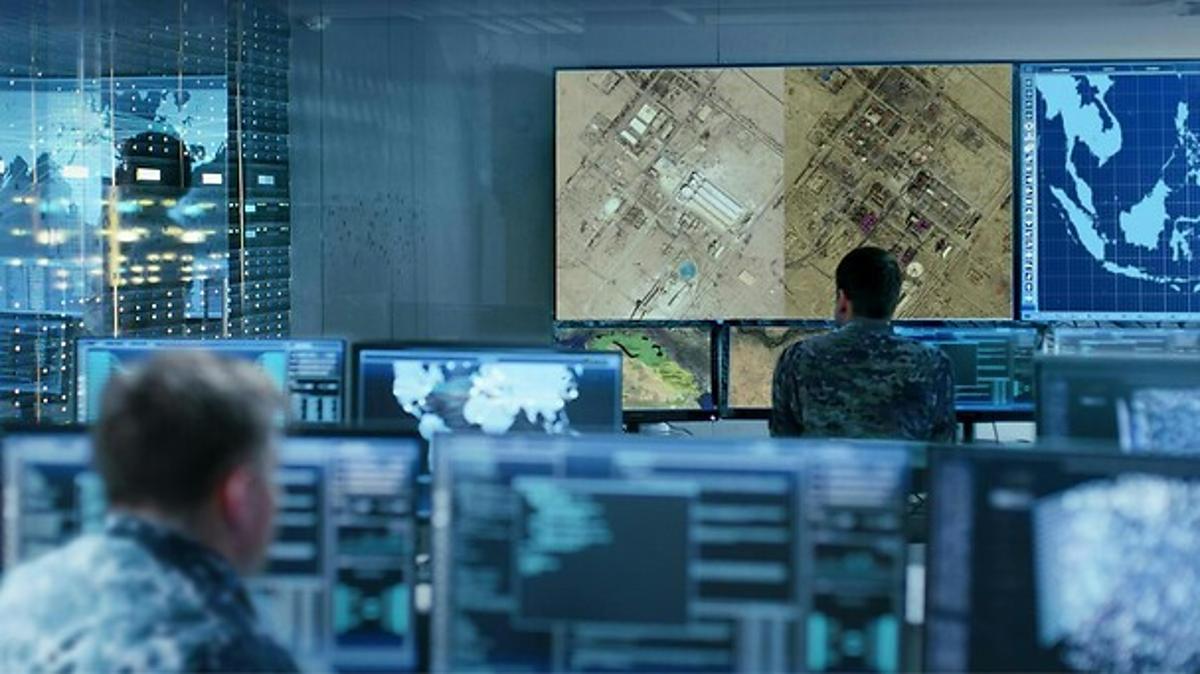
At the heart of Airbus's approach is a proprietary framework that governs how agents discover one another, negotiate responsibilities and share outputs. The architecture emphasizes modularity, traceability and hallucination control—critical safeguards when lives depend on algorithmic recommendations. Instead of a chat window, commanders receive an interactive map that overlays relevant data streams, from aircraft radar to naval AIS feeds, all triggered by a simple natural‑language command. This visual layer not only accelerates situational awareness but also provides an audit trail, allowing analysts to backtrack decisions and validate the AI’s reasoning.
If successful, the AI‑agent mesh could redefine decision superiority, a core tenet of modern warfare. By automating routine analysis and coordinating multi‑domain assets, forces can focus on strategic intent rather than data wrangling. The technology also signals a broader shift in the defense sector, where modular AI platforms may become as ubiquitous as GPS or secure communications. As rival nations invest in similar capabilities, Airbus's early mover advantage could shape procurement standards and set the benchmark for next‑generation command‑and‑control systems.
AI agents: A new paradigm of military decision-making
Comments
Want to join the conversation?
Loading comments...