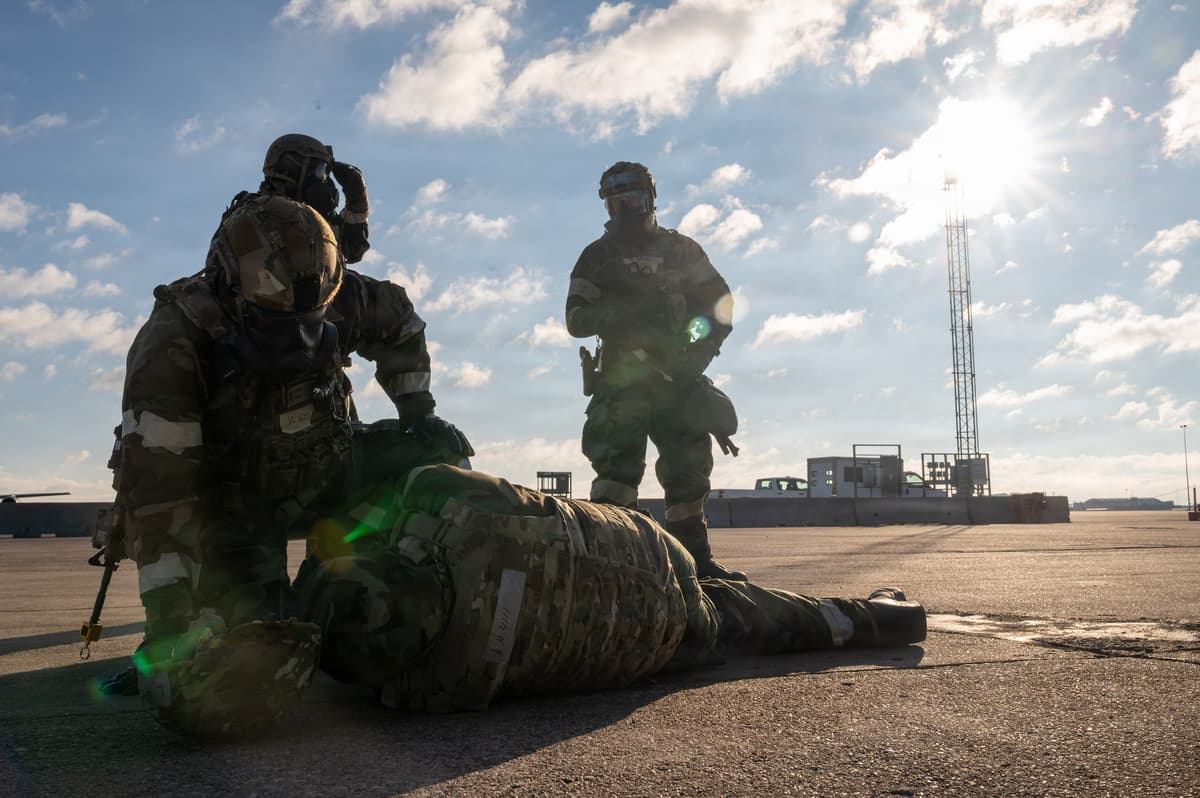
DARPA Launches Search for Robot Medics to Treat Battlefield Casualties
Why It Matters
Rapid, autonomous casualty care could dramatically reduce preventable deaths in future large‑scale combat and expand life‑saving capabilities to disaster zones, reshaping both military and emergency‑response logistics.
Key Takeaways
- •DARPA seeks autonomous swarm robots to drag and treat wounded soldiers
- •Robots must move casualties 10 meters or combine strength via swarming
- •Desired capabilities include self‑assembling tourniquets for rapid hemorrhage control
- •Prototype testing will use perfused cadavers, animal models, or high‑fidelity phantoms
- •Civilian applications envisioned for collapsed‑building rescues and hazardous‑material incidents
Pulse Analysis
The push for robot medics stems from a stark gap in current battlefield medical logistics. Large‑scale combat operations generate casualty volumes that outpace traditional medevac and combat‑life‑saver teams, leading to delayed hemorrhage control—a leading cause of preventable death. DARPA’s solicitation targets this vulnerability by leveraging recent breakthroughs in swarm robotics, self‑assembly, and autonomous medical devices, aiming to deliver immediate, point‑of‑need interventions that can buy critical minutes for evacuation.
Technically, the program demands a versatile platform that can navigate rugged terrain, assess injuries, and physically manipulate a casualty. Swarm capability allows multiple modest‑size bots to combine forces, either to pull a soldier onto a litter or to wrap around a limb and apply a smart tourniquet. Integration with unmanned ground vehicles promises a seamless handoff from autonomous medic bots to larger evacuation platforms. Phase‑one labs will validate core functions on manikins, while phase‑two escalates to realistic testing with perfused cadavers or high‑fidelity phantoms, ensuring compliance with FDA manufacturing standards.
Beyond the battlefield, the technology could revolutionize civilian emergency response. In collapsed‑building scenarios, chemical spills, or fire zones where human access is hazardous, swarming medic bots could deliver hemorrhage control and basic life support until human responders arrive. This dual‑use potential opens a sizable market for defense contractors and medical‑device firms, spurring investment in modular, lightweight robotic kits that fit into standard first‑aid packs or can be air‑dropped. As autonomous systems mature, the line between military and civilian rescue capabilities will blur, accelerating adoption across sectors.
DARPA launches search for robot medics to treat battlefield casualties
Comments
Want to join the conversation?
Loading comments...