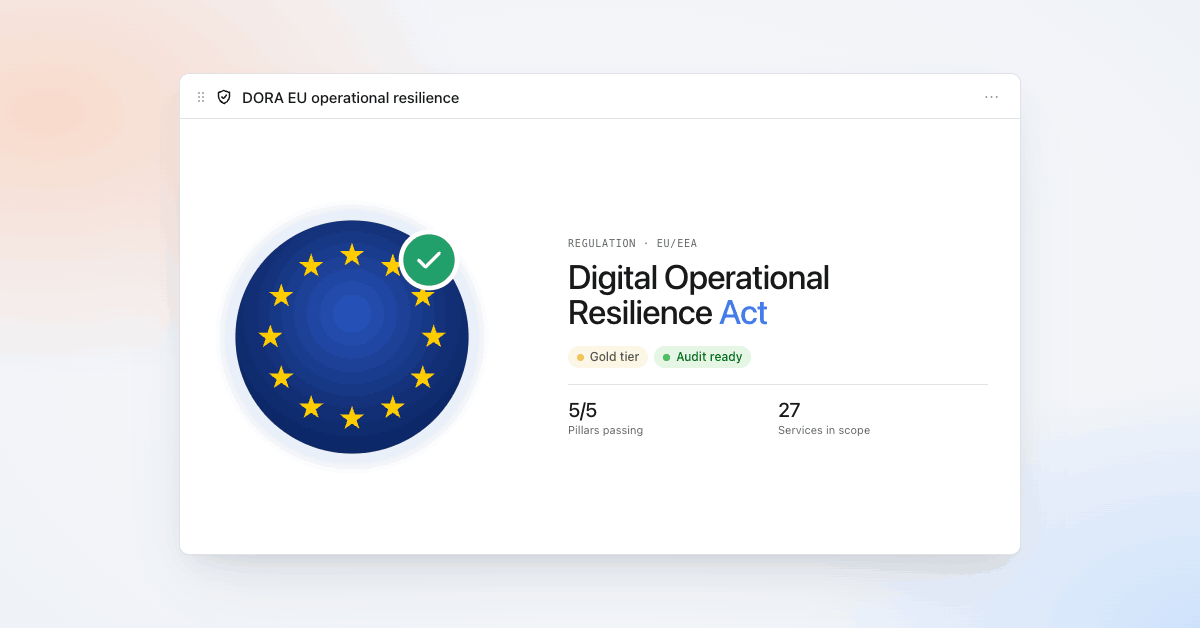
EU DORA Compliance for Engineering Teams
Why It Matters
Non‑compliance risks massive fines and regulatory sanctions, while automated DORA readiness streamlines audit cycles and protects operational continuity for EU‑based financial tech firms.
Key Takeaways
- •DORA mandates live ICT asset inventory for EU financial tech firms
- •Incident response must be automated and reported within 24‑hour window
- •Port offers a unified software catalog and real‑time compliance scorecards
- •Automated workflows reduce audit preparation from weeks to hours
- •Continuous third‑party mapping limits supply‑chain risk under DORA
Pulse Analysis
The EU’s Digital Operational Resilience Act marks a watershed for financial‑services technology, shifting compliance from a periodic paperwork exercise to a continuous, data‑driven mandate. By requiring a real‑time, auditable picture of every service, API and third‑party link, DORA forces firms to embed resilience into the software development lifecycle. The regulation’s steep penalties—up to 2 % of worldwide turnover—make it a top‑priority for any organization that processes EU financial transactions, compelling senior leaders to align engineering practices with regulatory expectations.
Engineering teams often stumble because critical knowledge is siloed across wikis, spreadsheets and individual expertise. Without a single source of truth, responding to auditor requests or incident alerts becomes a manual, error‑prone process that can stretch weeks. The four DORA pillars—ICT risk management, incident reporting, operational resilience testing, and third‑party risk oversight—each demand automated data collection, continuous monitoring, and auditable workflows. Companies that rely on ad‑hoc documentation risk missing reporting windows, exposing themselves to fines and reputational damage.
Port’s platform tackles these challenges by turning the software ecosystem into a live, queryable catalog. Integrated with tools like GitHub, Jira, PagerDuty and Datadog, it automatically inventories services, scores them against custom compliance criteria, and triggers remediation tickets when gaps appear. Incident‑response orchestration shortens detection‑to‑reporting cycles, while a contextual dependency lake visualizes third‑party blast radii. The result is a dramatic reduction in audit preparation time—from weeks to hours—while delivering the continuous evidence DORA requires, enabling financial‑services firms to focus on innovation rather than paperwork.
EU DORA compliance for engineering teams
Comments
Want to join the conversation?
Loading comments...