IRS-CI Uses Bank Filings in Nearly All Criminal Investigations
•February 24, 2026
0
Companies Mentioned

Why It Matters
Leveraging BSA data dramatically boosts IRS‑CI’s ability to detect and prosecute tax crimes, protecting revenue and deterring financial misconduct.
Key Takeaways
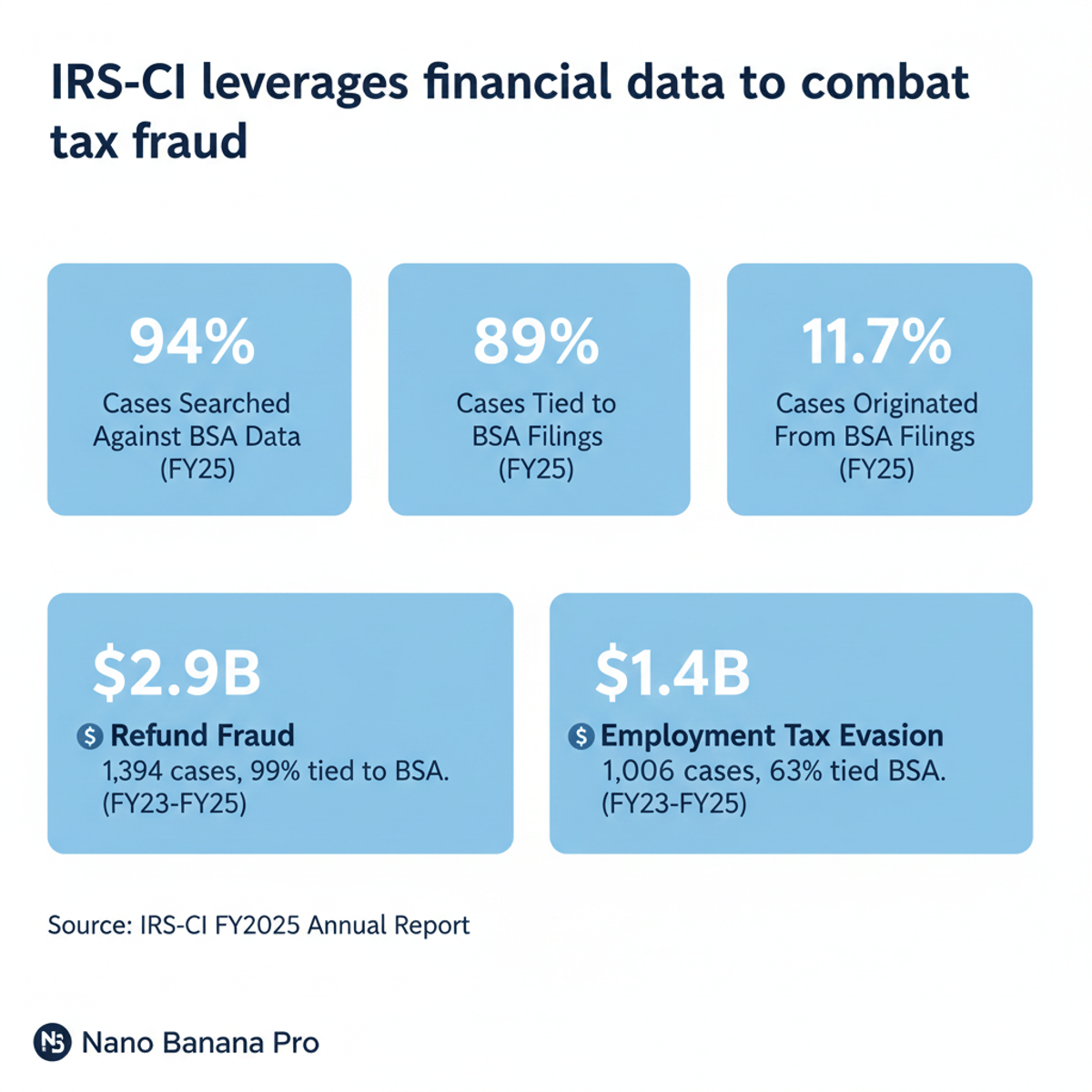
- •94% of cases searched against BSA data.
- •Over 3.9 million BSA filings examined.
- •$2.9 billion refund fraud uncovered.
- •98% conviction rate for BSA‑linked investigations.
- •CI‑FIRST partnership modernizes bank cooperation.
Pulse Analysis
The Internal Revenue Service’s Criminal Investigation division has turned the Bank Secrecy Act database into a cornerstone of its investigative toolkit. By cross‑referencing more than 3.9 million filings in fiscal year 2025, agents can flag suspicious activity far earlier than traditional audit triggers. This data‑driven approach mirrors broader government efforts to harness financial‑institution reporting for anti‑money‑laundering and tax‑evasion purposes. As the volume of electronic payments grows, the BSA’s structured reports—such as suspicious activity reports (SARs) and currency transaction reports (CTRs)—provide a granular, real‑time view of cash flows that would otherwise remain opaque.
The payoff is evident in the division’s performance metrics. Cases anchored to BSA filings achieved a 98 % conviction rate and yielded average prison terms of 42 months, alongside more than $450 million in asset forfeitures and nearly $500 million in victim restitution. Such outcomes reinforce the fiscal impact of robust data sharing: refund‑fraud investigations alone recovered $2.9 billion, while employment‑tax evasion probes uncovered $1.4 billion. High conviction rates also send a deterrent signal to potential offenders, encouraging better compliance and reducing the long‑term cost of tax fraud to the Treasury.
To sustain this momentum, IRS‑CI has launched public‑private initiatives like CI‑FIRST and the Optimizing Financial Records Request (OFRR) program. By providing banks with feedback on BSA reporting quality and standardizing subpoena processes, the agency shortens investigative timelines and improves the accuracy of the data it receives. Collaboration with the American Bankers Association and FinCEN further aligns industry best practices with enforcement goals. As these partnerships mature, financial institutions can expect clearer guidance, while regulators gain a more predictable pipeline of actionable intelligence, ultimately strengthening the nation’s financial crime defense.
IRS-CI uses bank filings in nearly all criminal investigations
0
Comments
Want to join the conversation?
Loading comments...