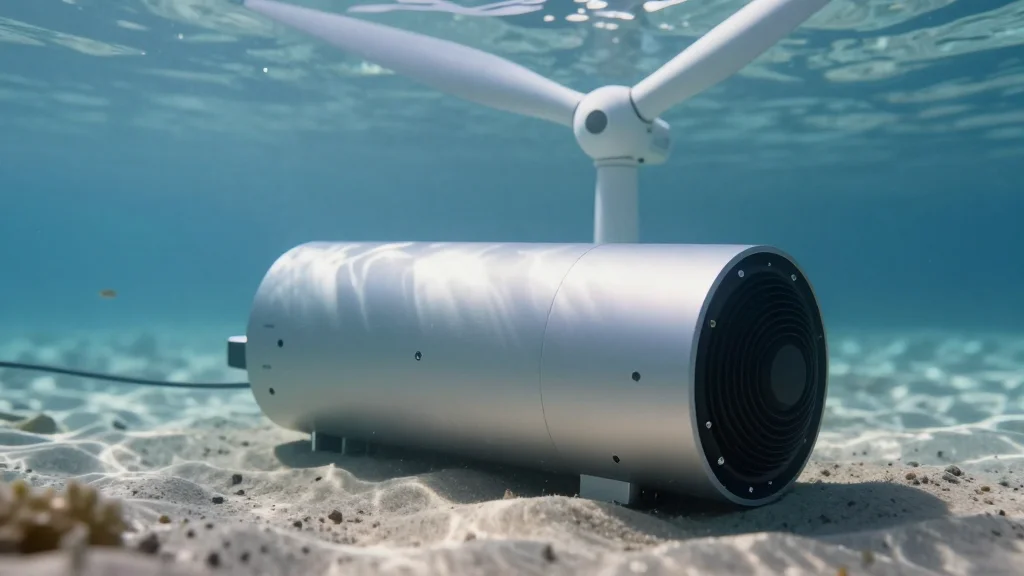
China Launches $228 Million Wind‑Powered Underwater Data Center Off Shanghai

Companies Mentioned
Why It Matters
The Lingang data center illustrates a new frontier for big‑data infrastructure: marrying renewable energy with oceanic cooling to slash operational costs and land consumption. If the model scales, it could redefine site selection criteria for hyperscale operators, especially in densely populated coastal regions where land is scarce and power grids are strained. Beyond cost savings, the project forces the industry to confront marine‑environment stewardship. Successful mitigation of thermal impacts could set a precedent for regulatory frameworks governing offshore compute facilities, influencing how governments balance digital growth with ecological preservation.
Key Takeaways
- •HiCloud’s underwater data center launched in May 2026, costing $228 million
- •Facility houses ~2,000 servers and draws 24 MW from a 50‑turbine offshore wind farm
- •Projected electricity use equals that of 20,000 U.S. homes per year
- •Earlier 2023 Hainan modules saved ~26,000 tons of water and cut emissions equivalent to removing 600 cars
- •HiCloud plans a 500‑MW underwater data center, potentially supporting dozens of hyperscale sites
Pulse Analysis
China’s plunge into underwater, wind‑powered compute marks a strategic pivot away from traditional, land‑intensive data‑center models that dominate the global market. The $228 million investment signals that Chinese firms are willing to allocate capital to experimental architectures when the payoff—lower energy bills, reduced freshwater demand, and a smaller geographic footprint—aligns with national sustainability goals.
Historically, big‑data operators have chased cheap electricity in regions with abundant coal or hydro power, often at the expense of environmental externalities. By contrast, HiCloud’s approach leverages two renewable vectors—offshore wind and seawater cooling—potentially delivering a more predictable cost structure as wind‑energy prices continue to fall. The move also mirrors a broader industry trend toward edge‑proximate compute; locating servers near coastal population centers reduces latency while sidestepping the real‑estate constraints that plague inland sites.
However, the model’s scalability hinges on resolving ecological concerns. Thermal plumes, even modest ones, could trigger regulatory scrutiny that slows deployment. If HiCloud can demonstrate robust monitoring and mitigation, it may unlock a template for other nations with extensive coastlines, from the United States to Japan. In that scenario, the underwater data‑center could become a competitive differentiator, reshaping vendor negotiations, influencing cloud‑service pricing, and prompting a wave of maritime‑infrastructure patents. The next few years will test whether the ocean can sustain the data deluge without compromising its own health.
China Launches $228 Million Wind‑Powered Underwater Data Center off Shanghai
Comments
Want to join the conversation?
Loading comments...