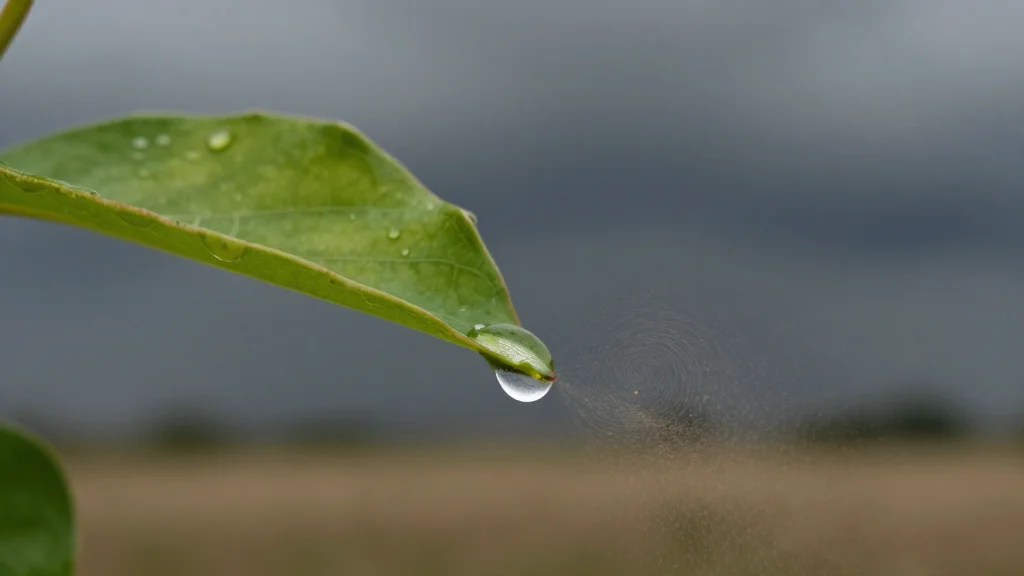
Chinese Study Finds Dust Storms Drive Extreme Rainfall via Ice‑Nucleating Effect

Why It Matters
The discovery that dust storms can trigger heavy rainfall reshapes how scientists and policymakers view aerosol‑cloud interactions. By quantifying dust’s ice‑nucleating capacity, the study provides a missing piece in climate‑model equations that have struggled to reproduce observed precipitation extremes. This could lead to more reliable forecasts of floods and droughts, directly affecting disaster‑response budgeting and agricultural planning in vulnerable regions. Beyond immediate weather prediction, the work illustrates the power of big‑data analytics in climate science. Processing decades of global satellite imagery, precipitation records and high‑resolution simulations required petabyte‑scale computing resources, demonstrating that large‑scale data integration can uncover hidden climate drivers that were previously obscured by noise.
Key Takeaways
- •Dust particles act as efficient ice nuclei, boosting precipitation efficiency by up to 30 % in simulations
- •Four‑decade dataset shows a ~10‑year oscillation in dust events, each followed by higher weekly rainfall
- •Study combines satellite dust observations, global precipitation data and high‑precision numerical modeling
- •Findings challenge the view of dust storms solely as natural disasters, highlighting a climate‑feedback role
- •Implications for climate models, flood forecasting and water‑resource management across arid regions
Pulse Analysis
The Lanzhou‑led study arrives at a moment when climate‑model uncertainty around aerosol effects remains a major source of forecast error. Historically, mineral dust has been treated as a passive tracer, but Liu Yuzhi’s team demonstrates that dust actively modifies cloud microphysics. This aligns with a broader trend in Earth‑system science where big‑data pipelines—leveraging satellite constellations, AI‑driven pattern recognition and ensemble simulations—are uncovering non‑linear feedbacks that were previously invisible.
From a market perspective, the research could stimulate demand for next‑generation remote‑sensing platforms and high‑performance computing services. Companies that provide cloud‑based climate analytics, such as AWS and Microsoft Azure, may see increased uptake from national meteorological agencies seeking to ingest petabyte‑scale dust datasets. Moreover, the findings could influence insurance underwriting for flood risk, prompting actuaries to incorporate dust‑driven precipitation spikes into loss models.
Looking ahead, the key question is whether dust‑induced precipitation can be harnessed for weather‑modification programs. China already operates a weather‑modification centre; integrating dust‑nucleation science could refine seeding strategies, potentially turning a natural phenomenon into a tool for drought mitigation. However, the ethical and ecological ramifications of deliberately amplifying dust emissions will need careful scrutiny, especially as industrial activities continue to alter aerosol compositions worldwide.
Chinese Study Finds Dust Storms Drive Extreme Rainfall via Ice‑Nucleating Effect
Comments
Want to join the conversation?
Loading comments...