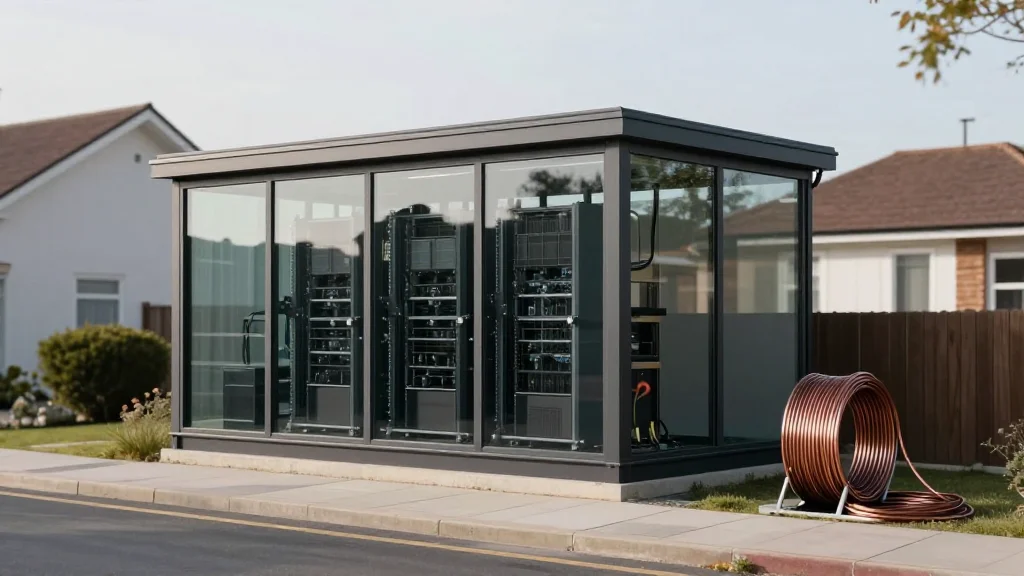
Data Center Boom Hits US Suburbs, Triggers $500M Sale Proposal and Copper Theft Surge

Companies Mentioned
Why It Matters
The suburban data‑center expansion signals a shift in where the computational horsepower that fuels AI and big‑data analytics is located. By moving massive facilities closer to population centers, providers can reduce latency but also place unprecedented loads on local power grids, water supplies, and real‑estate markets. The $500 million offer in Virginia illustrates how the financial incentives can outweigh community resistance, potentially reshaping suburban landscapes across the United States. At the same time, the copper‑theft spike underscores a hidden supply‑chain vulnerability. As data centers consume more copper for power and cooling, theft not only raises operational costs but also threatens the reliability of critical communications infrastructure. Addressing these intertwined challenges will require coordinated policy responses, from zoning reforms to enhanced security measures, to ensure that the growth of big‑data capabilities does not come at the expense of public safety or community stability.
Key Takeaways
- •Mital Gandhi proposes a $4.4 million‑per‑acre, $500 million deal to sell 143 homes in Ashburn, VA to a data‑center developer.
- •Loudoun County’s "Data Center Alley" hosts roughly 200 data centers, the world’s highest concentration.
- •71% of Americans oppose a data center built near their homes, according to a Gallup survey.
- •AT&T recorded over 10,400 copper‑theft incidents in 2023, with 7,000 in California alone.
- •Copper prices have roughly doubled in the past year, a trend linked to AI‑driven data‑center construction.
Pulse Analysis
The data‑center migration into U.S. suburbs marks a strategic pivot for cloud providers seeking lower land costs and proximity to fiber networks, but it also forces municipalities to confront infrastructure bottlenecks that were traditionally managed at the municipal or regional level. Historically, data centers clustered in industrial parks far from residential zones; the current trend reflects the relentless demand for low‑latency AI services, which can justify higher electricity rates and the construction of dedicated substations. This creates a feedback loop: as more power‑intensive AI workloads emerge, utilities must upgrade capacity, which in turn attracts additional data‑center projects.
The copper‑theft phenomenon adds a supply‑chain dimension that is often overlooked in discussions of big‑data growth. Copper is a critical conduit for the massive power draws of AI‑focused facilities, and its price volatility directly influences both construction budgets and operational risk. Companies like AT&T are now forced to allocate resources to security and loss‑prevention, potentially passing costs onto consumers. Policymakers could mitigate this risk by incentivizing alternative materials, such as aluminum or advanced composites, and by tightening penalties for metal theft.
Looking ahead, the outcome of Gandhi’s proposal could set a market precedent. If the community accepts the bulk sale, other homeowner associations may follow, accelerating the conversion of suburban land into data‑center campuses. Conversely, strong community pushback could prompt stricter zoning regulations, slowing the pace of expansion and encouraging providers to invest in retrofitting existing industrial sites. The balance between economic incentives, infrastructure capacity, and community acceptance will define the next phase of the big‑data ecosystem’s physical footprint.
Data Center Boom Hits US Suburbs, Triggers $500M Sale Proposal and Copper Theft Surge
Comments
Want to join the conversation?
Loading comments...