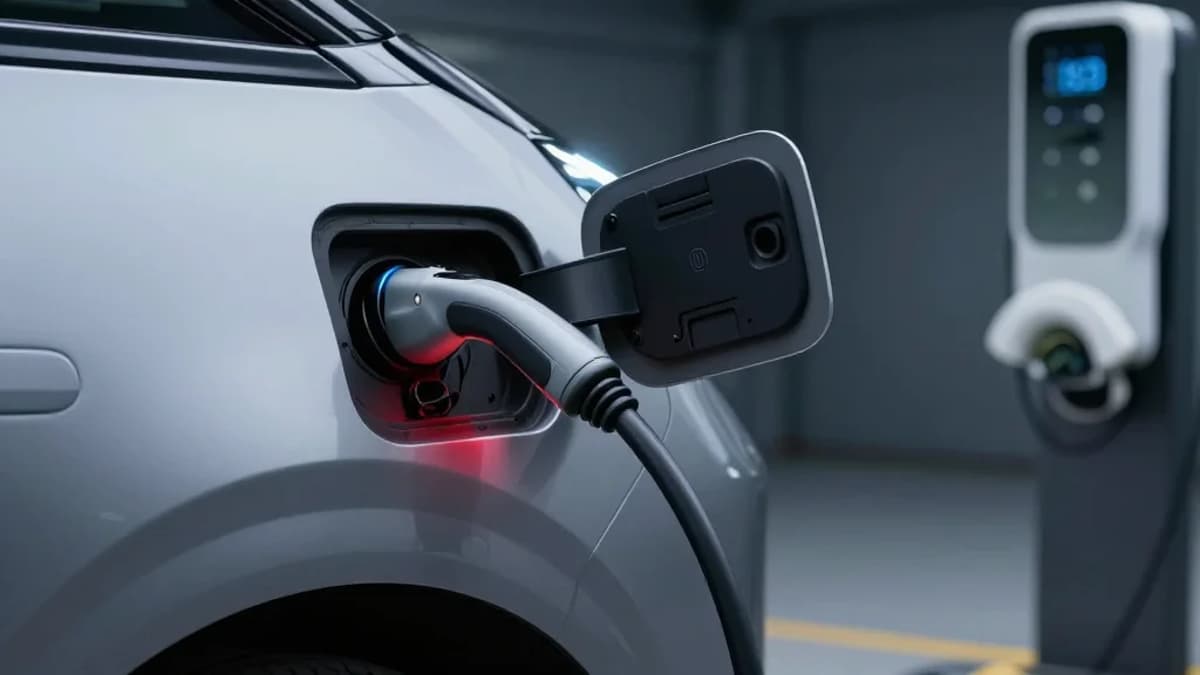
Accelerated degradation raises total‑cost‑of‑ownership for EV owners and fleets, influencing charging‑network strategy and battery‑management design.
The Geotab telematics study, covering more than 22,700 electric vehicles across 21 models, provides the most comprehensive look yet at how ultra‑fast charging reshapes battery health. Vehicles that routinely used DC chargers above 100 kW lost capacity at roughly 2.5 percent per year, about twice the 1.2‑1.5 percent rate observed for drivers who favored Level 2 stations. The data reveal a clear threshold: once more than 12 percent of all charging events exceed 100 kW, degradation accelerates sharply. This finding quantifies the trade‑off between convenience and long‑term range.
The underlying chemistry explains the speed of wear. Pushing 100 kW or more forces lithium ions to plate on the anode, a process that reduces active material and shrinks usable capacity. While both lithium‑iron‑phosphate (LFP) and nickel‑manganese‑cobalt (NMC) packs suffer, LFP cells exhibit a noticeably slower fade under the same stress, making them a better fit for high‑turnover fleets. Temperature compounds the effect: ambient heat above 77 °F adds roughly 0.4 percent annual loss, and sub‑freezing fast charges can cause irreversible structural damage despite modern pre‑conditioning systems.
For owners and fleet managers, the study translates into actionable guidance. Maintaining state‑of‑charge between 20 % and 80 % and limiting ultra‑fast sessions to occasional top‑ups can extend battery life by years, preserving resale value and reducing total‑cost‑of‑ownership. Infrastructure planners should balance the rollout of 150‑kW superchargers with mid‑power stations to give drivers flexibility without imposing unnecessary wear. As battery management systems become more sophisticated, future EVs may automatically modulate charge power based on temperature, chemistry, and usage patterns, mitigating the degradation penalty while keeping the convenience of rapid recharging.
The takeaway: A decade into the era of electric mobility, one question still divides drivers and engineers alike: how much does fast charging really cost the battery? A new large‑scale analysis from telematics firm Geotab offers one of the clearest answers yet, showing that EV battery packs age significantly faster when high‑power charging becomes routine.
The firm analyzed data from more than 22,700 vehicles across 21 models and found a striking pattern: batteries subjected to frequent charging sessions above 100 kilowatts degraded at roughly twice the rate of those primarily using lower‑power options such as Level 2 chargers.
While the typical EV experiences about 2.3 percent capacity loss per year, vehicles that rely heavily on ultra‑fast DC charging show up to 2.5 percent annual degradation. The same models, when fast‑charged sparingly, degraded at a rate closer to 1.5 percent per year. The threshold appears when more than 12 percent of total charging sessions occur at those high‑power stations.
The 100 kW figure is significant because it marks the point at which charging ceases to be merely “fast” and becomes electrochemically aggressive. Forcing electrons into cells at that rate accelerates what battery scientists call lithium plating, a buildup of metallic lithium on the anode instead of proper ion diffusion throughout the electrode.
The process reduces the number of available charge carriers, effectively shrinking the battery’s usable capacity over time. This phenomenon affects both major lithium‑ion chemistries – lithium iron phosphate (LFP) and nickel manganese cobalt (NMC) – but the study found that LFP batteries hold up noticeably better under the stress of ultra‑fast charging.
The analysis also underscores that climate plays a meaningful role. In regions where average temperatures exceed 77 °F, degradation increases by roughly 0.4 percent per year. At the other extreme, attempting to fast‑charge below freezing can cause permanent structural damage, which is why preconditioning systems – now standard in most EVs – are critical to maintaining long‑term cell health.
Interestingly, Geotab’s longitudinal dataset shows that after the initial drop, most EV batteries stabilize at around a 1.4 percent annual degradation rate, suggesting that early wear levels off after the first few years.
Battery Management Systems appear to be doing their job, keeping charge levels, thermal profiles, and cell balance within safe margins. Drivers still influence those curves, however. The research found that packs that spend most of their time below 20 percent or above 80 percent state of charge experience noticeably faster decline, adding another reason to stay within moderate ranges when possible.
Vehicle type also makes a difference. Multi‑purpose vehicles and delivery vans – often operating under heavy loads and more aggressive duty cycles – averaged 2.7 percent annual capacity fade, compared to two percent for light passenger cars. Yet across all categories, the takeaway is simple: the faster and hotter you charge, the more capacity you give up over time.
To be clear, Geotab’s analysis does not suggest EV drivers should abandon high‑speed chargers entirely. The convenience of a 20‑minute recharge during long trips remains essential to electric mobility, especially as charging networks expand worldwide. Rather, the data serves as a reminder that convenience comes at a measurable cost, and that moderating fast‑charging habits – even slightly – can extend usable battery life by years.
Comments
Want to join the conversation?
Loading comments...