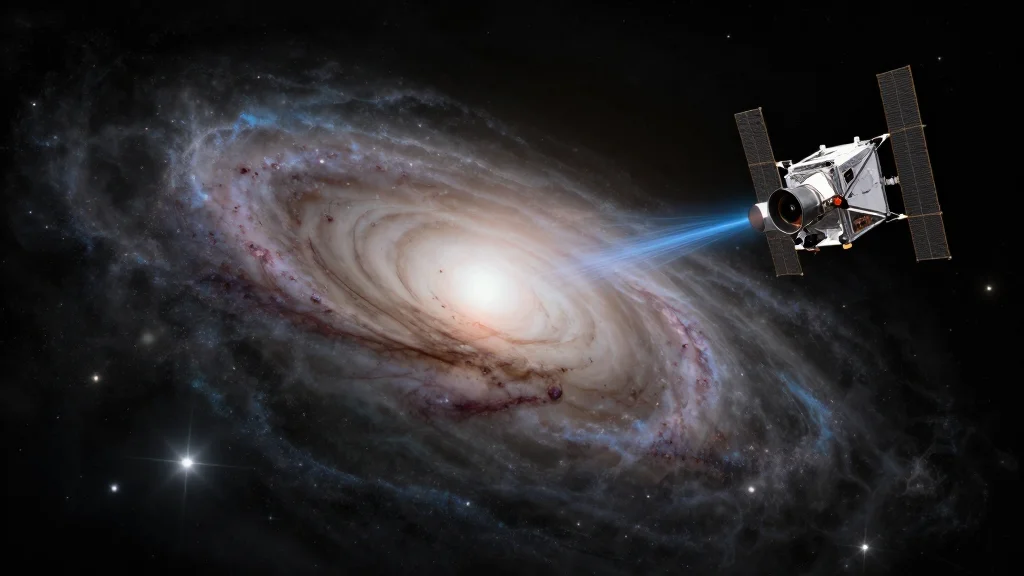
JWST’s ‘Red Monster’ Galaxy Pushes Early-Universe Limits, Highlights Big-Data Crunch

Why It Matters
The detection of a mature, dust‑rich galaxy at such an early epoch forces a reassessment of the timeline for star formation, metal enrichment, and dust production in the universe. If galaxies could assemble and enrich themselves within 400 million years, theoretical models of cosmic evolution must accommodate faster cooling, more efficient star‑burst cycles, or alternative dust‑creation pathways. Beyond the scientific implications, the discovery showcases the indispensable role of big‑data technologies in frontier research. The ability to ingest, process, and analyze terabytes of high‑resolution space‑telescope data in a matter of weeks demonstrates how data‑intensive pipelines have become as critical as the instruments themselves. This paradigm shift is likely to drive investment in scalable cloud infrastructure, AI‑assisted analysis tools, and collaborative data repositories across the scientific ecosystem.
Key Takeaways
- •JWST identified galaxy EGS‑z11‑R0 at ~400 Myr after the Big Bang, a record for dust‑rich systems.
- •The discovery required processing several terabytes of JWST imaging and spectroscopic data.
- •Pieter van Dokkum, Yale astrophysicist, highlighted the rapidity of dust formation in a quote.
- •Study led by Giulia Rodighiero (University of Padua) used the Dawn JWST Archive to locate the galaxy.
- •Findings may accelerate funding for big‑data pipelines and cloud‑based analytics in astronomy.
Pulse Analysis
The EGS‑z11‑R0 discovery is a textbook example of how the bottleneck in modern astronomy has shifted from photon collection to data handling. JWST’s unprecedented sensitivity generates raw datasets that quickly outpace the storage and processing capacities of many research groups. The fact that Rodighiero’s team could isolate a single, anomalous object from terabytes of public data underscores the maturity of open‑access archives and the democratization of high‑performance analytics.
Historically, breakthroughs in cosmology have hinged on incremental improvements in telescope aperture or detector efficiency. Today, the competitive edge lies in algorithmic sophistication and compute elasticity. Cloud providers are already courting astrophysics labs with specialized GPU instances for spectral fitting and deep‑learning classification. As the volume of JWST data grows toward the petabyte scale, we can expect a surge in partnerships between observatories and tech firms, mirroring trends seen in genomics and climate science.
Looking forward, the scientific community must grapple with two intertwined challenges: validating extraordinary claims from massive data sweeps and ensuring that the infrastructure to support such analyses remains sustainable. Peer review will need to incorporate reproducibility checks that verify data pipelines, while funding agencies must balance investments in hardware with support for open‑source software ecosystems. If these issues are addressed, the era of data‑driven discovery inaugurated by the ‘red monster’ could accelerate our understanding of the universe’s first billion years, while simultaneously reshaping the economics of big‑data research.
JWST’s ‘Red Monster’ Galaxy Pushes Early-Universe Limits, Highlights Big-Data Crunch
Comments
Want to join the conversation?
Loading comments...