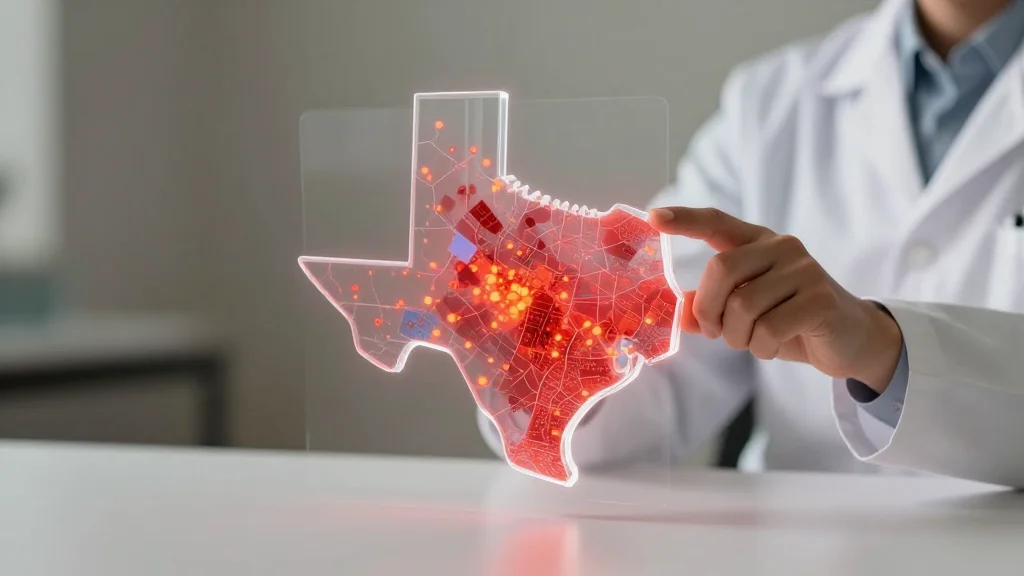
Pitt Researchers Leverage Big‑Data Model to Forecast Texas Measles Outbreak

Why It Matters
The successful use of the FRED big‑data model in Texas demonstrates that high‑resolution, data‑driven forecasting can directly influence public‑health decision‑making, potentially reducing morbidity and mortality during outbreaks. By proving that granular vaccination and mobility data can be synthesized into actionable risk maps, the study paves the way for broader adoption of predictive analytics across state and federal health agencies, accelerating response times and optimizing resource allocation. Moreover, the initiative highlights a growing intersection between data science and epidemiology, where the ability to process terabytes of heterogeneous data becomes a public‑health asset. As governments grapple with increasingly complex disease dynamics, the Pitt model offers a replicable framework that could become a cornerstone of national disease‑surveillance strategies, influencing funding priorities and regulatory standards for data sharing and privacy.
Key Takeaways
- •Pitt's FRED model forecasted a 2025 Texas measles outbreak that infected >800 people and caused 2 deaths.
- •Simulations combined vaccination rates, demographics, population density and commuting patterns.
- •The model’s visualizations helped Texas lawmakers target vaccination campaigns in high‑risk clusters.
- •Previous applications in California raised measles immunization to 96%, surpassing herd‑immunity thresholds.
- •Pitt team seeks to integrate FRED with CDC’s BioSense platform for nationwide, near‑real‑time outbreak alerts.
Pulse Analysis
The Texas case marks a turning point in how public‑health agencies leverage big‑data tools. Historically, disease surveillance relied on lagging indicators—hospital admissions, lab reports, and manual case tracing. FRED flips that paradigm by ingesting real‑time data streams and producing forward‑looking risk maps. This shift mirrors the broader data‑economy trend where predictive analytics are becoming a competitive advantage, not just a research curiosity.
From a market perspective, the success of FRED could catalyze a wave of investment into health‑data platforms. Venture capitalists have already earmarked $1.2 billion for health‑tech analytics in 2026, and a proven public‑sector use case like Texas may accelerate corporate partnerships, especially with cloud providers offering HIPAA‑compliant data pipelines. However, the model also surfaces tension between public‑health imperatives and privacy concerns. The granular mobility data that powers FRED must be anonymized and governed under strict protocols, a challenge that could slow adoption unless clear regulatory frameworks emerge.
Looking forward, the integration of FRED with national systems such as CDC’s BioSense could create a unified early‑warning network capable of detecting not only measles but also novel pathogens. If the upcoming Midwest pilot validates the model’s performance against seasonal flu, we may see a cascade of state‑level deployments, standardizing predictive epidemiology as a core component of emergency preparedness. The key question remains: can the industry balance the need for detailed data with the public’s expectation of privacy, and will policymakers allocate sustained funding to keep these analytics engines operational beyond the next crisis?
Pitt Researchers Leverage Big‑Data Model to Forecast Texas Measles Outbreak
Comments
Want to join the conversation?
Loading comments...