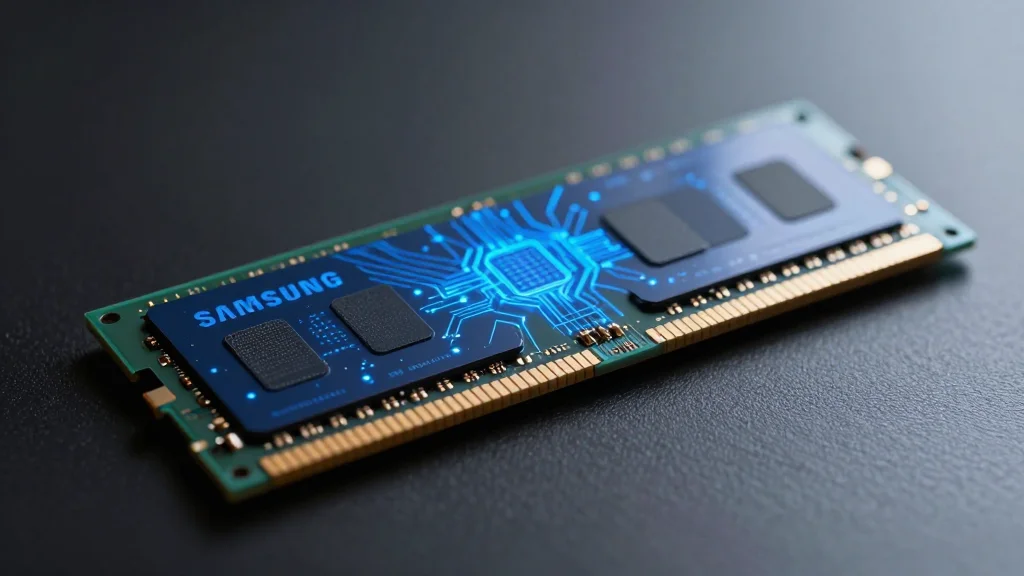
Samsung Shifts Focus to AI‑Driven Data‑Center Memory and Storage

Companies Mentioned
Why It Matters
Samsung’s strategic shift underscores how AI is redefining the hardware priorities of the world’s largest semiconductor firms. By moving resources toward data‑center memory and storage, Samsung is positioning itself to supply the backbone of AI‑driven big‑data workloads, from training massive language models to real‑time analytics. This realignment could accelerate the deployment of AI services across industries, as faster, more efficient storage reduces bottlenecks that have traditionally limited model scalability. The pivot also signals heightened competition for wafer capacity, which may tighten supply for both consumer and enterprise customers. As Samsung, Micron, and SK Hynix race to meet AI‑centric demand, pricing dynamics and lead times for high‑performance memory could shift, influencing the cost structures of cloud providers and enterprises investing in big‑data initiatives.
Key Takeaways
- •Samsung announces strategic focus on memory and storage for AI data centers
- •Shift reflects rising demand for AI‑driven big‑data workloads
- •Positions Samsung against rivals Micron and SK Hynix in data‑center market
- •Potential to accelerate AI model training and analytics by providing low‑latency components
- •Upcoming product announcements expected later in 2026
Pulse Analysis
Samsung’s pivot is more than a product line adjustment; it is a response to the structural shift in compute demand from consumer gadgets to AI‑intensive workloads. Historically, Samsung’s revenue has been anchored in smartphones and consumer electronics, sectors that are now plateauing in growth. By reallocating fab capacity to data‑center memory, Samsung is tapping a market segment that is projected to outpace consumer spend for the next decade. This mirrors the strategic playbooks of earlier tech giants that successfully transitioned from hardware to infrastructure, such as Intel’s focus on data‑center CPUs after the PC era waned.
The competitive landscape will likely intensify as cloud providers seek to lock in supply contracts that guarantee performance and volume discounts. Samsung’s deep expertise in NAND and DRAM gives it a technical edge, but it must also navigate the geopolitical complexities of semiconductor supply chains, especially given recent export restrictions affecting Asian fabs. If Samsung can deliver AI‑optimized chips at scale, it could secure a foothold that not only boosts its top line but also reshapes the economics of big‑data processing, potentially lowering barriers for smaller firms to adopt advanced AI.
Looking ahead, the success of Samsung’s strategy will hinge on its ability to translate the announced focus into tangible products and partnerships within the next 12‑18 months. Early adoption by hyperscale cloud operators could create a virtuous cycle, driving further investment in AI‑specific memory architectures and cementing Samsung’s role as a critical infrastructure provider in the era of big data.
Samsung Shifts Focus to AI‑Driven Data‑Center Memory and Storage
Comments
Want to join the conversation?
Loading comments...