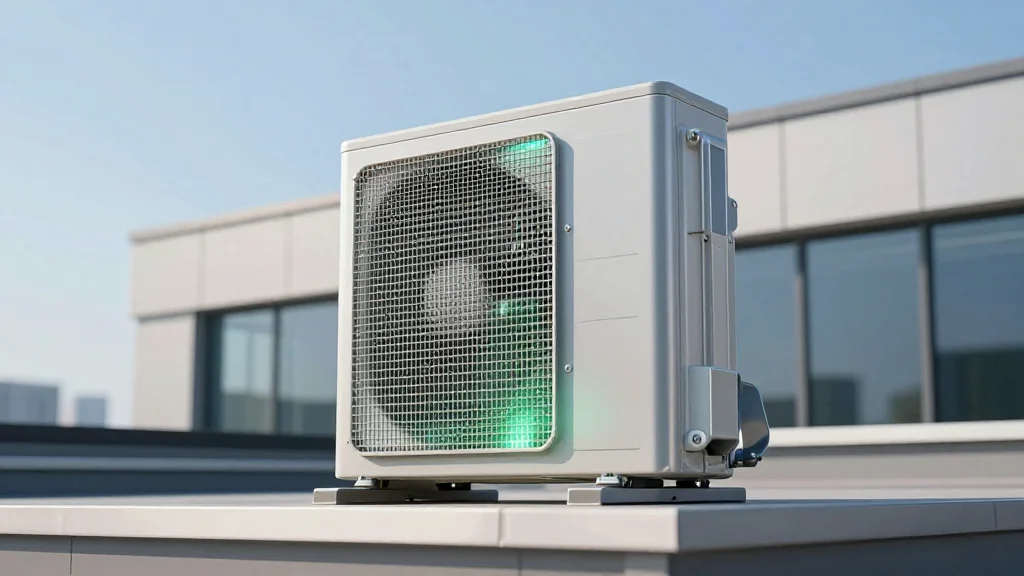
Transaera’s MOF‑Based AC Promises 40% Energy Cut for Data‑Center Cooling

Companies Mentioned
Why It Matters
The data‑center sector accounts for roughly 1% of global electricity use, a share that is set to rise as AI workloads and cloud services expand. Energy‑intensive cooling is the primary driver of this growth, so any technology that can cut cooling power by 40% directly reduces operating costs and greenhouse‑gas emissions. Transaera’s MOF‑based system not only addresses the looming triple‑fold increase in global cooling demand but also demonstrates how breakthroughs in chemistry can be repurposed for digital infrastructure, potentially reshaping sustainability strategies across the tech industry. Beyond cost savings, the technology offers a pathway to meet increasingly stringent ESG (Environmental, Social, Governance) criteria imposed by investors and regulators. Data‑center operators that adopt such high‑efficiency cooling solutions will be better positioned to achieve net‑zero targets, avoid carbon taxes, and secure green financing, thereby influencing capital flows within the broader big‑data ecosystem.
Key Takeaways
- •Transaera’s new rooftop AC uses metal‑organic frameworks to cut energy use by 40%
- •Global cooling demand projected to rise from 5,000 TWh in 2022 to 18,000 TWh by 2050
- •Unit cost is ~20% higher than conventional systems but pays for itself in ~2 years
- •Payback driven by 13 years of net energy savings over a 15‑year lifespan
- •Potential to reduce data‑center PUE by up to 30% and lower carbon emissions significantly
Pulse Analysis
Transaera’s announcement arrives at a pivotal moment when data‑center operators are wrestling with both cost pressures and climate commitments. Historically, cooling has been the low‑hanging fruit for efficiency gains—early adopters of free‑cooling and liquid‑cooling have already demonstrated double‑digit PUE improvements. The MOF‑based approach adds a new dimension by tackling humidity, a factor often overlooked in traditional designs. By decoupling dehumidification from temperature control, Transaera sidesteps the thermodynamic penalty of over‑cooling, a clever exploitation of material science that could become a standard design principle.
From a market perspective, the technology’s 40% energy reduction is comparable to the gains promised by next‑generation AI‑driven cooling orchestration platforms, but with a hardware‑centric, deterministic performance profile. This could appeal to hyperscale operators that prioritize reliability over software‑only solutions. However, the 20% premium price tag may slow adoption among cost‑sensitive colocation providers unless they can lock in long‑term power purchase agreements at favorable rates.
Looking ahead, the real test will be scaling the MOF manufacturing process to meet the massive demand implied by a 15‑year data‑center lifecycle. If Transaera can secure supply‑chain resilience for its proprietary frameworks, it could capture a sizable share of the projected $200 billion global data‑center cooling market. In the meantime, the announcement is likely to spur competitive R&D, prompting incumbents like Daikin and Carrier to explore similar moisture‑control technologies, accelerating the overall shift toward greener, more efficient data‑infrastructure.
Transaera’s MOF‑Based AC Promises 40% Energy Cut for Data‑Center Cooling
Comments
Want to join the conversation?
Loading comments...