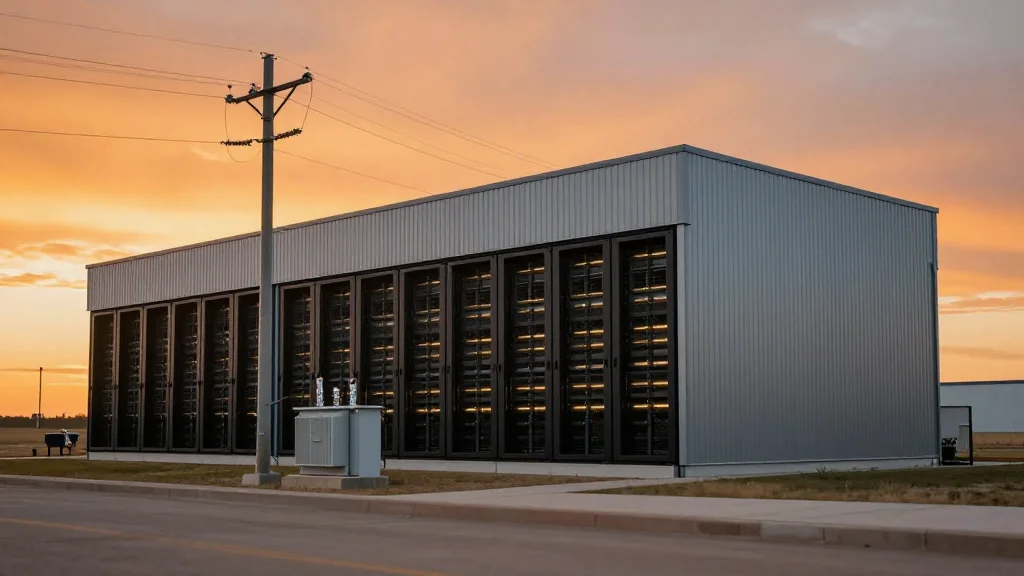
Trump‑Branded $10B AI Data Center Stalls as CEO Departs, Shares Dive 75%

Why It Matters
The stalled Trump‑branded data‑center highlights the growing pains of scaling AI infrastructure to meet unprecedented compute demands. As AI models grow larger, the industry relies on massive, power‑hungry facilities; any disruption can tighten supply, raise costs, and slow innovation across sectors that depend on big‑data analytics. Moreover, the project’s political branding illustrates how high‑profile backing does not guarantee operational success, emphasizing the need for solid engineering and realistic project management. For the broader big‑data market, the outcome will influence investor confidence in similarly ambitious ventures. A successful turnaround could validate the megaproject model and attract further capital, while a prolonged stall may prompt a shift toward more modular, geographically dispersed data‑center strategies that mitigate risk.
Key Takeaways
- •President Donald Trump Advanced Energy and Intelligence Campus valued at over $10 billion stalls in Texas Panhandle.
- •CEO Toby Neugebauer abruptly resigns, citing naivety about cooling‑system complexity.
- •Company shares have fallen 75% in the past six months, intensifying investor concerns.
- •Project power demand projected at three times that of New York City, requiring massive grid upgrades.
- •Backers include Trump allies and Howard Lutnick’s sons, who earn millions in consulting fees.
Pulse Analysis
The Trump‑branded data‑center saga is a textbook example of how political cachet can mask the gritty realities of building next‑generation AI infrastructure. While the $10 billion price tag and the former president’s name generated headline‑grabbing buzz, the underlying engineering challenges—especially cooling for dense AI chips—proved more formidable than anticipated. Neugebauer’s admission of naivety signals a broader industry lesson: scaling compute is not just a financial exercise but a complex systems problem that demands deep technical expertise.
Historically, megaprojects in the tech sector have succeeded when they paired visionary funding with disciplined execution. The failure to secure a stable leadership team at a critical juncture erodes stakeholder confidence and can trigger a cascade of financing setbacks, as seen in the 75% share decline. Competitors such as Microsoft, Google, and Amazon, which have been incrementally expanding their own hyperscale footprints, may now capture market share that the Trump campus hoped to dominate.
Looking ahead, the project's fate will likely hinge on two factors: the ability to replace Neugebauer with a leader who can navigate both technical and regulatory hurdles, and the willingness of power utilities to commit the massive grid resources required. If the board can quickly install seasoned infrastructure talent and secure firm commitments from energy providers, the campus could still become a pivotal node for AI workloads. Conversely, prolonged uncertainty may push AI developers toward more distributed, edge‑focused architectures, reshaping the big‑data landscape away from monolithic, power‑intensive hubs.
Trump‑Branded $10B AI Data Center Stalls as CEO Departs, Shares Dive 75%
Comments
Want to join the conversation?
Loading comments...