Western Digital's Five‑Year AI Roadmap Puts Storage Ahead of Compute

Companies Mentioned
Why It Matters
The roadmap signals a paradigm shift for enterprises wrestling with exploding AI data volumes. By prioritizing storage scalability and cost efficiency, Western Digital challenges the prevailing narrative that AI performance is driven solely by ever‑larger GPU farms. If the company’s high‑density HDDs deliver the promised capacity and bandwidth, organizations could defer costly compute expansions and instead invest in storage architectures that keep data close to the model, reducing latency and energy consumption. For the broader big‑data ecosystem, Western Digital’s strategy could accelerate the adoption of hybrid storage tiers that blend flash and HDD technologies. This hybrid approach may become the default for AI workloads that require both massive capacity and rapid access, influencing hardware roadmaps at cloud providers, hyperscalers, and enterprise data centers worldwide.
Key Takeaways
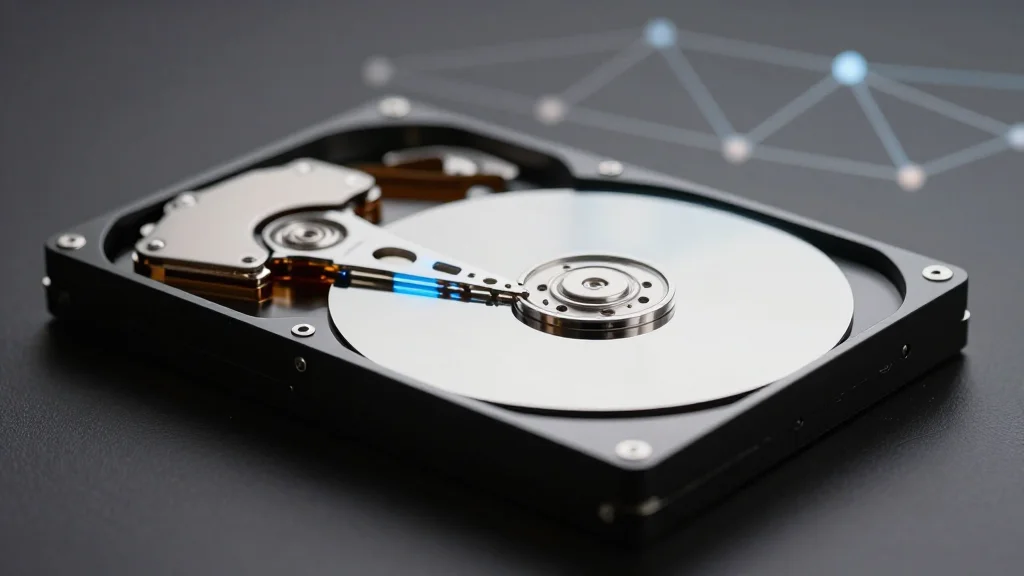
- •Western Digital's AI roadmap focuses on storage, not compute, over the next five years.
- •40TB UltraSMR ePMR HDDs are in customer qualification; 100TB+ HAMR drives are targeted for 2025‑2026.
- •Survey shows 69% of enterprises prioritize AI training/inference workloads, while only 7% prioritize latency.
- •Long‑term contracts secured through 2029; procurement lead times are 52 weeks.
- •High‑bandwidth HDDs using multiple heads promise up to 2× traditional HDD throughput without extra power.
Pulse Analysis
Western Digital’s storage‑first AI roadmap arrives at a moment when the industry is grappling with the data deluge generated by large language models and generative AI. Historically, AI hardware roadmaps have been dominated by compute‑centric narratives—think NVIDIA’s GPU scaling or Google’s TPU roadmap. By flipping the script, Western Digital is betting that the next bottleneck will be data movement and storage economics rather than raw FLOPS.
The company’s emphasis on density gains through ePMR and HAMR mirrors the semiconductor industry’s shift toward lithography breakthroughs to sustain Moore’s Law. However, storage faces a unique challenge: each new generation must not only increase capacity but also maintain or improve bandwidth and power efficiency. Western Digital’s high‑bandwidth multi‑head design could be a decisive differentiator, especially for training regimes that stream terabytes of data per hour. If successful, this technology may force hyperscalers to redesign their AI clusters, allocating a larger share of rack space to dense HDD arrays and rebalancing cooling and power budgets.
From a market perspective, the roadmap could reshape vendor dynamics. Cloud providers that have traditionally bundled compute and storage (e.g., AWS’s EC2 + EBS) might need to partner more closely with storage specialists to offer AI‑optimized tiers. Meanwhile, competitors like Seagate are also investing in HAMR, setting up a head‑to‑head race that could compress development timelines and drive down costs for end users. The real test will be whether Western Digital can translate its roadmap promises into reliable, high‑volume production—something that has historically tripped up even the most seasoned storage vendors.
In the longer view, a storage‑centric AI architecture could democratize access to large‑scale AI. By reducing the total cost of ownership and decoupling performance from pure compute scaling, smaller enterprises could run sophisticated models without the massive GPU farms that have been a barrier to entry. This could accelerate AI adoption across industries, from healthcare to finance, and reinforce the importance of robust, scalable data infrastructure as the foundation of the next wave of AI innovation.
Western Digital's Five‑Year AI Roadmap Puts Storage Ahead of Compute
Comments
Want to join the conversation?
Loading comments...