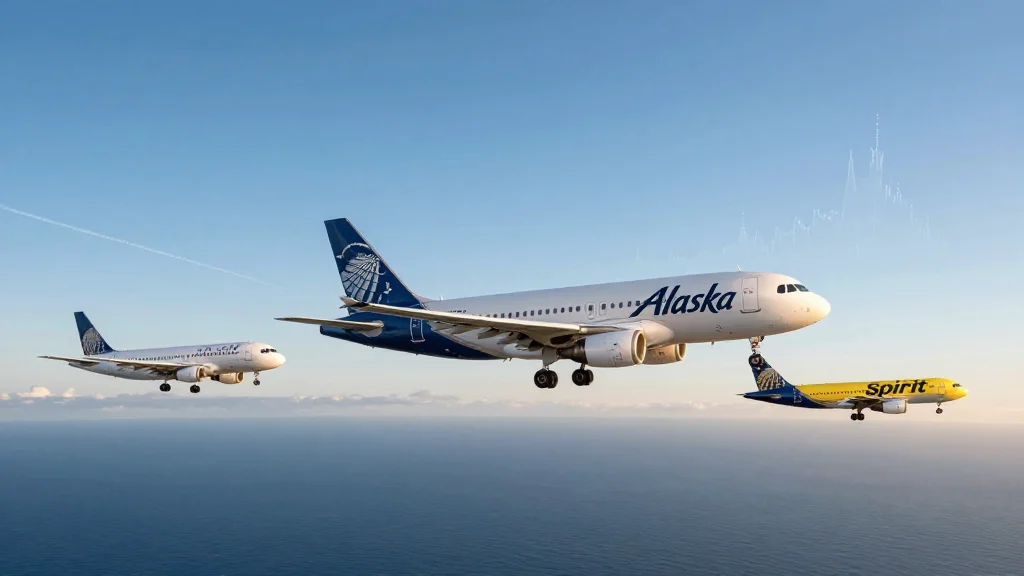
American CEO Tells Employees His Deal Strategy: United No, Alaska Yes, Spirit Assets Maybe
Key Takeaways
- •United merger ruled out due to antitrust and customer harm
- •Alaska partnership will expand joint venture and oneworld alliance
- •Spirit acquisition unlikely; only selective asset purchases considered
- •American pledges assistance to stranded Spirit passengers if bankruptcy occurs
- •CEO focuses on premium core business amid industry volatility
Pulse Analysis
Merger chatter has long haunted the U.S. airline sector, where the Department of Justice closely scrutinizes any deal that could reduce competition on key routes. By outright dismissing a United‑American combination, Robert Isom signals that regulatory hurdles and consumer backlash outweigh any potential cost synergies. This stance not only protects American from a costly legal battle but also reassures investors that the carrier will not jeopardize its market position through a risky consolidation.
Instead, Isom pointed to a stronger alliance with Alaska Airlines, a relationship that already includes a revenue‑sharing joint venture and a shared oneworld membership. Expanding this partnership could give American deeper access to West Coast and Pacific markets without the antitrust baggage of a full merger. For travelers, the collaboration promises more seamless connections, coordinated schedules, and a broader loyalty‑program footprint, positioning the two carriers to better compete against United and Delta on both premium and leisure routes.
Spirit Airlines presents a different challenge. As an ultra‑low‑cost carrier struggling with high fuel costs and a recent bankruptcy filing, Spirit’s business model clashes with American’s premium strategy. Isom’s willingness to purchase specific gates or assets—rather than the whole airline—reflects a tactical approach to capture valuable airport slots while avoiding integration complexities. Moreover, pledging assistance to stranded Spirit passengers underscores a customer‑centric narrative that could enhance American’s brand perception during industry turbulence. Overall, the CEO’s roadmap emphasizes organic growth, strategic alliances, and selective asset acquisition over large‑scale mergers, a formula likely to resonate with shareholders seeking stability amid a volatile travel market.
American CEO Tells Employees His Deal Strategy: United No, Alaska Yes, Spirit Assets Maybe
Comments
Want to join the conversation?