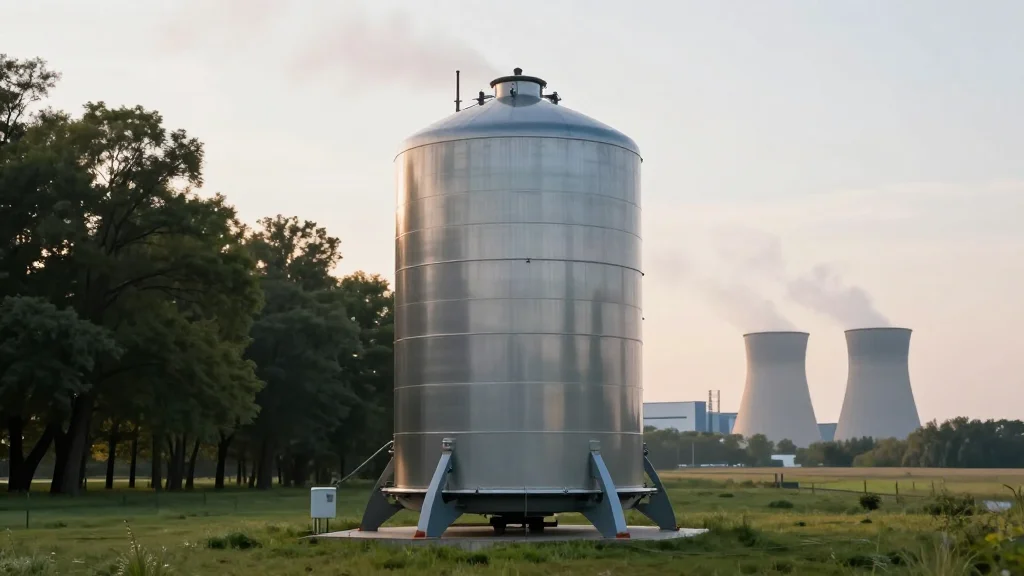
ČEZ Partners with Rolls‑Royce SMR on Czech Republic’s First Small Modular Reactor

Why It Matters
The ČEZ‑Rolls‑Royce SMR deal marks a pivotal shift in how Central European utilities are approaching decarbonization. By embracing SMR technology, ČEZ aims to replace aging coal plants and diversify its generation mix, directly supporting the EU’s 2030 climate objectives and reducing reliance on imported fossil fuels. For the broader CEO Pulse audience, the partnership illustrates how senior executives are leveraging strategic equity stakes—ČEZ’s 20% share in Rolls‑Royce SMR—to secure early access to emerging clean‑energy technologies. The move also highlights the role of state‑owned enterprises in shaping national energy policy, as the Czech government’s push toward full control of ČEZ aligns with its ambition to steer the country toward a low‑carbon future.
Key Takeaways
- •ČEZ and Rolls‑Royce SMR signed a partnership to build the Czech Republic’s first SMR at Temelín
- •Target to secure all permits by 2030, with construction potentially starting thereafter
- •Project could deliver up to 3 GW of modular nuclear capacity
- •ČEZ holds a 20% equity stake in Rolls‑Royce SMR; the Czech state owns ~70% of ČEZ
- •SMR technology promises faster build times and lower capital costs than traditional reactors
Pulse Analysis
The Czech Republic’s decision to partner with Rolls‑Royce SMR reflects a broader trend among European utilities to hedge against the intermittency of renewables by adding firm, low‑carbon generation. Historically, large nuclear projects have been plagued by cost overruns and lengthy construction schedules, eroding public and investor confidence. SMRs, by contrast, are marketed as factory‑built modules that can be assembled on site in a fraction of the time, potentially restoring credibility to nuclear as a climate solution.
From a competitive standpoint, the deal gives Rolls‑Royce SMR a foothold in Central Europe, a market traditionally dominated by Russian‑supplied reactors and, more recently, by French and Westinghouse designs. By securing a second deployment after the UK’s inaugural unit, Rolls‑Royce can demonstrate scalability and operational learning, which are critical for attracting further orders. For ČEZ, the partnership leverages its minority stake to influence technology road‑maps while mitigating the financial risk of a full‑scale nuclear build.
Looking forward, the success of the Czech SMR will hinge on regulatory approval speed, supply‑chain readiness, and public acceptance. If ČEZ can meet its 2030 licensing target, the project could become a template for other EU nations grappling with energy security and climate mandates. Conversely, delays or cost escalations could reinforce skepticism around SMRs and push CEOs to double down on wind, solar, and storage solutions instead. The next six to twelve months will therefore be a litmus test for the commercial viability of modular nuclear in a market increasingly driven by ESG considerations.
ČEZ partners with Rolls‑Royce SMR on Czech Republic’s first small modular reactor
Comments
Want to join the conversation?
Loading comments...