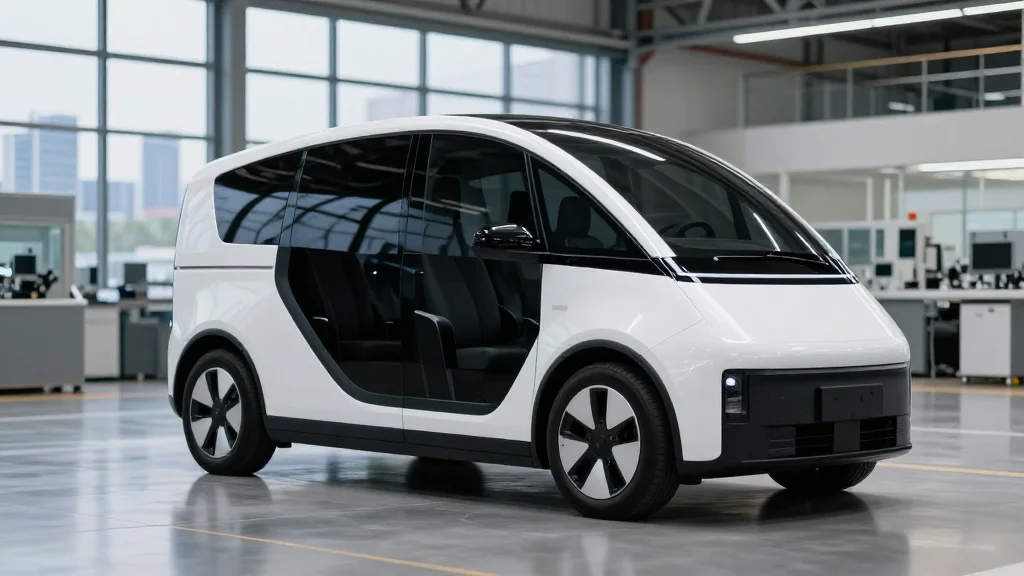
Elon Musk Announces Tesla Cybercab Production Launch at Giga Texas

Why It Matters
The commencement of Cybercab production marks a pivotal moment for Tesla’s autonomous‑vehicle ambitions, moving the concept from prototype to a manufacturable product. By creating a dedicated robotaxi platform, Tesla aims to capture a larger share of the emerging mobility‑as‑a‑service market, potentially generating billions in recurring revenue. The move also intensifies competition with established players in autonomous ridesharing, forcing faster regulatory and technological advancements across the industry. Furthermore, the production milestone tests Tesla’s ability to meet aggressive volume targets. Achieving even a fraction of the 2 million‑unit annual goal would validate the company’s manufacturing scalability and could boost investor confidence in its long‑term growth narrative, especially as traditional automotive sales face cyclical pressures.
Key Takeaways
- •Elon Musk confirms Cybercab production has begun at Giga Texas.
- •First Cybercab rolled off the line on Feb. 18; 60 units observed in early April.
- •Tesla targets 2 million Cybercabs per year (~38,000 per week) once full capacity is reached.
- •Q1 2026 earnings call noted paid robotaxi miles nearly doubled sequentially.
- •Regulatory approval remains a critical hurdle before Cybercabs can operate on public roads.
Pulse Analysis
Tesla’s decision to launch Cybercab production reflects a strategic pivot from selling cars to operating a mobility service. The company’s existing robotaxi fleet, based on the Model Y, already provides a data set for refining Full Self‑Driving algorithms, but the Cybercab’s purpose‑built design promises higher efficiency, lower cost per mile, and a clearer path to full autonomy. If Tesla can overcome regulatory barriers, the Cybercab could become a cash‑flow engine that decouples revenue from vehicle sales cycles, similar to how software subscriptions have transformed other tech firms.
Historically, Tesla’s timelines have been optimistic, with previous projects like the Semi and the original Cybertruck experiencing delays. However, the visible production line footage and the presence of dozens of units at the plant suggest a more disciplined rollout. Competitors such as Waymo, which rely on retrofitted vehicles, may find themselves at a disadvantage if Tesla can achieve economies of scale with a purpose‑built robotaxi.
Investors should watch for three signals in the coming months: the rate at which Tesla scales weekly output, the speed of regulatory approvals in key markets, and the integration of Cybercabs into the existing robotaxi network. A successful transition could not only boost Tesla’s top line but also redefine the economics of autonomous ridesharing, setting a new benchmark for the industry.
Elon Musk Announces Tesla Cybercab Production Launch at Giga Texas
Comments
Want to join the conversation?
Loading comments...