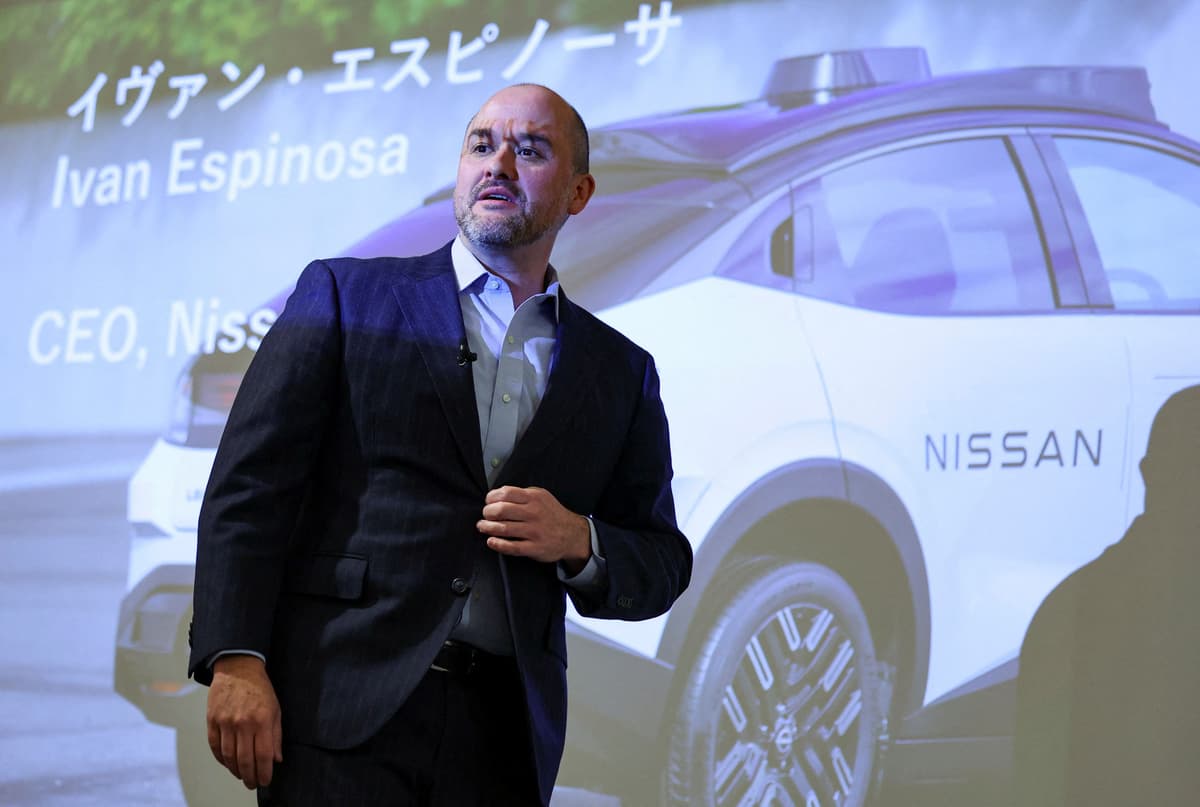
How Ivan Espinosa Got Nissan to Face Reality
Why It Matters
The restructuring aims to restore profitability and reposition Nissan in a rapidly electrifying, technology‑driven market, setting a benchmark for legacy automakers facing similar volume and cost pressures.
Key Takeaways
- •Nissan cut plants from 17 to 10, targeting 2.5M breakeven volume
- •Restructuring plan trims 20% of model lineup to reduce costs
- •Development cycle shortened from 54 to 37 months, saving engineering resources
- •Launched China‑centric N7, sparking year‑over‑year sales growth
- •Partnered with Wayve and Uber for Level 2+ autonomy, robotaxis by 2027
Pulse Analysis
Nissan’s decline from a 5.8‑million‑vehicle peak in 2018 to 3.2 million last year forced the board to install a fresh leader. Ivan Espinosa, a 45‑year‑old executive with stints across Southeast Asia, Europe and the Americas, arrived with a clear mandate: align the company’s cost base with its realistic sales ceiling. By redefining the breakeven point at 2.5 million units, he ordered the closure of seven factories, consolidating production to ten plants that better match current demand. The move, coupled with a 20% reduction in the model portfolio, directly tackles excess capacity that has eroded margins for years.
Beyond cost cuts, Espinosa is reshaping Nissan’s engineering cadence. The development timeline for a new vehicle has been compressed from 54 months to 37 months, a gain that frees engineering talent for future‑proof projects without sacrificing capital investment. This efficiency fuels the rollout of the third‑generation Leaf and a suite of plug‑in hybrids, reinforcing Nissan’s claim as an early EV pioneer. In China, the company abandoned a one‑size‑fits‑all approach, launching the locally engineered N7 and subsequent models tailored to Chinese consumer preferences, which have already sparked modest year‑over‑year growth.
Strategic partnerships are another pillar of the revival. Collaborations with Wayve and Uber position Nissan at the forefront of Level 2+ autonomous driving and robotaxi services slated for 2027, signaling a shift toward mobility‑as‑a‑service revenue streams. By leveraging these alliances while maintaining brand independence, Nissan aims to capture emerging tech markets without diluting shareholder value. Collectively, these actions illustrate how a legacy automaker can combine decisive restructuring, accelerated product development, and targeted collaborations to navigate the electric and autonomous era.
How Ivan Espinosa got Nissan to face reality
Comments
Want to join the conversation?
Loading comments...