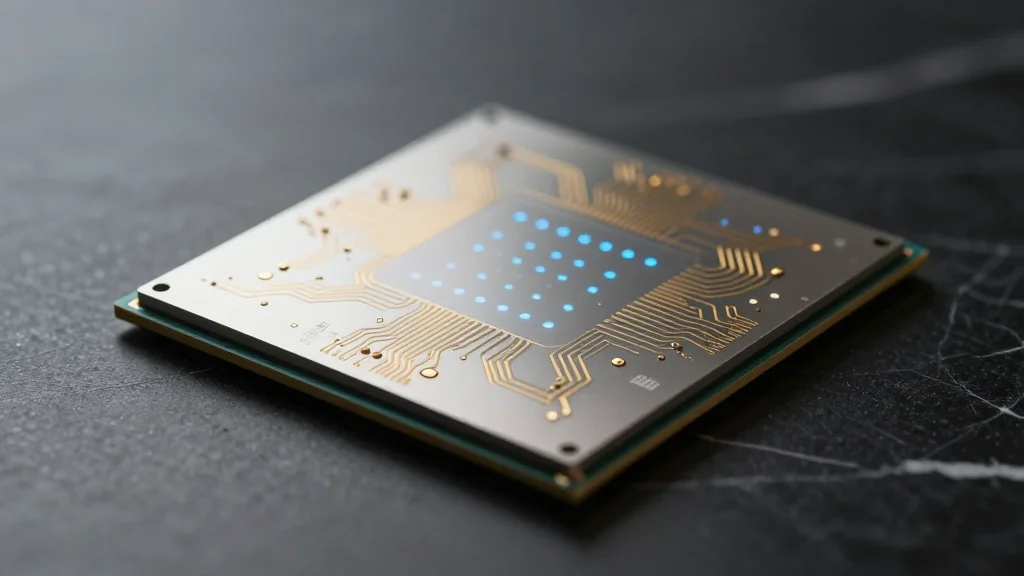
IBM CEO Arvind Krishna Commits $10 B Quantum Push to Deliver Error‑Free Computer by 2029

Why It Matters
IBM’s quantum pledge reshapes the competitive dynamics of the emerging quantum computing market. By committing $10 billion and securing federal backing, IBM positions the United States to lead a technology that could disrupt encryption, materials science and high‑performance computing. The initiative also forces rivals—both domestic startups and state‑backed Chinese firms—to accelerate their own roadmaps, potentially spurring a wave of talent migration, supply‑chain investment and regulatory scrutiny. For CEOs across sectors, the prospect of error‑free quantum machines by the end of the decade raises strategic questions about data security, R&D budgeting and partnership models. Companies that can integrate quantum‑ready algorithms early may capture a decisive advantage in drug discovery, financial risk modeling and logistics optimization, while those that lag could face a competitive gap as quantum‑enhanced services become mainstream.
Key Takeaways
- •IBM commits $10 billion over five years to quantum computing, targeting a reliable large‑scale system by 2029.
- •Anderon, a new pure‑play quantum chip foundry, will receive $1 billion from IBM and $1 billion in federal CHIPS incentives.
- •U.S. government takes a $1 billion equity stake in IBM’s quantum effort as part of a $2 billion quantum‑technology fund.
- •IBM Q1 2026 revenue rose 6% YoY; free cash flow hit $2.2 billion, the strongest in a decade.
- •Krishna warns that building a gigawatt‑scale quantum infrastructure could cost $60‑$80 billion in semiconductors.
Pulse Analysis
IBM’s quantum strategy marks a rare convergence of corporate capital, government policy and long‑term R&D ambition. Historically, quantum computing has been dominated by research labs and niche startups with limited commercial traction. IBM’s $10 billion infusion, coupled with a dedicated chip foundry, signals a shift toward industrialization—moving quantum from proof‑of‑concept to a production‑grade platform. This mirrors the earlier transition of AI from academic curiosity to cloud‑based services, where scale and ecosystem depth proved decisive.
The timing is crucial. While Alphabet’s CEO Sundar Pichai has warned that practical quantum computers are still five to ten years away, IBM’s roadmap compresses that horizon to 2029, effectively betting that hardware breakthroughs and error‑correction algorithms will converge faster than the broader market expects. If IBM meets its milestones, it could lock in early adopters—financial firms, pharma giants and national labs—who will need quantum‑ready solutions before competitors can offer comparable capabilities.
However, the plan is not without risk. The quoted $60‑$80 billion semiconductor cost for a gigawatt of power underscores the massive supply‑chain and energy challenges inherent in scaling quantum hardware. Moreover, the $10 billion spend must deliver tangible performance gains to justify continued investor confidence, especially as rivals like IonQ and Chinese state‑backed labs accelerate their own chip programs. CEOs watching this space should monitor IBM’s quarterly yield reports, the pace of Anderon’s fab construction, and any regulatory developments around quantum‑grade encryption, all of which will shape the commercial viability of the technology.
IBM CEO Arvind Krishna Commits $10 B Quantum Push to Deliver Error‑Free Computer by 2029
Comments
Want to join the conversation?
Loading comments...