Intel, SambaNova Unveil Joint AI Inference Hardware Blueprint

Companies Mentioned
Why It Matters
The Intel‑SambaNova alliance reshapes the AI inference market by introducing a viable, multi‑chip alternative to Nvidia’s single‑chip dominance. For CEOs steering AI‑centric enterprises, the new stack promises lower total cost of ownership, easier integration with existing Xeon fleets, and performance gains in compilation and vector‑search workloads that are critical for agentic AI applications. By committing to a hardware roadmap that emphasizes compatibility and energy efficiency, the partnership also addresses sustainability concerns that increasingly factor into executive decision‑making. The move could accelerate adoption of agentic AI across regulated sectors, where control, auditability and hardware provenance are paramount.
Key Takeaways
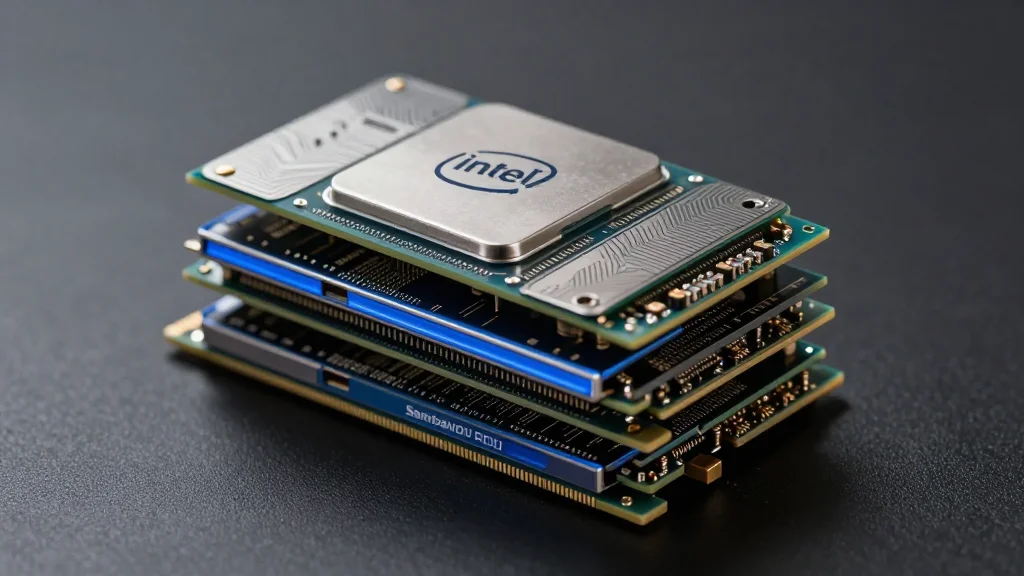
- •Intel and SambaNova announced a joint AI inference blueprint combining GPUs, SambaNova RDUs and Intel Xeon 6 CPUs.
- •The system will be available to enterprises and cloud providers in the second half of 2026.
- •Xeon 6 delivers >50% faster LLVM compilation than Arm‑based server CPUs.
- •Xeon 6 offers up to 70% faster vector‑database performance versus other x86 systems.
- •The architecture runs in existing air‑cooled data centers, avoiding new infrastructure builds.
Pulse Analysis
Intel’s decision to co‑develop inference hardware with SambaNova reflects a broader shift among legacy silicon vendors toward heterogeneous compute models. Historically, Intel has relied on its CPU dominance, while Nvidia built a monopoly around GPUs for AI workloads. By stitching together GPUs for pre‑fill, RDUs for decoding, and Xeon CPUs for orchestration, Intel leverages its existing data‑center footprint while borrowing specialized acceleration from SambaNova. This hybrid approach mitigates the risk of a single‑point performance bottleneck and aligns with the emerging “agentic AI” paradigm, where multiple AI agents interact in real time and demand low‑latency, high‑throughput pipelines.
From a market perspective, the partnership could erode Nvidia’s pricing power, especially in sectors where Xeon servers already dominate. Enterprises that have standardized on Intel’s ecosystem may now see a lower barrier to entry for advanced inference workloads, reducing the incentive to migrate to Nvidia‑only stacks. Moreover, the promised 50%+ compilation speedup and 70% vector‑search gains translate directly into cost savings for workloads that process massive code‑generation or retrieval tasks, a sweet spot for financial services, biotech and autonomous systems.
Looking ahead, the success of the blueprint will hinge on real‑world performance validation and the ability to deliver a seamless software stack that abstracts the underlying hardware diversity. If Intel and SambaNova can demonstrate parity or superiority to Nvidia’s end‑to‑end solutions, we may witness a rebalancing of AI hardware market share, prompting other players—such as AMD and Google—to accelerate their own heterogeneous strategies. CEOs will need to monitor benchmark releases and pricing models closely, as the competitive dynamics could reshape procurement cycles and long‑term AI roadmaps.
Intel, SambaNova Unveil Joint AI Inference Hardware Blueprint
Comments
Want to join the conversation?
Loading comments...