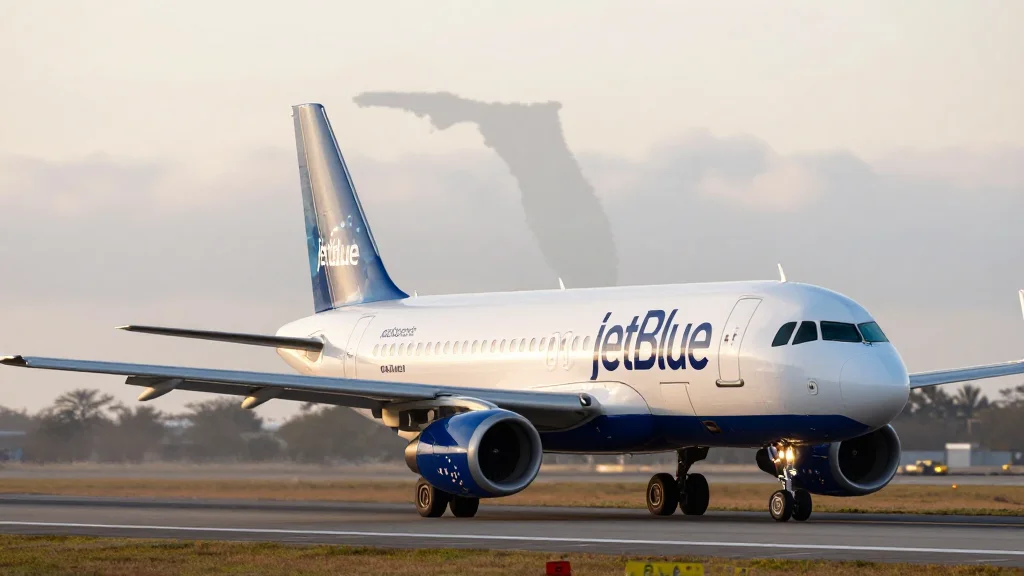
JetBlue Launches 11 Former Spirit Routes From Fort Lauderdale, Expanding to 130 Daily Flights

Companies Mentioned
Why It Matters
The swift addition of former Spirit routes by JetBlue reshapes the competitive dynamics of the U.S. domestic airline market. By filling the service void in South Florida, JetBlue not only captures a ready pool of price‑sensitive travelers but also signals to other legacy carriers that aggressive route expansion can be a viable response to sudden market gaps. The move also raises questions about fare structures: without Spirit’s ultra‑low‑cost pressure, average ticket prices on these routes could climb, affecting leisure travelers who rely on budget options. For the broader CEO Pulse audience, the episode illustrates how CEOs must balance rapid strategic execution with operational risk. Joanna Geraghty’s decision to add 11 routes within weeks demonstrates decisive leadership, yet the long‑term success will hinge on JetBlue’s ability to sustain profitability amid higher fuel costs and the logistical challenges of new markets.
Key Takeaways
- •JetBlue adds 11 former Spirit routes from Fort Lauderdale, launching July 9
- •Summer schedule expands to ~130 daily departures, a 75% increase YoY
- •Six new destinations (e.g., Barranquilla, Baltimore) are first‑time JetBlue markets
- •JetBlue shares rose 7.4% after the announcement; Frontier up 8.8%
- •Spirit’s shutdown removed ~2% of U.S. domestic seats, leaving 17,000 workers jobless
Pulse Analysis
JetBlue’s rapid route rollout is a textbook case of opportunistic expansion in a disrupted market. Historically, legacy carriers have been cautious about entering low‑margin, high‑competition segments dominated by ultra‑low‑cost players. Spirit’s demise removes a price anchor, creating a vacuum that JetBlue is eager to fill. By leveraging its existing network and brand equity, JetBlue can capture stranded demand without the need for a costly merger, which was previously blocked by regulators.
However, the strategy carries hidden costs. Adding 11 routes means deploying additional aircraft, crew, and ground support at a time when fuel prices have more than doubled due to the Iran‑related oil shock. JetBlue’s pledge to keep fares competitive may compress margins, especially on routes where it now faces little direct competition but higher operating expenses. The company’s ability to sustain the expanded schedule will depend on how quickly it can achieve load factor targets and whether ancillary revenue can offset the higher cost base.
From a broader industry perspective, the episode underscores the systemic risk posed by fuel price volatility to low‑cost carriers. Spirit’s collapse was precipitated by a sudden jump in jet fuel from $2.24 to $4.51 per gallon, a shock that legacy carriers absorbed more easily due to larger balance sheets and diversified revenue streams. As CEOs navigate a post‑pandemic landscape, the JetBlue‑Spirit saga serves as a cautionary tale: agility and scale can turn a competitor’s failure into growth, but only if the expanding airline can manage the underlying cost pressures that doomed its rival.
JetBlue launches 11 former Spirit routes from Fort Lauderdale, expanding to 130 daily flights
Comments
Want to join the conversation?
Loading comments...