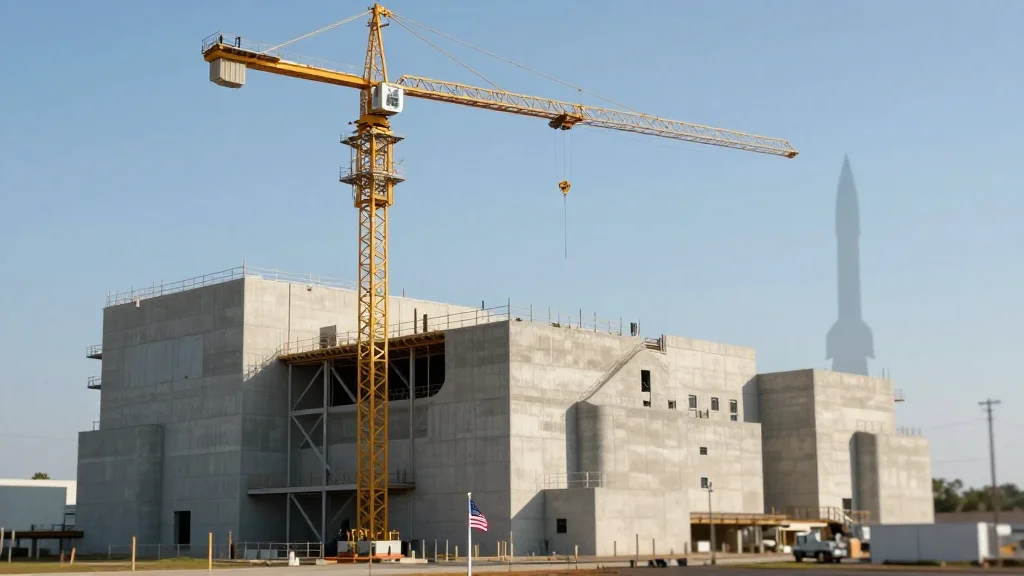
Lockheed Martin CEO Jim Taiclet Announces Quadruple THAAD Production at New Alabama Munitions Center

Companies Mentioned
Why It Matters
The expansion of critical munitions production in Alabama demonstrates a tangible shift from traditional, year‑by‑year procurement toward a demand‑driven, risk‑sharing model. By guaranteeing purchase commitments, the Pentagon reduces uncertainty for manufacturers, enabling faster scaling of essential defensive systems like THAAD and PAC‑3. This not only strengthens the warfighter’s immediate readiness but also revitalizes the domestic defense industrial base, creating jobs and fostering supply‑chain resilience. Moreover, the public‑private partnership framework could reshape future acquisition strategies for emerging technologies such as hypersonics and directed‑energy weapons. If Lockheed Martin can meet its production targets, it will provide a proof point that the government can accelerate fielding of critical capabilities without the lengthy delays that have historically plagued defense programs.
Key Takeaways
- •Lockheed Martin breaks ground on Munitions Production Center Building 47 in Troy, Alabama
- •Company pledges to quadruple THAAD interceptor production and triple PAC‑3 missile output
- •New procurement model shifts risk to industry, with the Pentagon guaranteeing purchases
- •Framework agreements signed in January cover PAC‑3, THAAD, Precision Strike Missile and more
- •Projected completion of core infrastructure by late 2027, with supplier agreements already secured
Pulse Analysis
The Troy, Alabama breakthrough is more than a construction milestone; it is a litmus test for the Pentagon’s Acquisition Transformation Strategy. Historically, defense procurement has been hamstrung by annual budgeting cycles that force contractors to hedge against demand volatility, often leading to under‑investment in capacity. By moving to a model where the government promises to buy the output, Lockheed Martin can front‑load capital expenditures, a move that could compress the typical 5‑ to 7‑year development timeline for high‑volume munitions.
From a market perspective, this partnership may pressure rival defense firms to seek similar demand‑signal contracts, potentially reshaping the competitive landscape. Companies that can demonstrate the ability to absorb upfront costs while delivering on accelerated schedules will likely capture a larger share of future missile and interceptor contracts. Conversely, firms that remain dependent on traditional grant‑funded facilities may find themselves at a strategic disadvantage.
Looking ahead, the success of Building 47 will hinge on Lockheed’s ability to synchronize its internal production ramps with supplier capacity upgrades. The company’s commitment to securing agreements with key component makers for seekers and guidance systems suggests an awareness of this bottleneck. If the supply chain can keep pace, the model could be replicated for next‑generation systems, including hypersonic glide vehicles and AI‑enabled munitions, fundamentally altering how the United States fields its most critical defense technologies.
Lockheed Martin CEO Jim Taiclet Announces Quadruple THAAD Production at New Alabama Munitions Center
Comments
Want to join the conversation?
Loading comments...