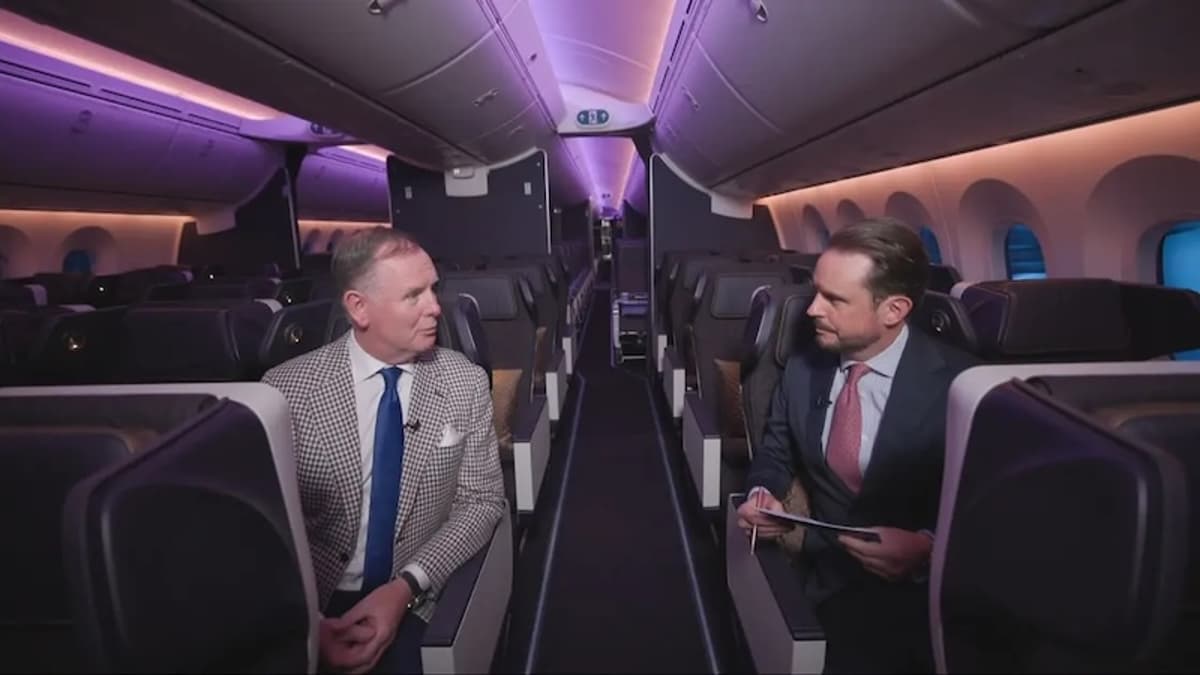
Q&A: Riyadh Air CEO Tony Douglas on Launching a New Airline, Expanding Its Fleet, and the Future of Air Travel
Companies Mentioned
Why It Matters
Riyadh Air’s launch underscores Saudi Arabia’s ambition to reshape global air traffic and challenge legacy carriers, while its tech‑heavy, partnership‑driven model could raise the bar for passenger experience and network reach.
Key Takeaways
- •First Boeing 787‑9s delivered; Airbus arrivals slated by year‑end
- •Targeting 22 destinations by March 2027, including London, Cairo, Dubai
- •Introduced Astra OLED entertainment and high‑speed Wi‑Fi on all aircraft
- •11 airline partners, excluding formal alliance, boost global connectivity
Pulse Analysis
Saudi Arabia’s aviation strategy has long centered on Riyadh as a gateway between East and West, but the launch of Riyadh Air marks the first full‑scale carrier built from the ground up under Crown Prince Mohammed bin Salman's vision. By securing its initial fleet of Boeing 787‑9 Dreamliners and scheduling Airbus deliveries before the year closes, the airline signals a rapid scaling approach that mirrors the aggressive expansion of Gulf rivals. This fleet mix offers both long‑range efficiency and capacity flexibility, positioning Riyadh Air to capture the projected surge in post‑pandemic “revenge tourism” and growing demand for premium long‑haul services.
Beyond aircraft, Riyadh Air is betting on technology to differentiate itself. Its proprietary Astra in‑flight entertainment platform, featuring OLED screens and personal‑device mirroring, is currently exclusive to only one other airline, promising a high‑definition experience that appeals to tech‑savvy travelers. Complemented by high‑speed satellite internet that enables real‑time work sessions, the carrier targets business passengers seeking productivity in the sky. The Sfeer loyalty program further reinforces this premium positioning by guaranteeing best‑price offers and complimentary Wi‑Fi, aiming to build a high‑value customer base from launch.
Strategically, Riyadh Air eschews traditional airline alliances, opting instead for 11 bilateral partnerships with carriers such as Delta and Singapore Airlines. This network‑centric model grants access to North American and Australasian markets without the constraints of alliance membership, allowing agile route adjustments in a geopolitically volatile region. Coupled with a talent pool of over two million applicants from 146 nationalities, the airline is poised to deliver a culturally rich, service‑focused product. If execution matches its ambitious timeline, Riyadh Air could become a pivotal hub, reshaping Middle‑East traffic patterns and intensifying competition for legacy carriers across Europe, Asia and the Americas.
Q&A: Riyadh Air CEO Tony Douglas on launching a new airline, expanding its fleet, and the future of air travel
Comments
Want to join the conversation?
Loading comments...