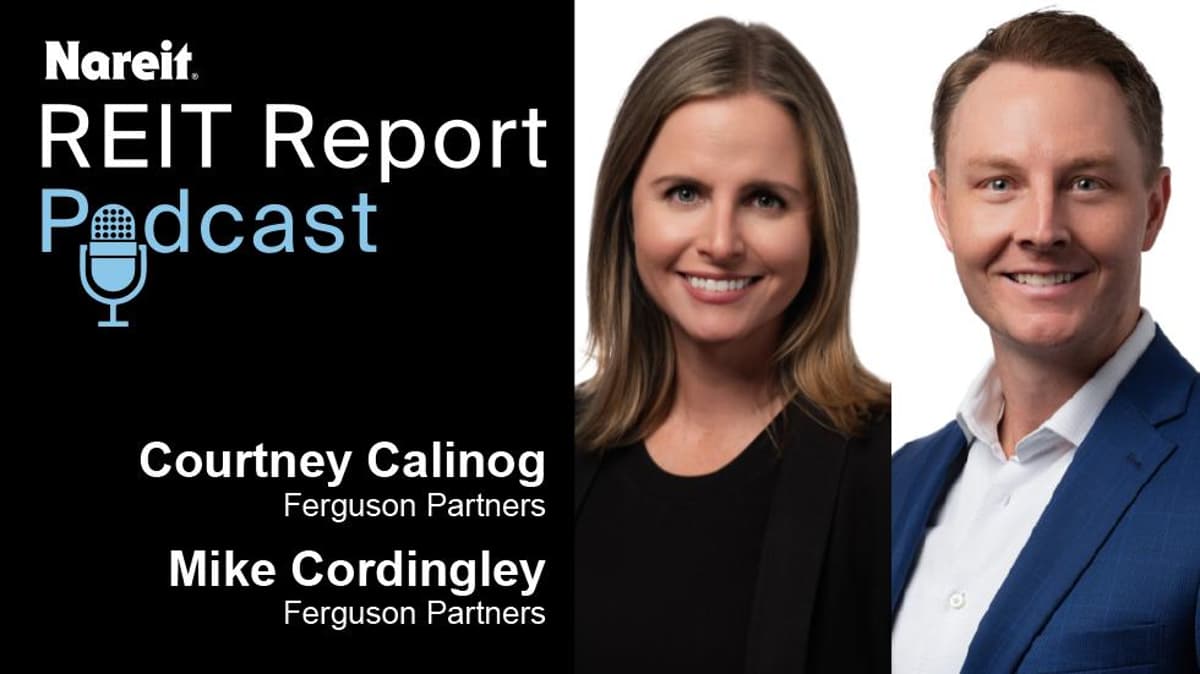
REIT Leadership Expectations Shifting Amid More Complex Environment: Ferguson Partners
Why It Matters
As cheap capital fades, REITs that prioritize adaptive, people‑focused leadership will better navigate uncertainty and protect shareholder value, giving them a competitive edge in a tightening market.
Key Takeaways
- •Technical expertise now considered baseline for REIT CEOs
- •Self‑awareness and communication drive trust in uncertain markets
- •CEOs act as “enterprise translators” linking capital, investors, operations
- •Internal promotion pipelines accelerate leadership turnover in REITs
- •Treating leadership as a strategic asset yields long‑term competitive edge
Pulse Analysis
The REIT sector is navigating a post‑pandemic environment where cheap capital has evaporated, forcing CEOs to move beyond traditional financial acumen. In a recent REIT Report podcast, Ferguson Partners' Courtney Calinog and Mike Cordingley highlighted that while technical expertise remains a prerequisite, the differentiator now lies in people‑centered skills such as self‑awareness, clear communication, and the ability to build trust amid volatility. These soft competencies enable leaders to translate complex market signals into actionable strategies, keeping stakeholders aligned when the cost of capital is no longer a given.
That shift has immediate implications for succession planning. The podcast noted that most REIT CEOs still rise from within, making early talent development a strategic priority. However, leadership turnover is accelerating, prompting boards to apply the same rigor to leadership pipelines as they do to portfolio construction. By treating leadership capability with intentional, long‑term scrutiny, firms can reduce disruption and preserve institutional knowledge, which is especially valuable when external financing options are scarce and market sentiment is fragile.
Firms that elevate leadership to a core strategic asset are likely to outpace peers as the REIT landscape stabilizes. Investors are increasingly scrutinizing board‑level talent, rewarding companies that demonstrate clear succession frameworks and a culture of resilience. Moreover, CEOs who act as “enterprise translators”—bridging capital markets, investor expectations, and operational execution—can generate steadier cash flows and preserve asset valuations during periods of turbulence. As the sector adapts, disciplined investment in leadership development will become a decisive factor in long‑term shareholder returns. This focus also aligns with ESG criteria that prioritize strong governance.
REIT Leadership Expectations Shifting Amid More Complex Environment: Ferguson Partners
Comments
Want to join the conversation?
Loading comments...