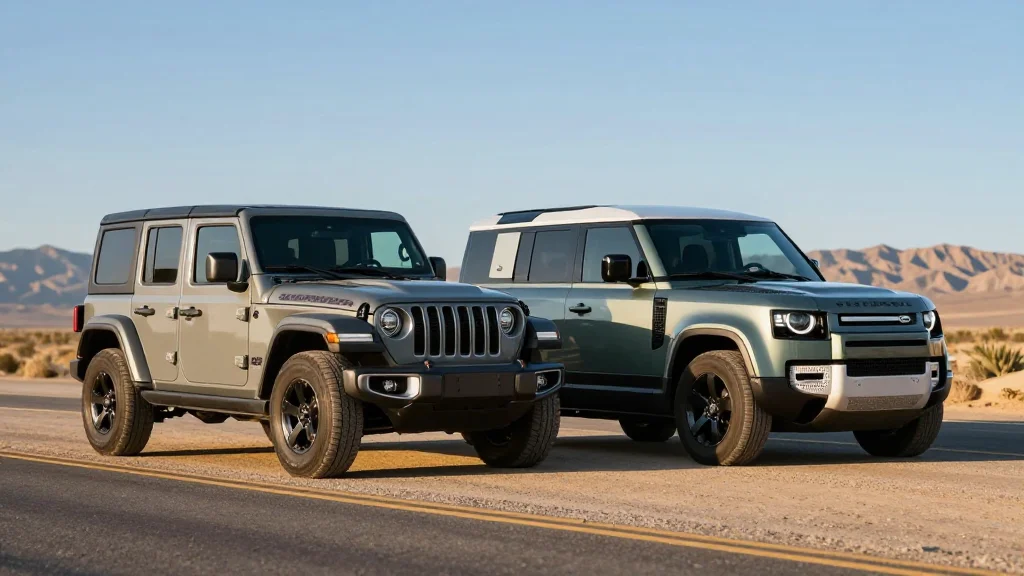
Stellantis and Jaguar Land Rover Sign MoU to Co‑Develop US Vehicles

Companies Mentioned
Why It Matters
The Stellantis‑JLR MoU illustrates how CEOs are using cross‑brand collaborations to address structural challenges such as tariff exposure, under‑utilized factory capacity, and the need for faster product cycles. By aligning Jeep’s mass‑market appeal with Land Rover’s luxury off‑road pedigree, the alliance could create a new vehicle class that appeals to affluent American consumers while preserving price competitiveness. Beyond the immediate product pipeline, the deal signals a broader industry trend toward partnership‑driven growth. As traditional automakers grapple with the high cost of electrification and shifting consumer preferences, joint development agreements allow firms to share R&D expenses, accelerate time‑to‑market, and mitigate regulatory risk. For investors, the collaboration offers a potential upside if it leads to higher margins and a stronger foothold in the US market, which remains the world’s largest automotive arena.
Key Takeaways
- •Stellantis and JLR signed a non‑binding MoU on May 20 to explore US product development.
- •Both CEOs highlighted synergy benefits: Antonio Filosa (Stellantis) and PB Balaji (JLR).
- •The partnership aims to combine Jeep’s mass‑market platform with Land Rover’s luxury off‑road expertise.
- •JLR currently has no US manufacturing, making the deal a strategic move against rising tariffs.
- •Potential prototypes could appear by 2028, with production targeted for the early 2030s.
Pulse Analysis
Stellantis’ recent string of joint ventures—first with Leapmotor, then Dongfeng—shows a deliberate shift toward a partnership‑centric model. The JLR MoU extends that strategy into the premium segment, where Stellantis has historically been weaker. By co‑developing vehicles, Stellantis can tap into JLR’s engineering talent and brand cachet without the capital outlay of a full acquisition. This reduces risk while still offering a pathway to higher‑margin products.
From a competitive standpoint, the alliance could reshape the US off‑road market. Jeep’s brand equity in America is strong, but recent sales have plateaued. Land Rover’s luxury positioning could elevate Jeep’s perception, allowing Stellantis to command premium pricing. Conversely, JLR gains a domestic production partner, potentially lowering its cost base and insulating it from tariff spikes that have already eroded its FY26 profit margins.
Looking ahead, the success of this collaboration will hinge on execution speed and the ability to integrate divergent corporate cultures. If the two firms can align engineering processes and supply chains quickly, they may set a template for other legacy automakers seeking growth through strategic alliances rather than costly solo ventures. Failure to deliver tangible products within a reasonable timeframe, however, could reinforce skepticism about the efficacy of MoU‑driven strategies in an industry that increasingly rewards decisive, capital‑intensive moves.
Stellantis and Jaguar Land Rover Sign MoU to Co‑Develop US Vehicles
Comments
Want to join the conversation?
Loading comments...