Ceo Pulse News and Headlines
  • All Technology
  • AI
  • Autonomy
  • B2B Growth
  • Big Data
  • BioTech
  • ClimateTech
  • Consumer Tech
  • Crypto
  • Cybersecurity
  • DevOps
  • Digital Marketing
  • Ecommerce
  • EdTech
  • Enterprise
  • FinTech
  • GovTech
  • Hardware
  • HealthTech
  • HRTech
  • LegalTech
  • Nanotech
  • PropTech
  • Quantum
  • Robotics
  • SaaS
  • SpaceTech
AllNewsDealsSocialBlogsVideosPodcastsDigests
NewsDealsSocialBlogsVideosPodcasts
Ceo PulseNewsVolkswagen Aims to Cut Costs by 20% by 2028 in Restructuring Plan, Report Says
Volkswagen Aims to Cut Costs by 20% by 2028 in Restructuring Plan, Report Says
CEO PulseCFO PulseEuro StocksFinance

Volkswagen Aims to Cut Costs by 20% by 2028 in Restructuring Plan, Report Says

•February 16, 2026
0
The Guardian » Business
The Guardian » Business•Feb 16, 2026

Why It Matters

The plan seeks to preserve Volkswagen’s profit margins and competitive edge as Chinese automakers gain market share in Europe, while also mitigating exposure to trade tensions and rising production costs.

Key Takeaways

  • •VW targets 20% cost reduction by 2028.
  • •Plant closures considered to achieve savings.
  • •€10 bn savings plan includes 35,000 job cuts by 2030.
  • •EU-China trade deficit rises 18% increasing competition.
  • •Restructuring aims to offset tariffs and Chinese pressure.

Pulse Analysis

Volkswagen’s latest cost‑cutting blueprint reflects a broader shift in the European auto sector, where legacy manufacturers are scrambling to stay ahead of fast‑growing Chinese rivals. By targeting a 20% reduction in operating expenses, VW hopes to offset the twin pressures of a shrinking domestic market and an EU‑China trade deficit that swelled 18% in 2025. The move underscores how geopolitical factors—particularly tariffs on electric vehicles and raw‑material imports—are reshaping strategic priorities for global carmakers.

The restructuring plan leans heavily on workforce rationalisation and potential plant shutdowns, extending the earlier pledge to trim 35,000 jobs by 2030. While the announced €10 bn savings target appears ambitious, VW already claims double‑digit‑billion‑euro efficiencies from prior measures, suggesting a disciplined execution capability. By aligning brand operations and streamlining supply‑chain logistics, the group aims to protect margins and sustain profitability despite volatile raw‑material prices and the looming threat of Chinese‑made models eroding market share.

Industry observers see VW’s strategy as a bellwether for the continent’s manufacturing resilience. If successful, the cost‑reduction model could become a template for other OEMs facing similar tariff pressures and competitive incursions from China’s state‑backed automakers. At the same time, the plan raises questions about employment impacts and the political feasibility of plant closures in key German regions. As EU policymakers debate further trade measures, Volkswagen’s ability to balance cost discipline with strategic partnerships in China will likely shape the future competitive landscape of the global automotive market.

Volkswagen aims to cut costs by 20% by 2028 in restructuring plan, report says

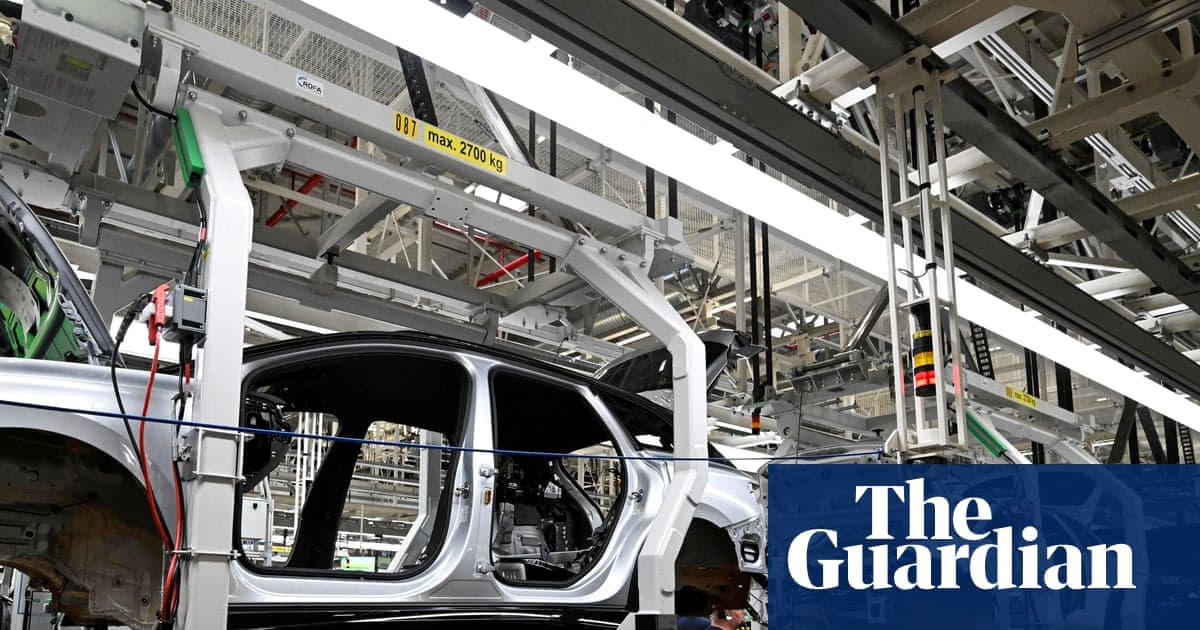
Plant closures possible as part of German carmaker’s efforts to create resilience in face of competition from China · By Lisa O’Carroll · Mon 16 Feb 2026 08:38 EST (last modified 09:04 EST) · An assembly line at Volkswagen’s plant in Emden, Germany. Photograph: Carmen Jaspersen/Reuters

Volkswagen plans to cut costs by 20 % by 2028, with plant closures not ruled out, as part of an effort to reshape the company in the face of increasing competition from China, according to reports.

The German automotive company’s chief executive, Oliver Blume, and its finance chief, Arno Antlitz, are said to have presented a plan for “massive” savings at a meeting of the company’s top executives last month.

Declining sales, high costs, the rise in sales of Chinese cars in Europe and robotisation are forcing manufacturers and suppliers across the car industry in Germany to create resilience in the sector.

Volkswagen announced plans for deep restructuring across its brands and plants 18 months ago as part of an effort to save €10 bn (£8.7 bn), a move that was seen in Germany as “an earthquake” in one of the country’s most famous companies.

Back then it announced cuts of 35 000 to its workforce of 135 000 by 2030 after an agreement with the staff union including natural attrition through retirement and other staff departures.

At the time, Volkswagen said the job losses would save €1.5 bn a year but the details on how this would be achieved remained undisclosed.

The latest, behind‑closed‑doors initiative is aimed at ensuring profits settle at a sustainable level in the new competitive environment, the German publication Manager Magazin reported on Monday.

Volkswagen said it was unable to comment on reports of its cost‑cutting drive until its annual results are announced on 10 March. But a spokesperson said on Monday that since the restructuring programme was announced three years ago, it had “achieved savings in the double‑digit billion‑euro range”.

They added: “This has enabled the group to cushion geopolitical headwinds – such as tariffs in the United States – and stay on course.”

Where exactly the savings are to be made and where cooperation between the brands is to be improved remained unclear at the meeting, Manager Magazin said, but it reported that plant closures could also be on the table.

The further details on the restructuring came after new data showed that the EU’s trade deficit with China grew by 18 % in 2025, with Europeans continuing to buy more from China than they sold.

The data from Eurostat estimated the annual EU trade deficit with China was €359.3 bn, or about €1 bn a day. This has fuelled concerns that the EU’s strategy, which includes tariffs on electric vehicles and formal initiatives to wean itself off critical supplies that impact industry and energy, is not having the desired impact.

The German chancellor, Friedrich Merz, is due to go to China next week, with trade high on the agenda.

Germany’s car industry is deeply embedded in China, with Volkswagen and other brands operating an extensive manufacturing base in the country though longstanding joint ventures.

Under Merz’s predecessor, Olaf Scholz, Germany voted against EU tariffs on Chinese imports, such was its concern about the impact on sales in the EU of Chinese‑made German car brands.

It failed to win the argument but in a significant development last week Volkswagen secured a breakthrough tariff reprieve for one China‑made brand, the Cupra Tavascan SUV. This was in exchange for agreeing to sell the car at an agreed minimum price.

China’s strategic partnerships will come under the spotlight again in April when Donald Trump is expected to visit Beijing, with all focus on de‑escalation of trade wars between the two economic superpowers, referred to by the US president as “the G2”.

Volkswagen has been approached for comment.

Read Original Article
0

Comments

Want to join the conversation?

Loading comments...