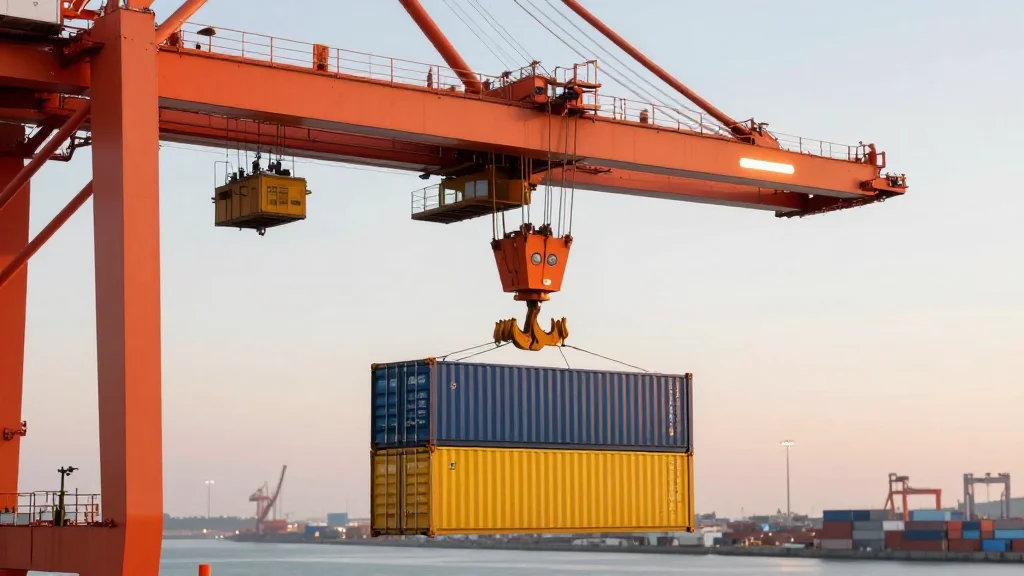
WATCH: Port of Virginia CEO Talks About Tariffs, Investment, and Why Her New Cranes Are the Most Unique Among U.S. Container Hubs
Why It Matters
Stable leadership at a top‑ranking U.S. port positions Virginia to capture growing trade volumes while navigating tariff volatility and funding critical infrastructure upgrades.
Key Takeaways
- •Sarah McCoy appointed permanent CEO of Virginia Port Authority
- •Virginia port ranks 6th U.S. container hub, handling 3.24M TEUs
- •New crane technology deemed most unique among U.S. ports
- •McCoy highlights tariff impacts and upcoming infrastructure investment
- •Leadership change signals focus on capacity, resilience, and growth
Pulse Analysis
Virginia’s ascension to the sixth‑largest container gateway in the United States reflects a broader shift in East Coast logistics, where shippers are diversifying away from traditional West Coast chokepoints. Handling 3.24 million TEUs in 2025, the Port of Virginia leverages its deep‑water berths and intermodal connections to attract trans‑Atlantic carriers seeking faster access to the Midwest. The recent appointment of Sarah McCoy as permanent CEO provides continuity at a time when the port is courting new trade lanes and negotiating with carriers over slot allocations.
McCoy’s remarks on tariffs highlight the delicate balance ports must strike between policy uncertainty and long‑term planning. While recent tariff rollbacks have eased pressure on import costs, lingering duties on steel and aluminum still influence cargo routing decisions. By signaling a proactive stance on advocacy and cost mitigation, the Virginia Port Authority aims to reassure importers that the hub can absorb policy shocks without compromising service levels. This approach is especially critical as the U.S. government debates broader trade frameworks that could reshape supply‑chain dynamics for years to come.
The introduction of a uniquely engineered crane system underscores the port’s commitment to technological differentiation. Unlike standard gantry cranes, the new units feature modular components and advanced automation that reduce cycle times and improve safety. Such investments are expected to boost berth productivity by up to 15%, positioning Virginia as a preferred destination for high‑value, time‑sensitive cargo. Combined with McCoy’s focus on infrastructure funding, the port is poised to expand its capacity, attract additional carrier commitments, and reinforce its role as a resilient node in the global shipping network.
WATCH: Port of Virginia CEO talks about tariffs, investment, and why her new cranes are the most unique among U.S. container hubs
Comments
Want to join the conversation?
Loading comments...