Google DeepMind - Latest News and Information
Technology Pulse
EMAIL DIGESTS
Daily
Every morning
Weekly
Tuesday recap
EMAIL DIGESTS
Daily
Every morning
Weekly
Tuesday recap

The DeepMind podcast revisits AlphaGo's 2016 victory over Lee Sedol, a milestone that reshaped artificial intelligence research. The episode explains why Go was the perfect testbed: simple rules but an astronomically large search space. AlphaGo fused a fast‑thinking policy network that predicts promising moves with a slow‑thinking Monte Carlo tree search that evaluates deep variations, mirroring the dual‑process thinking of human players. Guests share personal anecdotes – Thore testing a baby version on his first day, a bet that the system would go ten‑nil against a European champion, and the shock of commentators over move 37, a play with only a one‑in‑10,000 chance of appearing in human games. They connect those innovations to today’s breakthroughs: large language models, AlphaFold protein‑folding, and other scientific AI systems. The Go triumph proved reinforcement learning could handle ultra‑complex problems, opening the door to AI applications across industries.
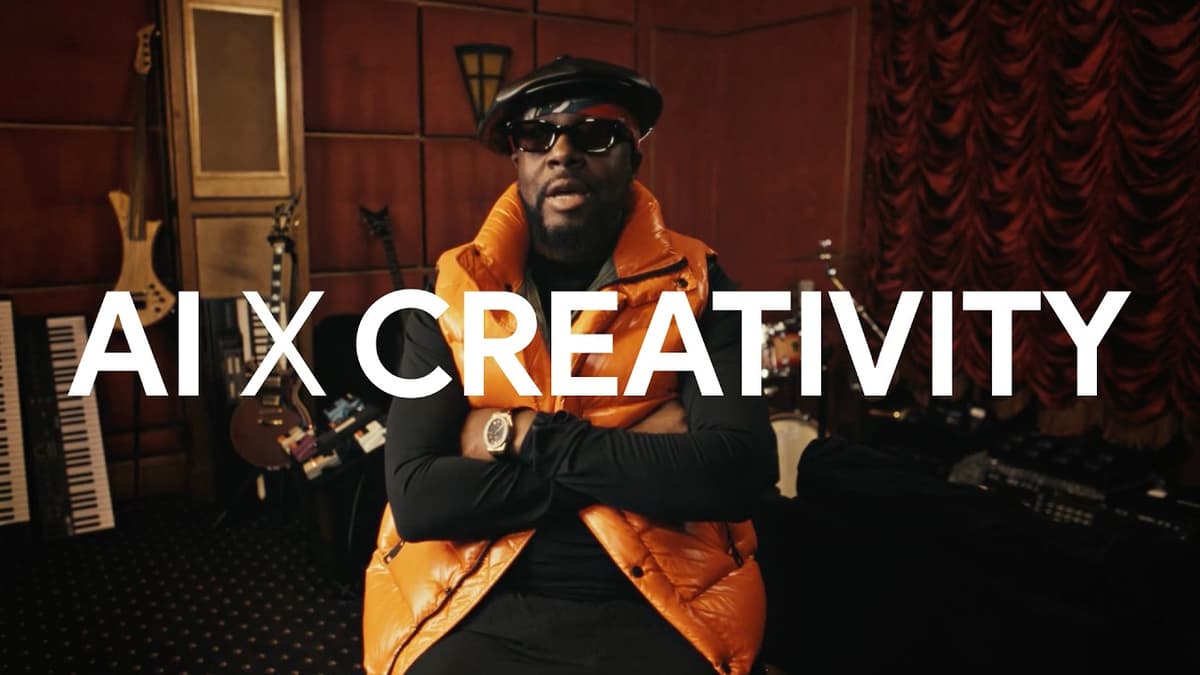
The video introduces Music AI Sandbox, an experimental suite designed to augment musical creativity, highlighted through a collaboration with veteran artist Wyclef Jean. The platform lets users generate novel samples, upload personal clips, and manipulate sounds, positioning AI as a flexible...
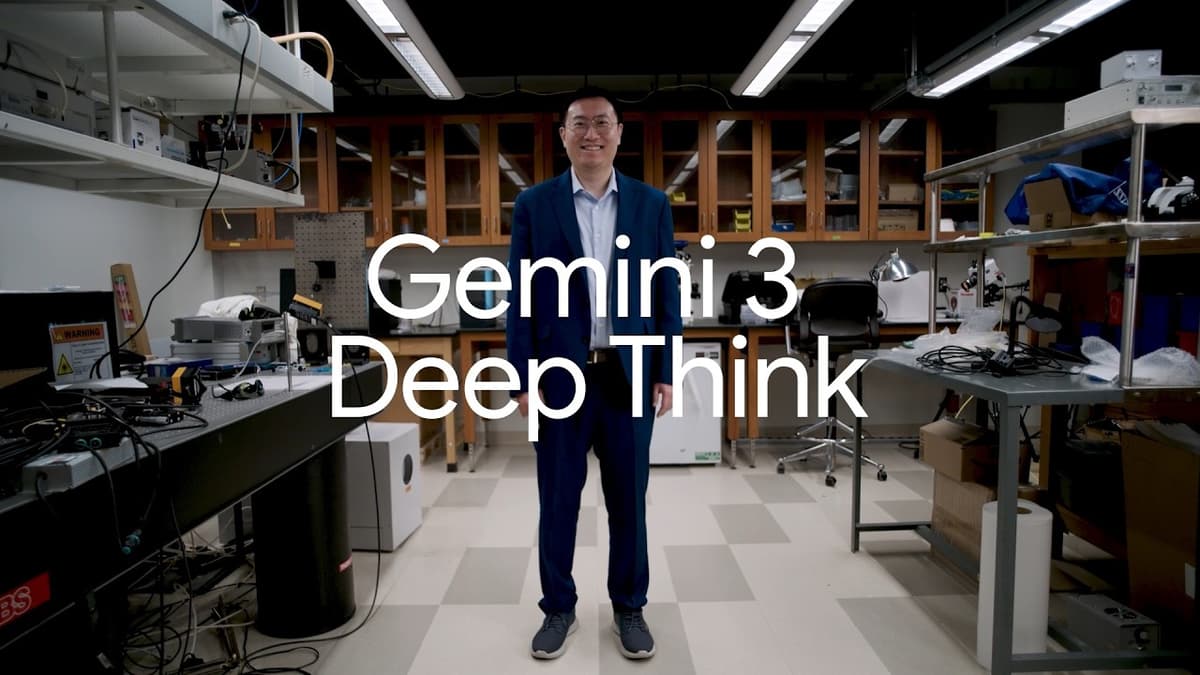
The video showcases a laboratory breakthrough using the Deep Tank AI platform to design and grow two‑dimensional (2D) semiconductor crystals. By feeding the system a recipe aimed at 100 µm lateral size, the AI‑guided process produced crystals measuring 130 µm, the largest...
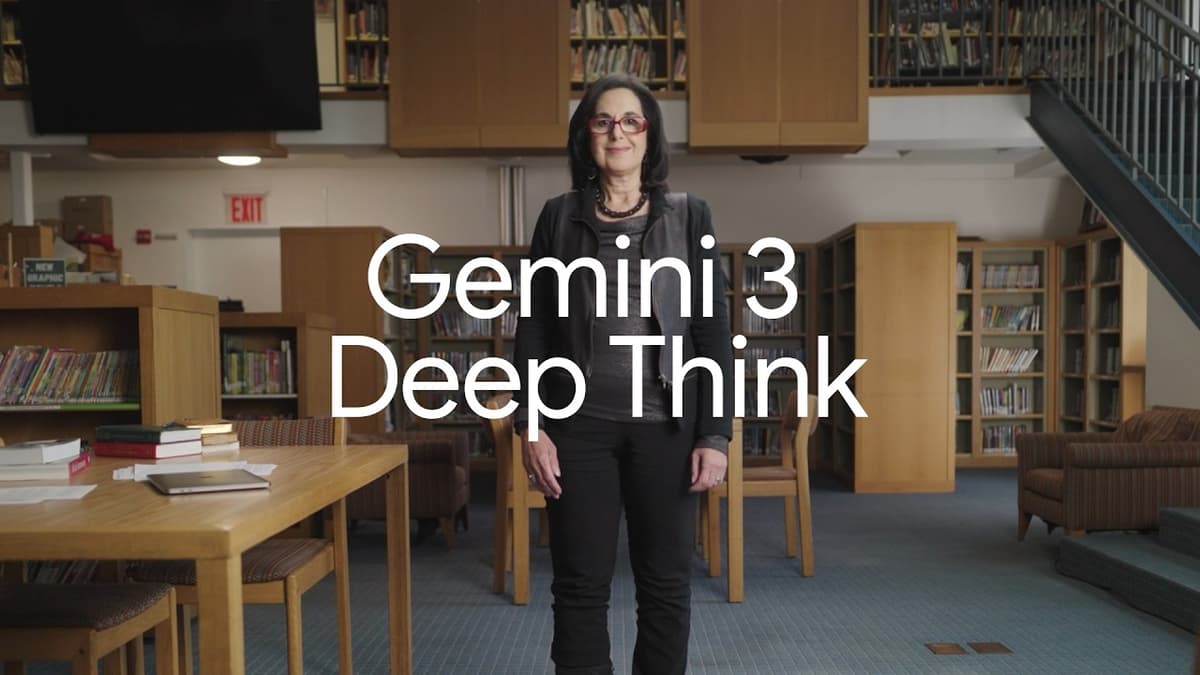
The video chronicles a theoretical physicist’s experience using Google’s Gemini model to fact‑check a multi‑year research paper on infinite‑dimensional algebra and symmetry. Before submitting the manuscript to a journal, the author ran the draft through Gemini’s verification tool, which immediately...
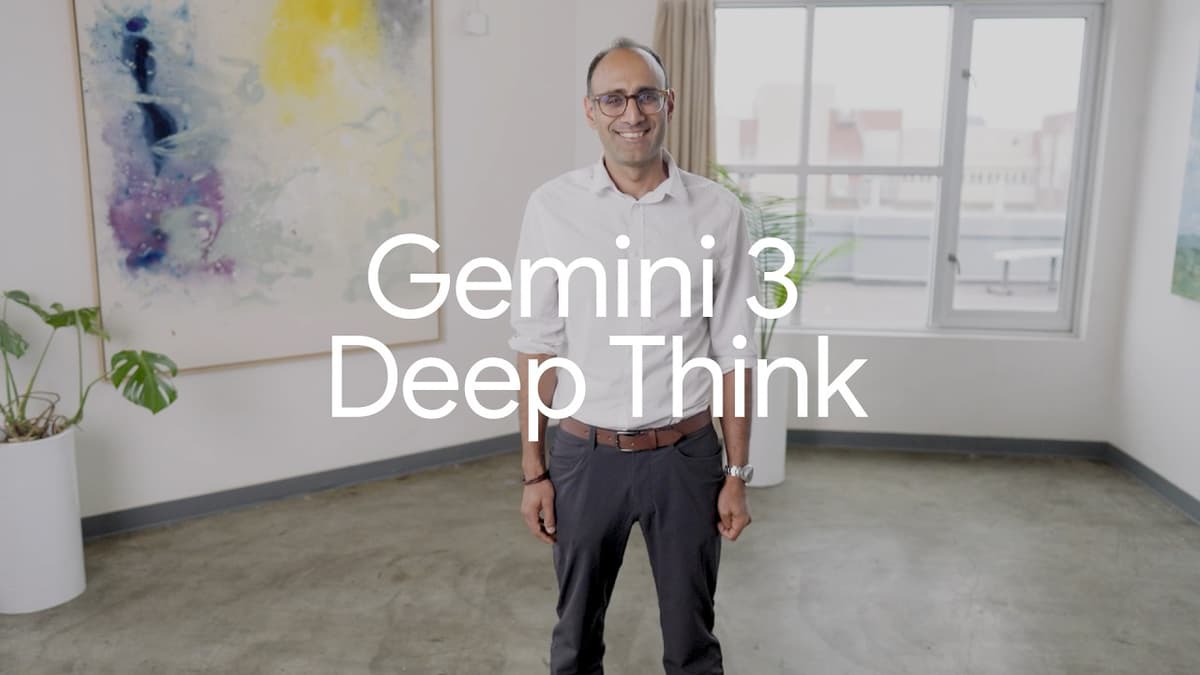
The video introduces Gemini 3’s Deep Think mode, an AI‑powered workflow that dramatically speeds mechanical engineering and rapid‑prototyping. By allowing creators to submit a single image or textual prompt, the system generates multiple viable CAD concepts, cutting design cycles by an order...
Google introduced Lyria 3, its latest AI‑driven music generation model, positioning it as a “musical collaborator” that can compose tracks from user‑provided prompts. The announcement highlights the model’s ability to interpret nuanced textual instructions, turning them into coherent, high‑quality audio that...

The video introduces Gemini’s Deep Think mode, an AI‑driven workflow that promises to compress mechanical‑engineering cycles dramatically. By feeding images or short prompts, the system produces a suite of design alternatives, enabling engineers—and even non‑designers—to iterate concepts at a pace the...

The video details how a researcher used Gemini’s fact‑checking engine to audit a high‑energy physics paper that aimed to bridge Einstein’s gravity with quantum mechanics. Before journal submission, the AI flagged Proposition 4.2 as mathematically incorrect, delivering three concrete logical objections...

The video showcases Gemini 3’s Deep Think platform, specifically the DeepTank AI system, as a breakthrough tool for optimizing the fabrication of two‑dimensional (2D) semiconductors. By feeding a comprehensive thermal‑profile model into the growth furnace, the lab pushed crystal size from a...
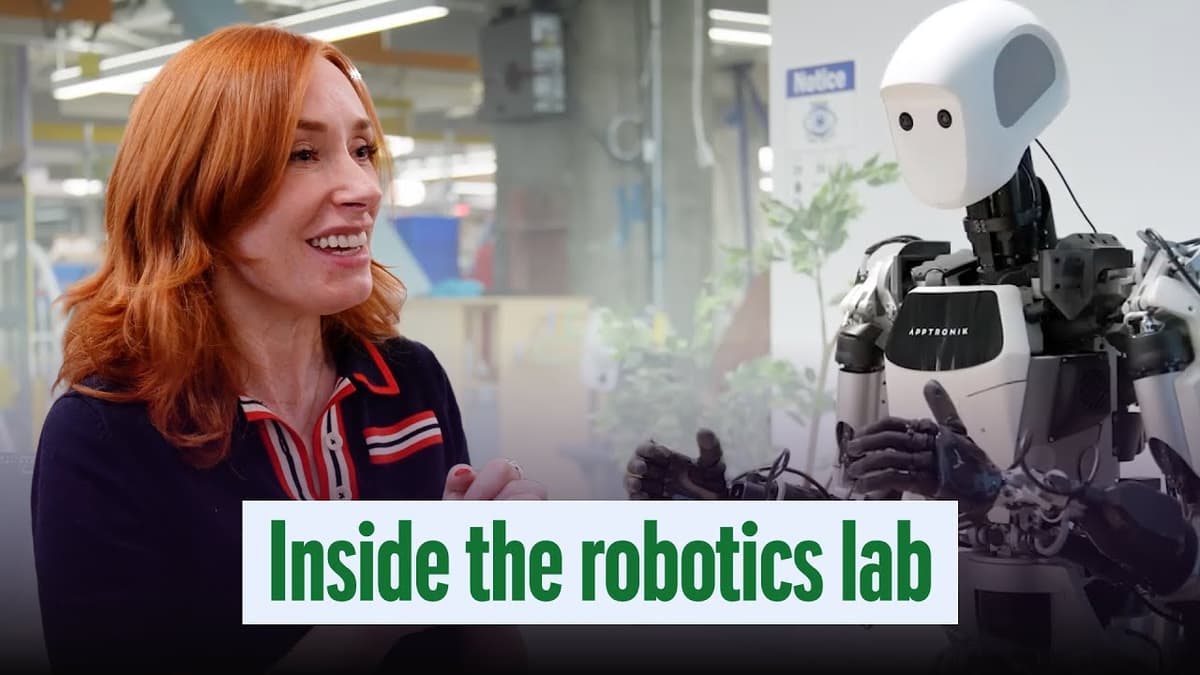
In a behind‑the‑scenes tour of Google DeepMind’s robotics lab, host Hannah Fry and Director of Robotics Kanishka Rao showcase the latest generation of general‑purpose robots built on large multimodal models. The discussion frames the shift from narrowly programmed manipulators to...


