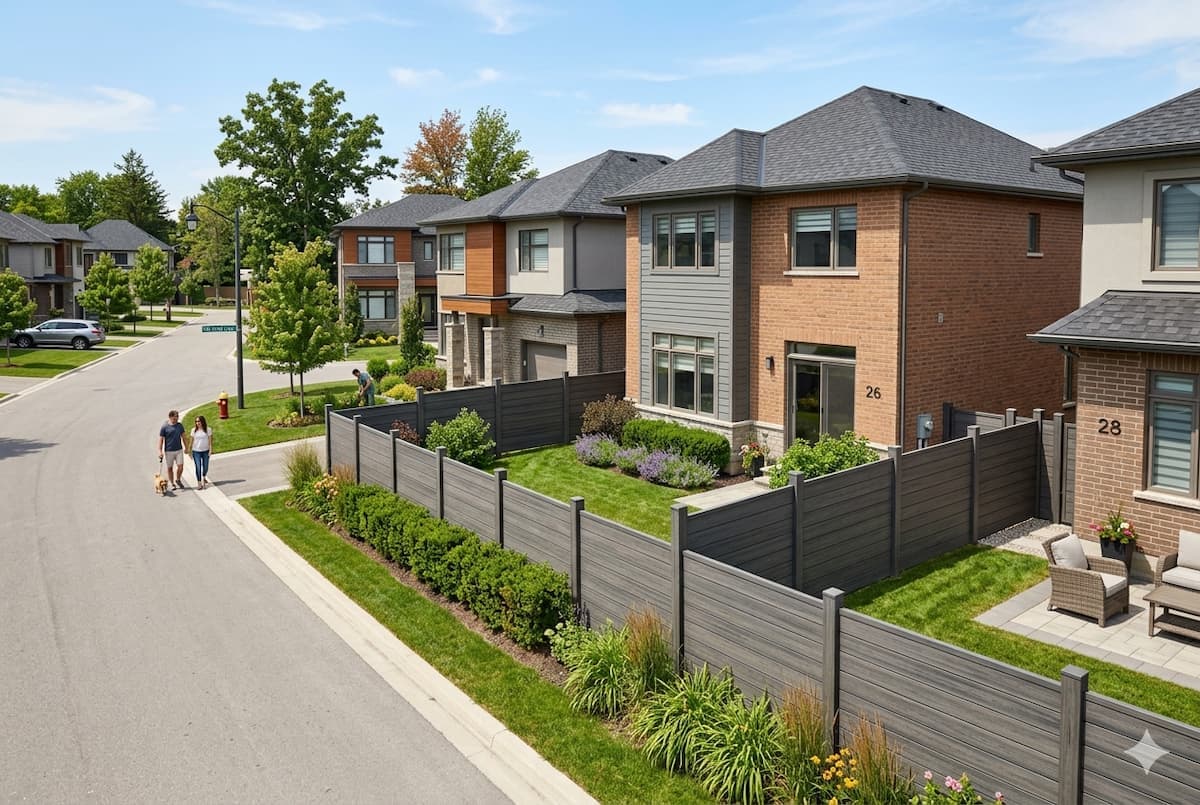
Best Practices for Installing Composite Fencing in Residential Developments
Key Takeaways
- •Part K mandates 600mm post embed; 900mm in high-wind areas.
- •Leave 13 × 13 cm gaps at panel bases for hedgehog connectivity.
- •Use C20/25 concrete and 3‑5 mm expansion gaps for durability.
- •Source panels from a single batch to avoid colour variation.
- •Composite fencing cuts waste to under 2% versus 10‑15% for timber.
Pulse Analysis
The push toward sustainable, low‑maintenance boundaries is reshaping UK residential construction. New regulations—Part K’s fall‑protection rules and the 2024 Biodiversity Net Gain hedgehog‑highway requirement—force developers to adopt composite fencing that can accommodate 13 × 13 cm gaps and meet stringent safety standards. Buyers increasingly value "fit‑and‑forget" solutions, driving a market shift that favors high‑performance materials over traditional timber.
Technical success hinges on precise engineering. Posts should be embedded at least 600 mm deep, extending to 900 mm in wind‑exposed zones, and set in C20/25 concrete to resist lateral pressure. A 3‑5 mm thermal expansion gap within post channels prevents warping during UK summer peaks above 30 °C. Using laser levels for runs over 10 m, floating fixings, and consistent batch sourcing eliminates colour drift and reduces waste to under 2%, bolstering BREEAM credits and warranty eligibility.
From a financial perspective, composite fencing’s higher CAPEX is offset by a markedly lower lifecycle cost. The UK home‑improvement sector, valued at over £16 billion (≈ $20.5 billion), shows strong buyer willingness to pay a premium for maintenance‑free boundaries. Faster sales cycles, reduced RMC liabilities, and superior acoustic performance—meeting ProPG noise guidelines—enable developers to unlock sites near busy transport corridors that were previously uneconomic. The combined sustainability, durability, and market appeal make composite fencing a strategic asset for modern housing projects.
Best Practices for Installing Composite Fencing in Residential Developments
Comments
Want to join the conversation?