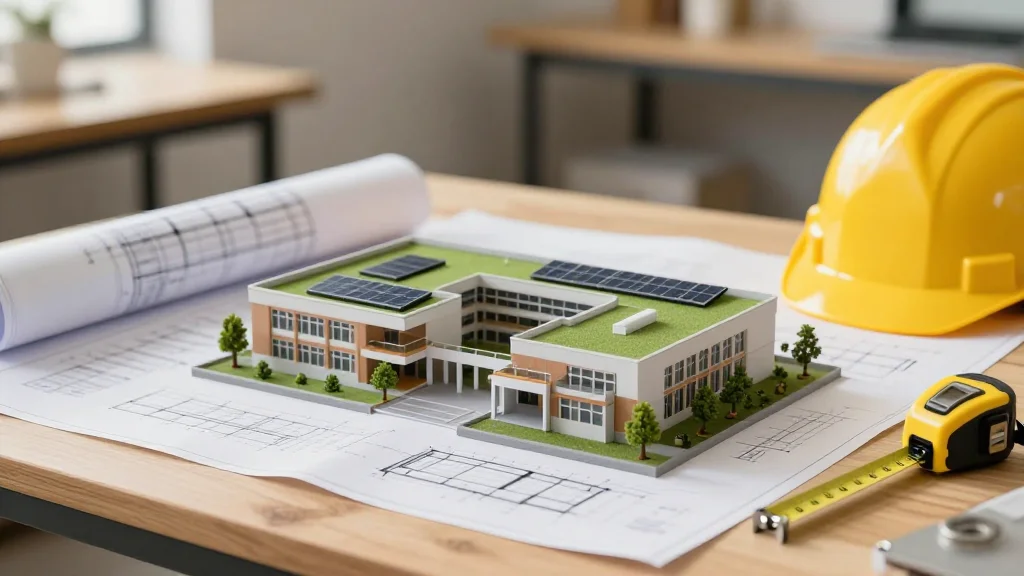
‘Contractors Need Strong Client Direction to Deliver Sustainable Schools’
Key Takeaways
- •DfE launches new design standards emphasizing net‑zero school construction
- •Morgan Sindall used timber panelised system, heat pumps, and PV at Little Reddings
- •New standards require embodied carbon reporting and whole‑life carbon methodology
- •Collaboration and clear client direction are critical for sustainable delivery
- •CarboniCa tool shared across DfE frameworks to track embodied carbon
Pulse Analysis
The Department for Education’s latest design standards mark a decisive shift toward climate‑resilient school infrastructure in the UK. By embedding three environmental pillars—healthy spaces, emissions reduction, and nature‑based solutions—the DfE aligns its construction policy with the Government’s Construction Playbook, which champions modern methods of construction (MMC) and low‑carbon materials. This policy upgrade not only raises compliance expectations for contractors but also signals to the broader built‑environment market that public‑sector projects will increasingly demand measurable sustainability outcomes.
Little Reddings Primary School serves as a tangible case study of the new regime in action. Built under the DfE’s 2021 Construction Framework, Morgan Sindall selected a timber panelised system, integrated ground‑source heat pumps, and installed high‑efficiency photovoltaic panels. Over a year of operational data collected via the DfE’s Building Performance Evaluation process confirms reduced energy consumption and stable indoor conditions. Moreover, Morgan Sindall’s proprietary CarboniCa platform, now offered to other framework contractors, provides granular embodied‑carbon tracking, reinforcing transparency and fostering industry‑wide best practices.
The broader implication for the construction sector is clear: client leadership must be decisive and well‑funded to translate sustainability ambitions into deliverable projects. Strong, trust‑based collaboration between DfE officials and contractors reduces risk, streamlines decision‑making, and maximises whole‑life value. As more public bodies adopt similar standards, contractors that master MMC, carbon‑accounting tools, and performance monitoring will gain a competitive edge, while the market as a whole moves closer to the UK’s net‑zero target for public buildings.
‘Contractors need strong client direction to deliver sustainable schools’
Comments
Want to join the conversation?