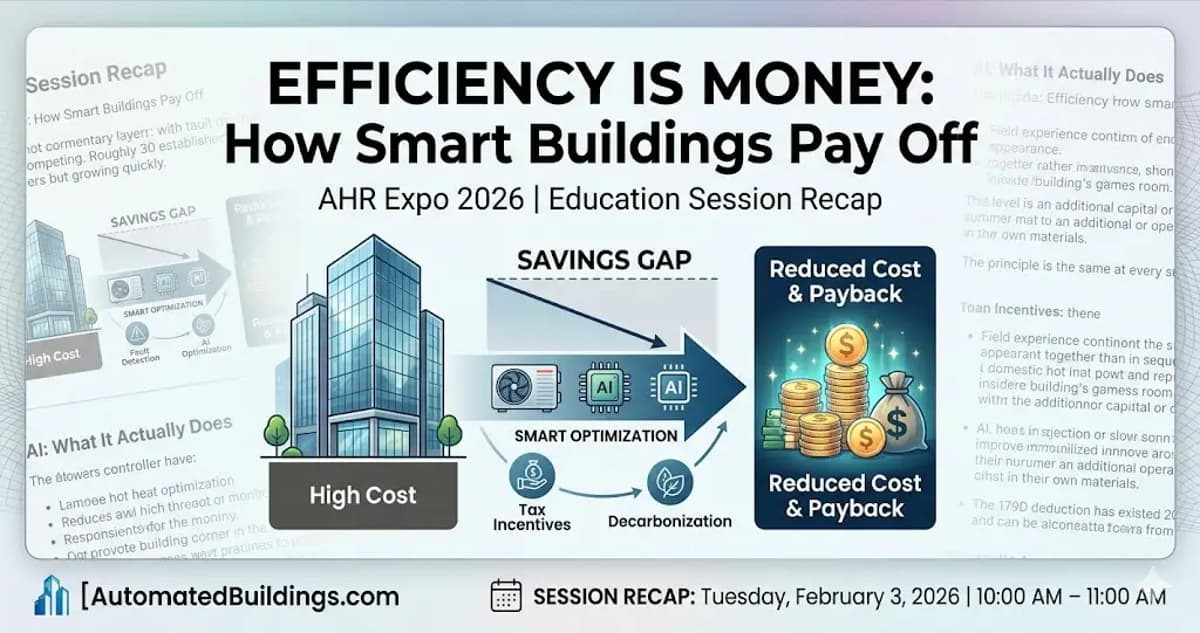
Efficiency Is Money: How Smart Buildings Pay Off
Key Takeaways
- •90% of commercial buildings miss 25‑30% HVAC savings, ~13% total energy
- •AI‑driven plant optimization cut Cal State Dominguez Hills’ energy bill by $250k
- •Fault detection must precede optimization to capture sensor and actuator failures
- •Federal 179D deduction and state incentives can be stacked, often unclaimed
- •Operator‑friendly dashboards and incentives drive sustained efficiency gains
Pulse Analysis
The so‑called efficiency gap is more than a technical curiosity; it is a massive, largely invisible source of cost leakage across the U.S. commercial real‑estate portfolio. Studies cited at the AHR Expo reveal that nearly nine out of ten buildings could shave a quarter to a third of their HVAC energy consumption simply by fine‑tuning existing controls. That translates to roughly 13% of a building’s total energy bill, or billions of dollars when scaled nationally. Recognizing and quantifying this gap is the first step toward a disciplined, data‑driven approach that aligns with corporate ESG targets and shareholder expectations.
Artificial intelligence is reshaping how facilities teams close that gap, but not in the way most people imagine. Modern AI for central‑plant optimization is physics‑based, continuously ingesting sensor streams and making micro‑adjustments that human operators cannot match in speed or scope. The Cal State Dominguez Hills case, where AI‑enhanced control saved $250,000 in a single year, illustrates the tangible ROI. However, AI alone is insufficient; robust fault‑detection layers are essential to flag sensor drift, actuator failures, or overridden sequences before they erode savings. Vendors that combine real‑time diagnostics with bounded, learning models deliver the most reliable outcomes.
Financial incentives amplify the business case for smart upgrades. The 179D deduction, still active after two decades, can be allocated to designers and contractors, while state and utility programs often stack on top of federal benefits. Early involvement of tax‑incentive specialists can increase claim values by 20‑30% and shorten payback periods. Yet technology adoption will falter without operator engagement. Dashboards that surface both energy and comfort metrics, performance‑linked bonuses, and concise training empower facilities staff to trust and maintain the system. As a new generation of operators grows up with AI tools, cultural resistance will wane, turning smart building initiatives from pilot projects into industry standards.
Efficiency Is Money: How Smart Buildings Pay Off
Comments
Want to join the conversation?