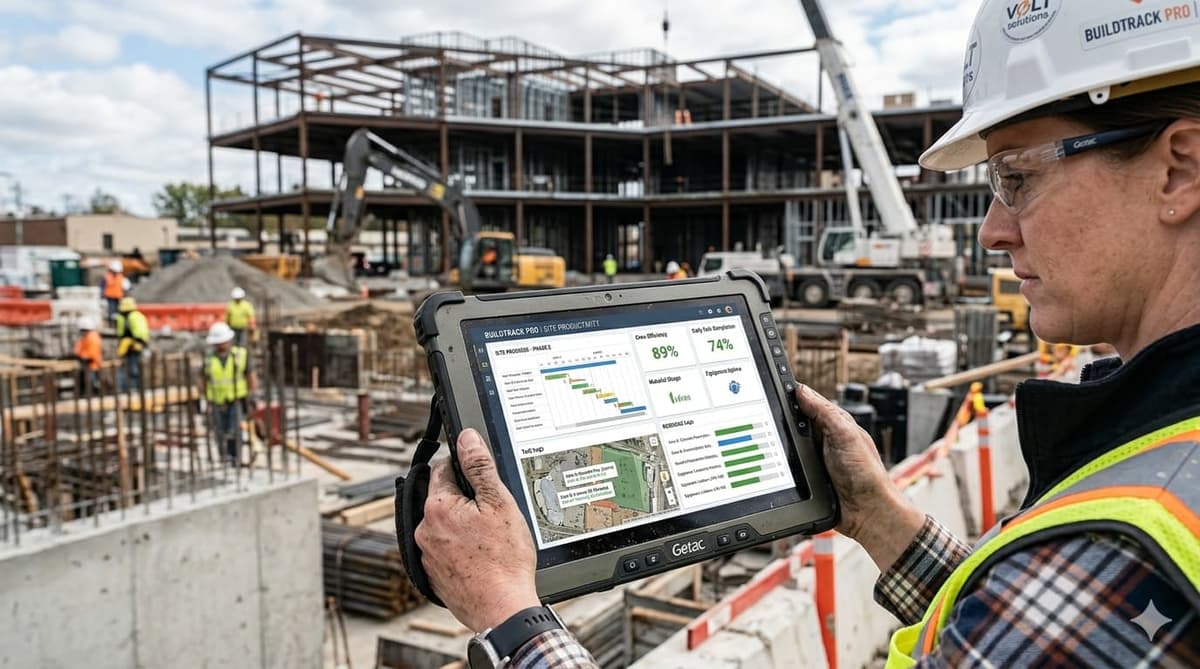
How Leading Contractors Are Tying Labor Hours to Scope Progress (Not Just Timesheets)
Key Takeaways
- •Real‑time cost‑code time capture feeds ERP for instant labor‑scope comparison
- •Earned‑hours‑to‑actual‑hours ratio flags productivity variance weekly
- •Accurate field data eliminates reliance on memory‑based timesheets
- •Weekly labor‑scope reviews scale across dozens of job sites
- •EVM‑based tracking provides early warning without a full controls department
Pulse Analysis
The construction sector has long struggled with a disconnect between hours logged and work delivered. Traditional timesheets satisfy payroll needs but offer little insight into whether crews are meeting planned milestones. By integrating Earned Value Management principles—planned value, actual cost, and earned value—contractors can now quantify progress at the cost‑code level. This granular approach turns labor data into a leading indicator of project health, allowing managers to spot delays before they cascade into cost overruns.
Technology plays a pivotal role in closing the data‑quality gap. Modern productivity platforms capture timestamps at the point of work, automatically assigning them to predefined scope elements. The resulting data streams directly into job‑costing systems, eliminating manual reconciliation and reducing latency. Weekly dashboards that display earned‑hours versus actual‑hours ratios give project leaders a clear, actionable signal: ratios below 1.0 signal lag, while ratios above 1.0 indicate ahead‑of‑schedule performance. For specialty trades such as electrical and MEP, tying hours to measurable units—linear feet of conduit, fixtures installed—makes the metric even more precise.
Scaling this practice across multiple sites amplifies its impact. Contractors with ten or twenty concurrent projects can no longer rely on monthly cost reports; they need a unified, real‑time view of productivity trends. Consistent field‑level time capture, combined with automated reporting, provides that visibility, turning raw labor data into a strategic asset. As McKinsey’s 2024 construction productivity report highlights, digitizing existing processes is only the first step—linking labor to scope represents a deeper transformation that can help narrow the industry’s chronic productivity gap.
How Leading Contractors Are Tying Labor Hours to Scope Progress (Not Just Timesheets)
Comments
Want to join the conversation?