Key Takeaways
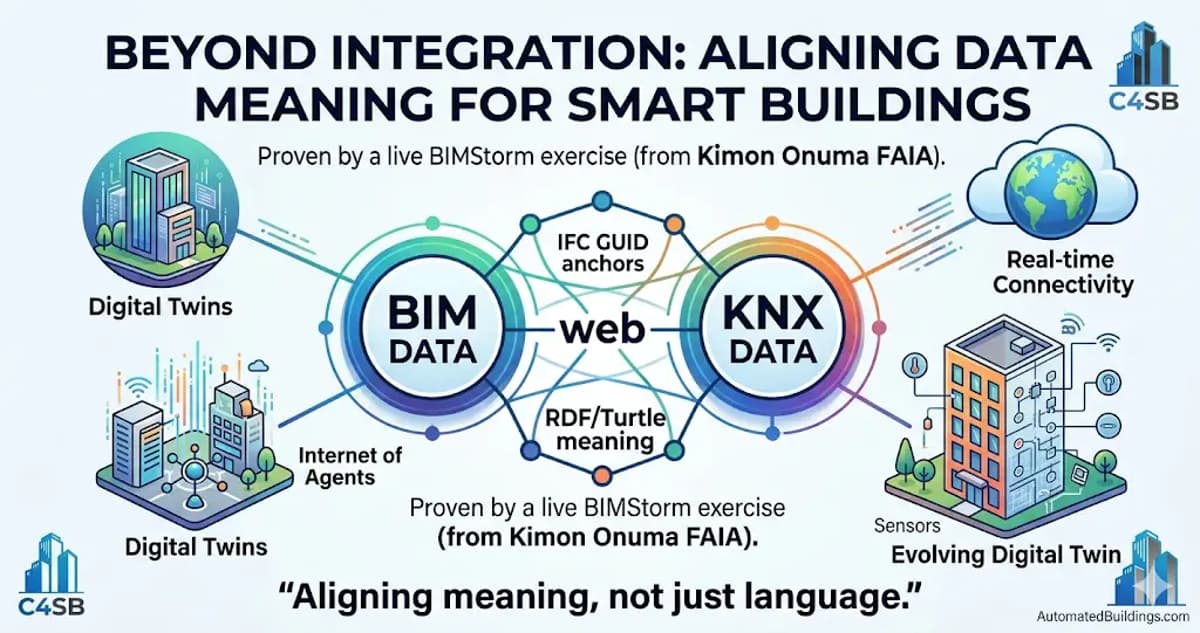
- •IFC GUID anchors enable BIM–KNX data linking without schema merging
- •RDF/Turtle adds semantic meaning, turning models into evolving digital twins
- •Integration completed in hours, cutting project timelines dramatically
- •Lowers expertise barrier, allowing non‑BIM users to contribute automation data
Pulse Analysis
The building‑automation sector has long chased a universal standard, but the recent BIMStorm demonstration flips that narrative. By anchoring each asset with an IFC Global Unique Identifier and describing relationships in RDF/Turtle, engineers sidestepped the need for a monolithic data model. This semantic‑web approach treats identity as the glue, letting disparate tools speak a common meaning while preserving their native formats. The result is a fluid, web‑compatible digital twin that can evolve as sensors and agents feed new data.
Speed to value is the headline. Teams merged BIM geometry with KNX control points in mere hours—a task that traditionally required weeks of schema mapping and custom middleware. The lightweight integration leverages existing web protocols, enabling real‑time updates and on‑the‑fly adjustments to building performance. As digital twins become living entities, the ability to inject fresh data without re‑engineering the underlying model unlocks continuous optimization, predictive maintenance, and the emerging "Internet of Agents" that can autonomously negotiate energy use across sites.
Beyond technology, the identity‑first model democratizes participation. Architects, facilities managers, and junior engineers can contribute automation logic without mastering BIM intricacies, while KNX specialists can consume rich spatial context without learning new modeling tools. This lowered barrier supports talent pipelines and encourages cross‑disciplinary collaboration—key factors as the industry embraces AI, machine‑learning analytics, and generative design. In short, aligning data meaning rather than forcing tool conformity could become the new cornerstone of smart‑building strategy, driving faster deployments, richer insights, and broader market adoption.
Identity Over Integration
Comments
Want to join the conversation?