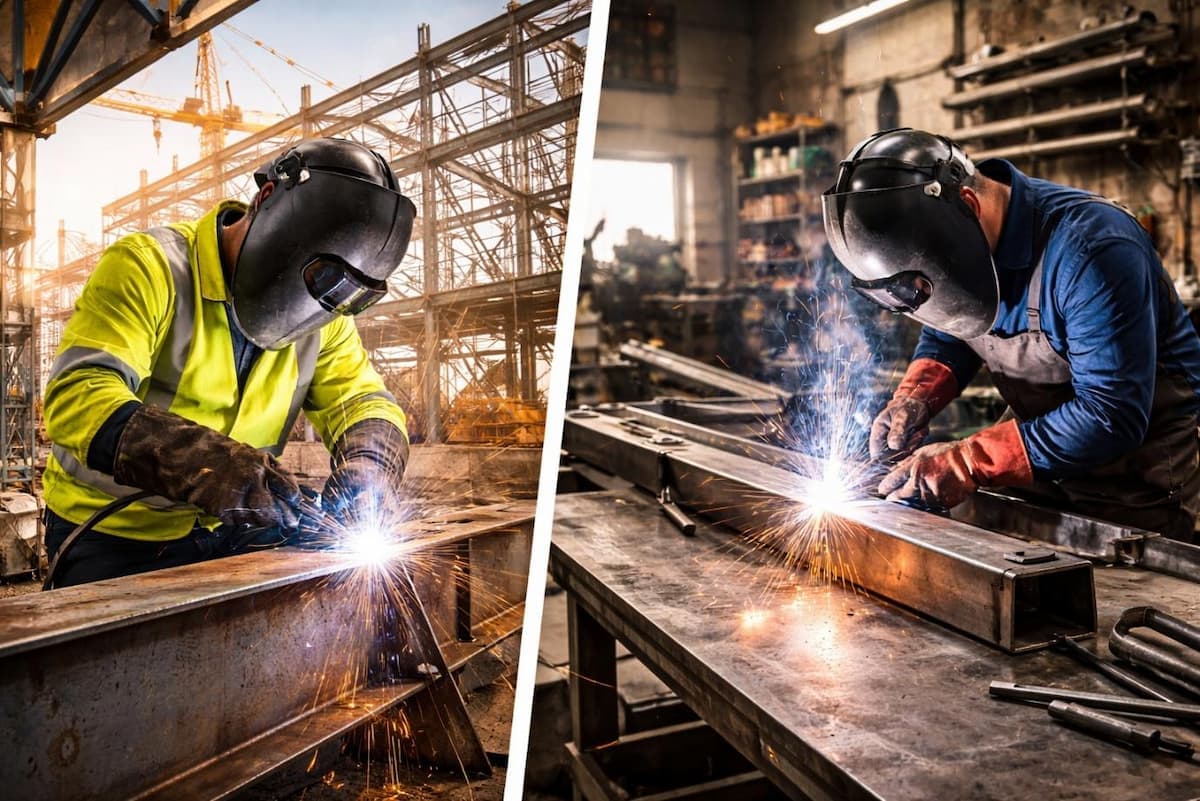
On-Site Welding vs Workshop Fabrication: What’s Best for Your Project?
Key Takeaways
- •On-site welding offers real-time flexibility for large, immobile structures.
- •Workshop fabrication ensures higher precision through controlled environment and advanced machinery.
- •Hybrid approach combines prefabrication benefits with on-site adjustments for optimal results.
- •Weather, space, and logistics drive method selection and cost considerations.
- •Experienced welders are essential regardless of chosen fabrication strategy.
Pulse Analysis
In today’s construction landscape, the choice between on‑site welding and workshop fabrication is more than a technical preference—it’s a strategic lever that can dictate a project’s bottom line. On‑site welding shines when structures are too massive or awkward to transport, allowing trades to adapt instantly to site conditions. However, exposure to weather, limited workspace, and heightened safety protocols can erode productivity. Conversely, workshop fabrication leverages controlled environments, advanced CNC welding equipment, and rigorous quality‑control regimes, delivering uniform welds and reducing rework, albeit with added logistics for moving finished components.
Cost and schedule implications are pivotal. While on‑site welding can trim transportation expenses, it often incurs higher labor rates and potential weather‑related delays. Workshop fabrication accelerates production by enabling parallel fabrication of multiple components, compressing the critical path, but introduces handling and delivery costs that must be factored into the budget. Project managers must weigh these trade‑offs against the complexity of the design, the frequency of repetitive elements, and the geographic constraints of the build site to arrive at the most economical solution.
A growing number of firms are embracing a hybrid approach, prefabricating precision‑critical modules in the shop and completing final fit‑up on‑site. This blend captures the accuracy of controlled fabrication while preserving the adaptability of on‑site welding. Success hinges on partnering with seasoned welding specialists who understand both environments, can navigate safety regulations, and optimize equipment selection. By aligning method choice with project goals, owners can safeguard timelines, control costs, and ensure structural durability.
On-Site Welding vs Workshop Fabrication: What’s Best for Your Project?
Comments
Want to join the conversation?