Standing Seam vs Metal Cladding: A Commercial Roofer’s Guide for UK Specifiers
Key Takeaways
- •Pitch under 10° mandates standing seam; cladding requires ≥10°
- •Standing seam costs $237‑$275/m² installed; cladding $175‑$225/m²
- •Penetrations add ~$62.5 per linear metre to standing seam quotes
- •Cut‑edge protection crucial; missing it halves roof lifespan
- •Approved installers ensure proper fixed‑point and penetration detailing
Pulse Analysis
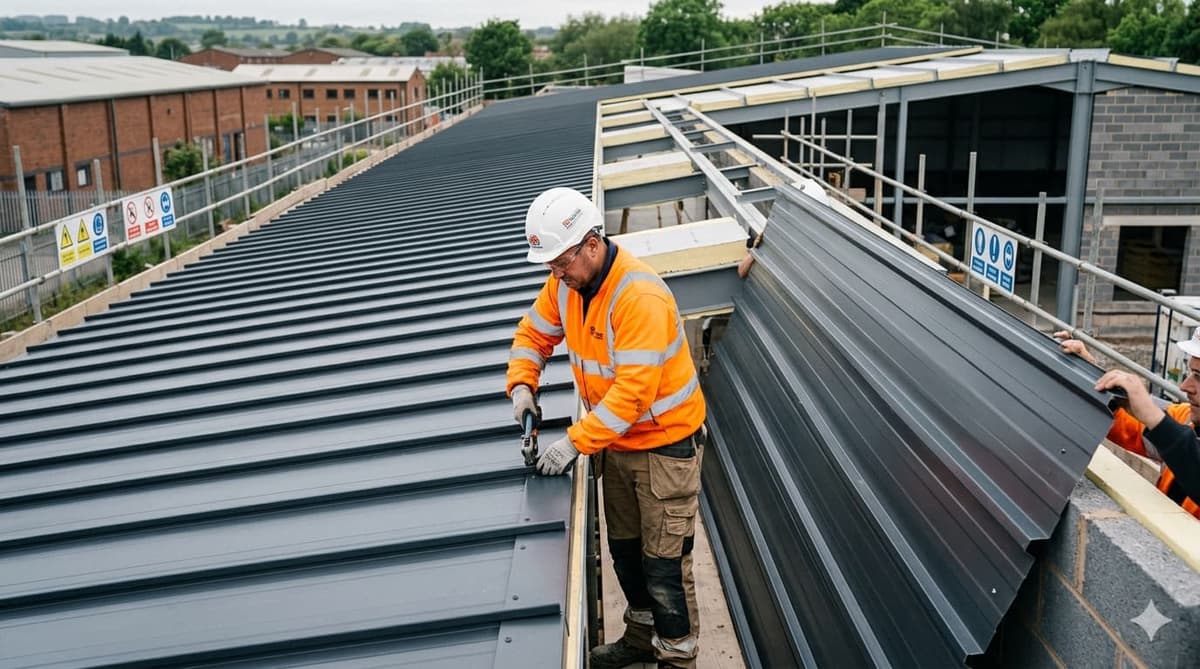
In the UK commercial construction market, roof specifications have moved beyond aesthetic choices to become critical risk‑management decisions. Low‑pitch roofs, common in schools, warehouses and sports facilities, expose the limitations of traditional insulated metal cladding, whose warranties typically demand a 10‑degree minimum slope. Standing‑seam systems, such as those offered by AshZip and Kalzip, overcome this barrier with sealed seams that can function on slopes as flat as 1 degree, making them the preferred solution for architectural projects that require clean lines and uninterrupted panels.
Cost considerations also drive specifier decisions. While the material price gap appears modest—cladding at $175‑$225 per m² versus standing‑seam at $237‑$275 per m²—the true expense emerges in detailing. Each roof penetration (vent, skylight or plant pipe) adds roughly $62.5 per linear metre to a standing‑seam installation, a factor that can inflate a quote by tens of thousands on heavily penetrated roofs. Conversely, cladding penetrations rely on simpler EPDM or lead flashings, keeping labor and material outlays lower. Speed of installation further favors cladding for high‑throughput distribution centres, where a faster programme translates directly into reduced operational disruption.
For facilities managers and architects, the guide underscores three non‑negotiable checks: verify that the roof pitch aligns with the chosen system, confirm the contractor is listed on the manufacturer’s approved installer register, and ensure the budget accounts for cut‑edge protection and penetration detailing. Proper survey work—often using drones for precise slope data—prevents costly retrofits, while approved installers guarantee correct fixed‑point placement and seam clip spacing, preserving the roof’s structural integrity. By treating standing‑seam and cladding as complementary, not interchangeable, solutions, specifiers can extend service life to 30 years and avoid the hidden expenses that plague poorly specified commercial roofs.
Standing Seam vs Metal Cladding: A Commercial Roofer’s Guide for UK Specifiers
Comments
Want to join the conversation?