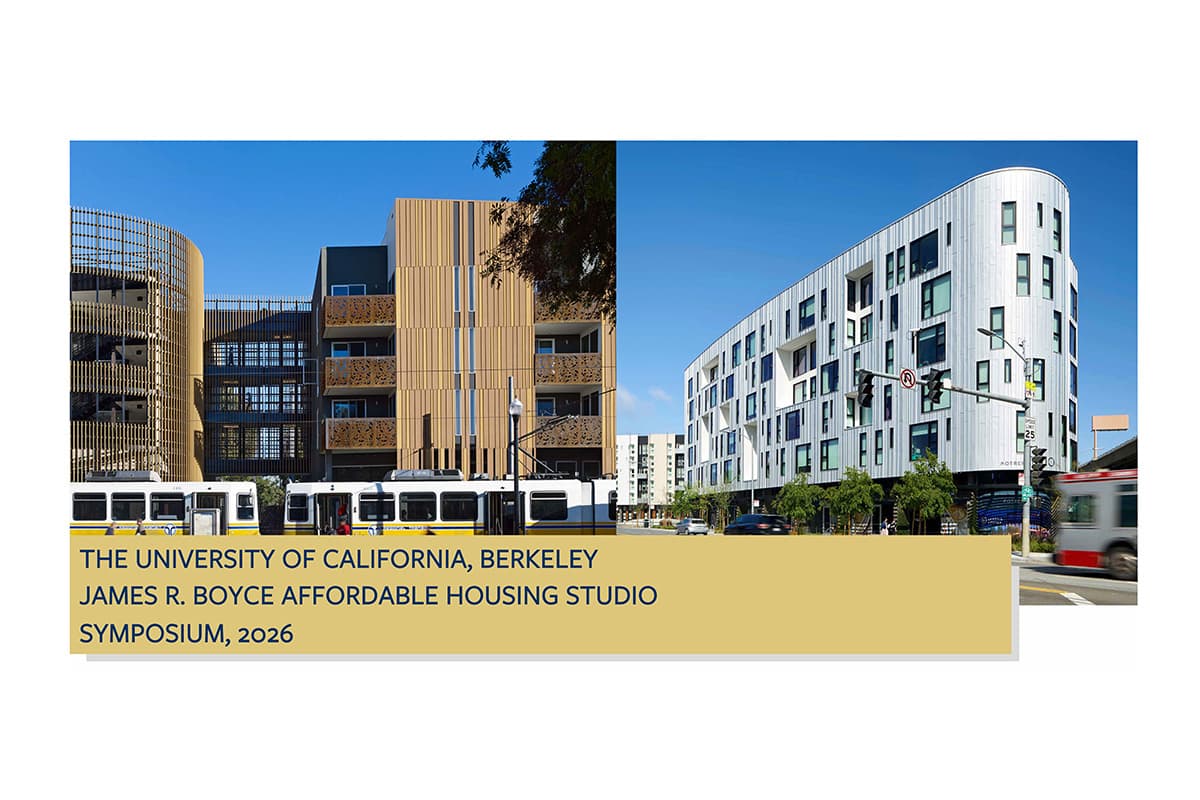
UC Berkeley Boyce Affordable Housing Symposium
Key Takeaways
- •Student teams presented mixed‑income proposals for LA Metro’s Glendora station.
- •Panel highlighted new public financing tools lowering development costs.
- •Experts from design, finance, and government evaluated student projects.
- •Event fosters collaboration between academia and industry on affordable housing.
- •Awards recognized innovative solutions accelerating delivery of mixed‑income units.
Pulse Analysis
California’s affordable‑housing crisis has intensified as urban populations surge and land costs climb, prompting policymakers to look toward transit‑oriented development as a lever for density and equity. Universities like UC Berkeley, through the Terner Center, play a pivotal role by marrying academic research with real‑world projects, creating testbeds that inform public policy and private investment. By focusing on the Glendora Metro station—a newly opened hub—the symposium highlighted how proximity to transit can unlock higher‑density, mixed‑income projects that serve both commuters and low‑income households.
The May 7 symposium assembled a cross‑section of experts, from the Los Angeles County Affordable Housing Solutions Agency to the Bay Area Housing Finance Association, to discuss cutting‑edge public‑financing instruments such as tax‑increment financing, low‑income housing tax credits, and state‑backed loan programs. Student teams, guided by faculty and industry mentors, applied these tools to concrete design proposals, demonstrating how innovative funding can reduce construction costs and compress timelines. The panel discussion and jury evaluation underscored the importance of aligning financial structures with architectural solutions to achieve scalable, affordable outcomes.
Outcomes from the event suggest a roadmap for replicating these financing strategies across California’s transit corridors. Policymakers can draw on the symposium’s insights to craft incentives that attract private capital while safeguarding affordability. Developers gain a clearer understanding of risk‑mitigation mechanisms, and community groups receive a platform to influence project design. As cities grapple with housing shortages, the collaborative model showcased at UC Berkeley offers a template for accelerating mixed‑income development without compromising fiscal responsibility.
UC Berkeley Boyce Affordable Housing Symposium
Comments
Want to join the conversation?