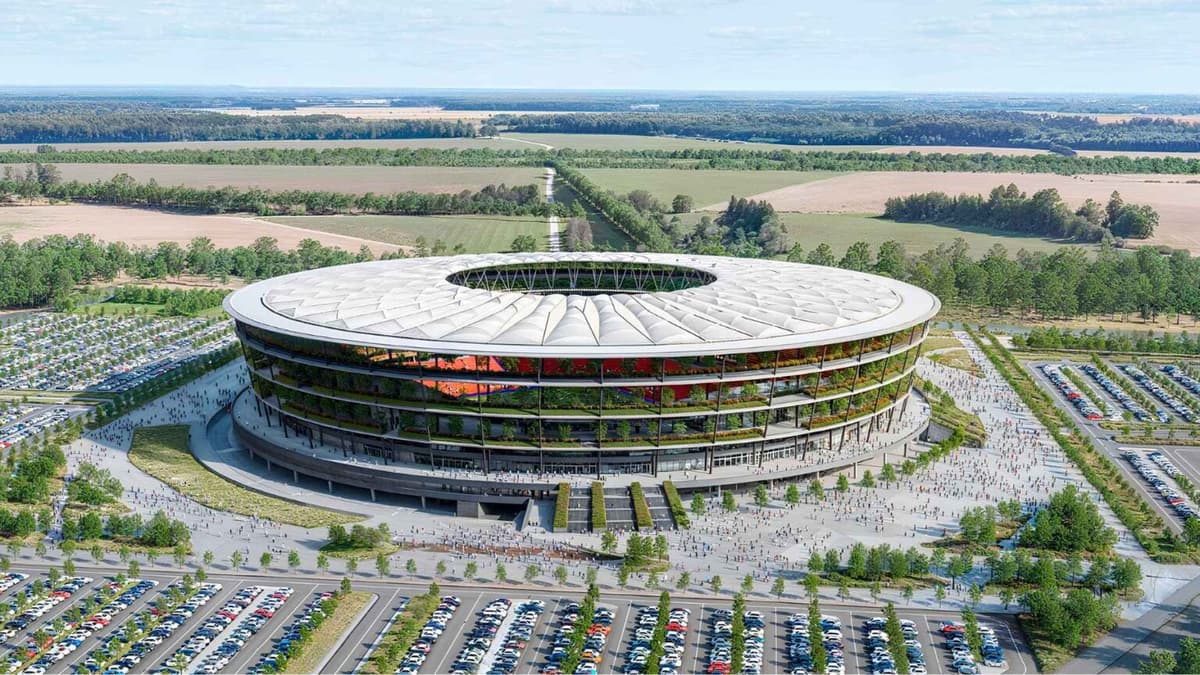
$1.1bn Serbia National Stadium: World’s First Garden Stadium Project Advances with Steel Milestone
Companies Mentioned
Why It Matters
The stadium blends high‑performance sports infrastructure with green architecture, setting a new benchmark for sustainable, mixed‑use venues in Europe. Its delivery will boost Serbia’s tourism, job creation, and ability to attract major international competitions.
Key Takeaways
- •First steel lift of 12,600‑tonne structure completed
- •Garden stadium integrates suspended greenery around 52,000‑seat arena
- •Project cost $1.1 billion, aiming for 2026 completion
- •CSCEC uses laser tracking and BIM for sub‑millimeter precision
Pulse Analysis
The Serbia National Stadium marks a turning point in stadium engineering, as CSCEC’s precision‑driven steel erection demonstrates how digital tools like laser tracking and BIM can achieve alignment tolerances of less than half a millimeter. Such accuracy is crucial for the cable‑supported framework that must bear both the roof and the weight of suspended gardens, a feat rarely attempted at this scale. By mastering these techniques, the project not only mitigates construction risk but also establishes a replicable model for future mega‑structures that demand tight tolerances.
Beyond the technical marvel, the "garden stadium" concept redefines the role of sports venues in urban ecosystems. The four circular garden rings will host trees, shrubs, and walkways, turning the arena into a public green space that enhances biodiversity and offers year‑round recreation. This integration aligns with global sustainability goals, reducing the stadium’s carbon footprint while delivering aesthetic value that can elevate Belgrade’s city brand. Planners anticipate ancillary benefits such as increased foot traffic for nearby businesses and a boost to the hospitality sector during events.
From a market perspective, the $1.1 billion investment signals Serbia’s ambition to compete for high‑profile football tournaments and concerts, driving economic growth through tourism and job creation. The project also reflects a broader industry shift toward multipurpose, environmentally conscious stadiums that serve as catalysts for urban regeneration. As other clubs, like Manchester United, explore similar large‑scale developments, Serbia’s garden stadium could become a reference point for blending capacity, commercial viability, and ecological stewardship in future sports infrastructure projects.
$1.1bn Serbia National Stadium: World’s First Garden Stadium Project Advances with Steel Milestone
Comments
Want to join the conversation?
Loading comments...